






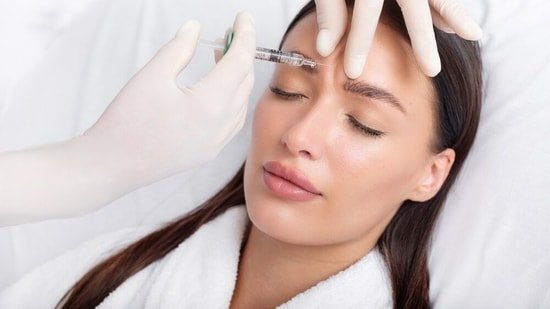
You must have come across before-and-after pictures of celebrities on social media, captioned ‘glow down,’ where their faces appear visibly frozen, swollen or puffy, almost as if they are unable to move their facial muscles naturally.
If you are familiar with this, it may naturally create anxiety about how Botox might affect the face in the long term, instilling second thoughts in those who may be considering this cosmetic treatment.
But the real answer is much more nuanced! Is it really Botox that causes the frozen look, or does it come down to how the treatment is planned and performed?
Answering the nuances, Dr Reema Arora, facial aesthetics expert and founder at The Face Clinic, New Delhi, offered insights on what can actually lead to a frozen or puffy-looking face after Botox and how the treatment can be planned for more natural-looking results.
But first, let’s get the basics sorted. Botox has become a buzzword, especially with social media gossip around celebrities’ dramatic facial transformations. But what exactly does it do, and why do people go for Botox in the first place?
You may observe that when you raise your eyebrows, horizontal lines appear on your forehead. Similarly, when you frown, lines may form between your eyebrows, and when you smile or squint, fine lines can appear around the eyes. Certain expression lines deepen over time and become prominent in the form of ageing lines.
This is where Botox comes in. “Botox works by relaxing selected muscles that create expression lines, such as frown lines, forehead lines, crow’s feet, jaw tension or a heavy-looking brow,” Dr Arora clarified, which expression lines Botox targets.
Does Botox freeze your face and make it puffy?
Now, two worries generally come up when people talk about the long-term results of Botox. One is a frozen expression, where the face looks almost ‘stuck’ and unable to move naturally. The second is unnatural puffiness, where the cheeks or jawline may appear more swollen or heavier than normal.
Often, these concerns are chalked up as an automatic result of Botox. However, according to the expert’s insights, there is a clear difference between a frozen-looking face and a puffy-looking face, and they happen for different reasons.
“Botox does not freeze a face by default. A face looks frozen when movement is over-blocked, or treatment is repeated without reassessing the face,” Dr Arora said, suggesting that the problem may be in unsuitable dosing, incorrect muscle selection or a treatment pattern which blocks the facial muscle movement.
Next comes the problem around the puffiness, where the face may appear fuller, swollen or unusually tight, especially around the cheeks and jawline. However, Dr Arora clarified that Botox does not actually add volume to the face. So, if someone notices persistent puffiness, it may need a broader evaluation instead of being blamed on Botox alone.
The facial aesthetics expert described the factors responsible, “Persistent puffiness usually needs a broader facial assessment rather than being attributed to Botox alone. A puffy or heavy-looking face may need assessment of filler history, fluid retention, under-eye swelling, skin laxity, weight changes, ageing shifts and overall facial balance.”
How do BOTOX techniques help maintain natural facial expressions?
Since much of the discourse around Botox is about how certain facial expressions are softened, one wonders how natural expressions can be preserved when most of the natural expressions come from facial lines.
The expert addressed this concern, “Modern Botox is not about stopping every movement. It is about softening selected overactive muscles while preserving the expressions that make the face look natural, warm and recognisable. When used with restraint, it can soften tension without erasing personality. The key goal is how much is injected, but how much expression is intentionally preserved.”
What safe and well-planned Botox treatments can deliver over the long term?
Dr Arora believed that safe long-term Botox planning requires reassessment, not repetition. This means dosage and treatment pattern should be adjusted based on how the face changes with age, instead of following the same routine every time.
“The face changes with age, muscle strength, skin quality, fat distribution, bone support and facial proportions do not remain the same. A dose or pattern that looked right earlier may not be suitable later,” she said.
Botox is treated as a fixed routine, which, according to the expert, can be a mistake. Every session should reassess movement, brow position, expression, skin quality and facial balance as the face changes over the years. However, Dr Arora assured that well-planned Botox can help soften repeated expression lines and reduce facial tension. It should never make the face look stiff, heavy or ‘disconnected from natural expression’.
Note to readers: This article is for informational purposes only and not a substitute for professional medical advice. Always seek the advice of your doctor with any questions about a medical condition.


