



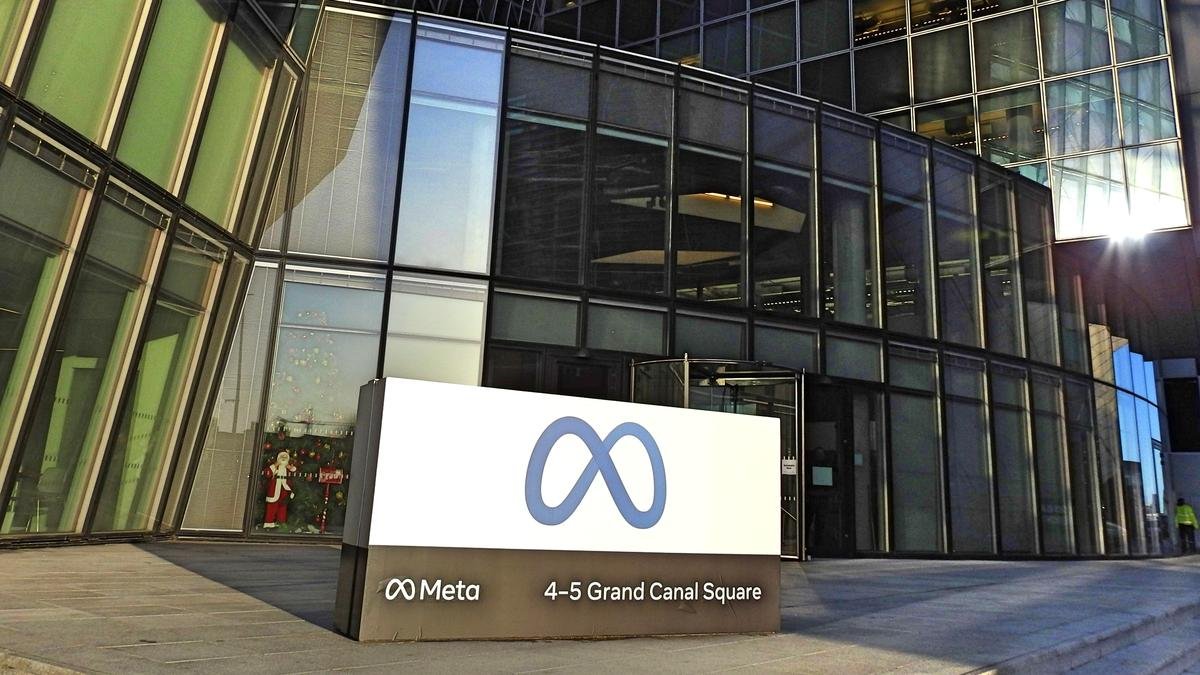
The Story So Far: Meta was ordered on Wednesday (October 21, 2026) to pay a fine of $25 billion to the U.S. state of New Mexico after a jury found last month that the company had misled its users regarding data privacy, in a case related to the Cambridge Analytica scandal. This is one of the largest financial penalties imposed on a corporation in U.S. history, as well as a landmark victory holding Facebook liable under the State’s consumer protection law.
“For too long, powerful technology companies have operated as though their size and influence put them beyond the reach of the law,” said New Mexico Attorney General Raúl Torrez. He had sued Meta in 2021, alleging that the company misled Facebook users on who had access to their data, how the company handled hate speech and misinformation posted on its platform as well as other internal policies.
What was Facebook’s controversial ‘friend sharing’ feature?
Initially, Facebook allowed third-party app developers to access personal information related to the users of these apps as well as their friends, even if they were unaware of their data being shared, through a feature called “friend sharing”. The platform publicly announced that it would end this feature in 2014 and after a transition period ending May 2015, they said that users could choose whether to share their information with the application.
However, in spite of these assurances, the platform had put in place exemptions for its “favoured partners” who would still be able to access this information, albeit without the knowledge of the users.
What is the Cambridge Analytica scandal?
The now-defunct Cambridge Analytica was a British data analytics firm best known for assisting the 2016 Presidential campaign of Donald Trump. The firm acquired data on millions of Facebook users via means that deceived both the users and Facebook, according to media reports. This data was reportedly used to undertake targeted political advertising.
The data was harvested using a third-party personality quiz app called “thisisyourdigitallife,” which was installed by about 2,70,000 users, but also collected information on their friends. The app reached roughly 87 million Facebook users globally.
Although Facebook learned in December 2015 that Cambridge Analytica had obtained the data, it was not publicly disclosed until 2018, after a whistleblower came forward, triggering a major political scandal.
How did Facebook respond to the controversy?
Following the revelations, Facebook assured that it would conduct an “App Developer Investigation” (ADI). Among the assurances given as part of ADI was an inquiry into all apps that had access to user data prior to the 2014 platform change and ensuring the deletion of improperly obtained data. However, it was later revealed that the platform did not conduct the comprehensive probe that it had promised. Moreover, it did not have the ability to conduct such a thorough investigation or enforce deletion of data.
Facebook had also committed to notifying users about data breach. Its investigation found at least 2,000 unique apps associated with data misuse. Out of this, it was able to associate 1,585 applications with New Mexico user accounts. Those affected the data of at least 11,46,225 New Mexican Facebook users. However, it was found that Facebook did not inform the user about this.
What was the New Mexico court’s verdict?
The New Mexico jury found in September 2026 that Facebook violated the State’s Unfair Practices Act 43,899,725 times. The 26 representations that the jury found violative and wilful span a period of 11 years — May 24, 2010 to August 18, 2021. Among these representations were those made by Facebook’s senior leadership including Mark Zuckerberg, CEO, and Sheryl Sandberg, the then-COO.
Taking these factors into consideration, the New Mexico District Court Judge Francis Mathew ordered Meta to pay $25 billion in penalties. The judge said that a penalty of more than $219 billion would be justified under state law, which allows a $5,000 penalty for each violation, but he reduced the amount. He also ordered that the penalty shall accrue an annual interest of 15% until it was paid in full. Meta said penalties of no more than $3.45 billion were warranted.
The Court further said that it will “reserve on injunctive relief pending further briefing in this matter”.
What was Meta’s response?
C. J. Mahoney, Meta’s chief legal officer, said in a statement that the company is confident it will win on appeal. “This ruling, and the Attorney General’s approach to this enforcement, makes it all but impossible to do business in the state of New Mexico,” Mr. Mahoney said, adding that the “lawsuit seeks to impose a tax on speech”.
Meta has previously maintained that it does not sell user data and that New Mexico failed to prove that any consumer had actually been misled. It also contended that a penalty of this magnitude would risk violating its constitutional rights to due process and protection from excessive fines.
Published – October 23, 2026 08:49 am IST
