





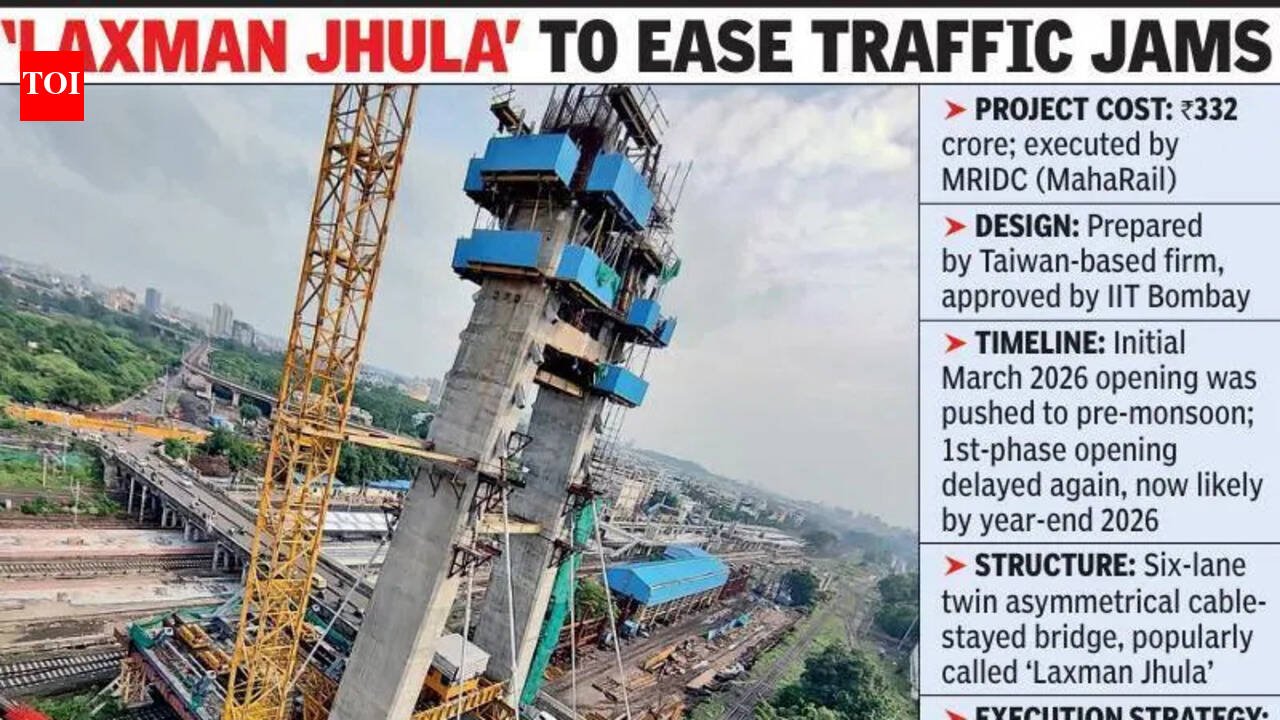
Nagpur: The Ajni twin cable-stayed bridge project has entered a crucial stage with launching of bridge segments and installation of high-tensile cables underway. Out of the total 28 segments planned for the first cable-stayed span, eight segments have been launched successfully, while three pairs of high-tensile cables have been installed, marking a key milestone in the Rs332-crore infrastructure project.The six-lane bridge, popularly known as ‘Laxman Jhula’, is being constructed by Maharashtra Rail Infrastructure Development Corporation (MRIDC), also known as MahaRail, to replace the 125-year-old British-era Ajni railway overbridge (RoB). The project is being executed under supervision of MRIDC managing director Rajesh Kumar Jaiswal and is aimed at improving connectivity between South and Central Nagpur.MRIDC said the cable installation is a major milestone in construction of the asymmetrical cable-stayed structure. The 220-metre cable span, comprising a 120-metre and 100-metre section, will be supported by 24 pairs of high-tensile cables. The cables will lift the entire cable span of the bridge.A total of 28 segments are being erected for the cable-stayed portion, with each segment being launched and suspended using high-tensile cables. Total weight of the cable span is around 1,800 metric tonnes per span.The project is being executed in phases to avoid traffic disruption. Under first phase, one side of the bridge comprising 3 lanes is being constructed and will initially handle 2-way traffic. After this portion becomes operational, the existing bridge will be dismantled and second carriageway of the twin bridge will be constructed. Once completed, both sides will carry one-way traffic.MRIDC had initially planned to open first side of the bridge by March 2026, which was later shifted to pre-monsoon period. Despite progress in major structural works and commencement of cable installation, the first phase revised deadline has been missed again and is likely to open by the year end.The project has witnessed delays due to design modifications required because of parallel infra works, construction over a busy railway corridor, and approvals required for the cable-stayed structure. The bridge design was prepared by a Taiwan-based firm and later approved by IIT Bombay. Construction of the project began in April 2023.


