



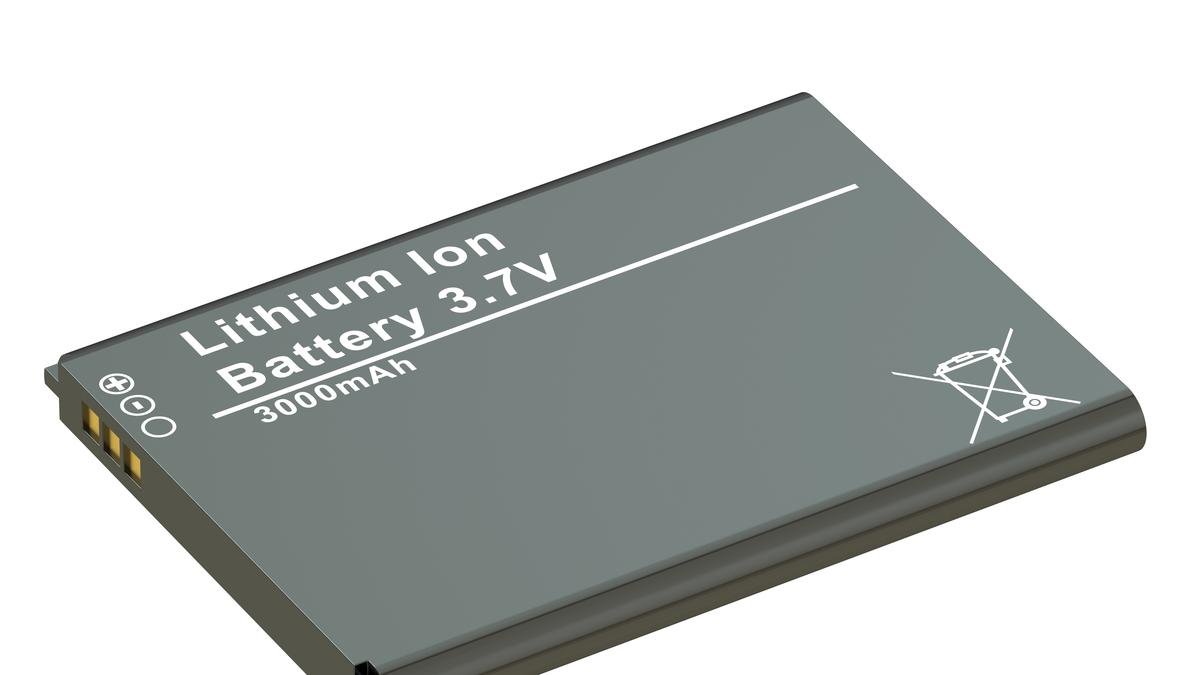
Image used for representation purpose only.
| Photo Credit: Getty Images/iStockphoto
Eschewing big-ticket announcements, Finance Minister Nirmala Sitharaman on Sunday (February 1, 2026) resorted to a series of customs duty exemptions in the Union Budget to encourage domestic manufacturers of clean-energy components, including lithium-ion batteries and solar cells.
The basic customs duty on sodium antimonate, used in the manufacture of solar glass, has been cut from 7.5% to 0. “Specified” capital goods required for manufacturing lithium-ion cells for Battery Energy Storage System (BESS) have also been exempted from duty, along with several components used in the manufacture of nuclear power projects, including controller and protector absorber rods.
Last year, Parliament passed the Sustainable Harnessing and Advancement of Nuclear Energy for Transforming India (SHANTI) Act, which, among other things, incentivises private companies to invest and operate nuclear power plants in India. The Centre had also announced a ₹20,000-crore Nuclear Energy Mission to develop at least five indigenously designed and operational Small Modular Reactors by 2033.
Despite the policy push, the overall budgetary allocation for the Department of Atomic Energy has risen to ₹38,422 crore or about 2% higher than the previous year. Within this, the allocation for atomic energy research has increased by nearly 8% to ₹10,000 crore.
The Ministry of New and Renewable Energy, however, saw a sharper rise in allocation to nearly ₹32,914 crore from ₹26,549 crore in the previous year. As in last year’s budget, the most significant component of this year’s outlay is the Pradhan Mantri Surya Ghar Muft Bijli Yojana, which aims to solar-electrify one crore households by 2026-27. As of December ‘25, about 24 lakh households have benefitted under the scheme. The Budget has earmaked ₹22,000 crore for the scheme this year, up from ₹20,000 crore last year.
Union Budget 2026-27 documents
While India already operates Production Linked Incentive schemes to boost advanced-chemistry batteries and solar-cell manufacturing, domestic companies have been facing considerable challenges in accessing critical raw materials and skilled technicians, as well as in scaling up production.
“With a significant increase in allocation for the New and Renewable Energy sector, the Budget reinforces India’s commitment to sustainability, energy security and inclusive growth,” Renewable Energy Minister Pralhad Joshi said in a post on X. “With measures like duty exemptions for capital goods for lithium-ion cell manufacturing or for inputs used in solar glass production, the Budget frames India’s energy transition within a broader push for industrial competitiveness and resilient supply chains, supporting domestic production of critical inputs and access to key minerals,” Centre for Science and Environment (CSE) deputy programme manager Trishant Dev said.
Published – February 01, 2026 01:28 pm IST


