



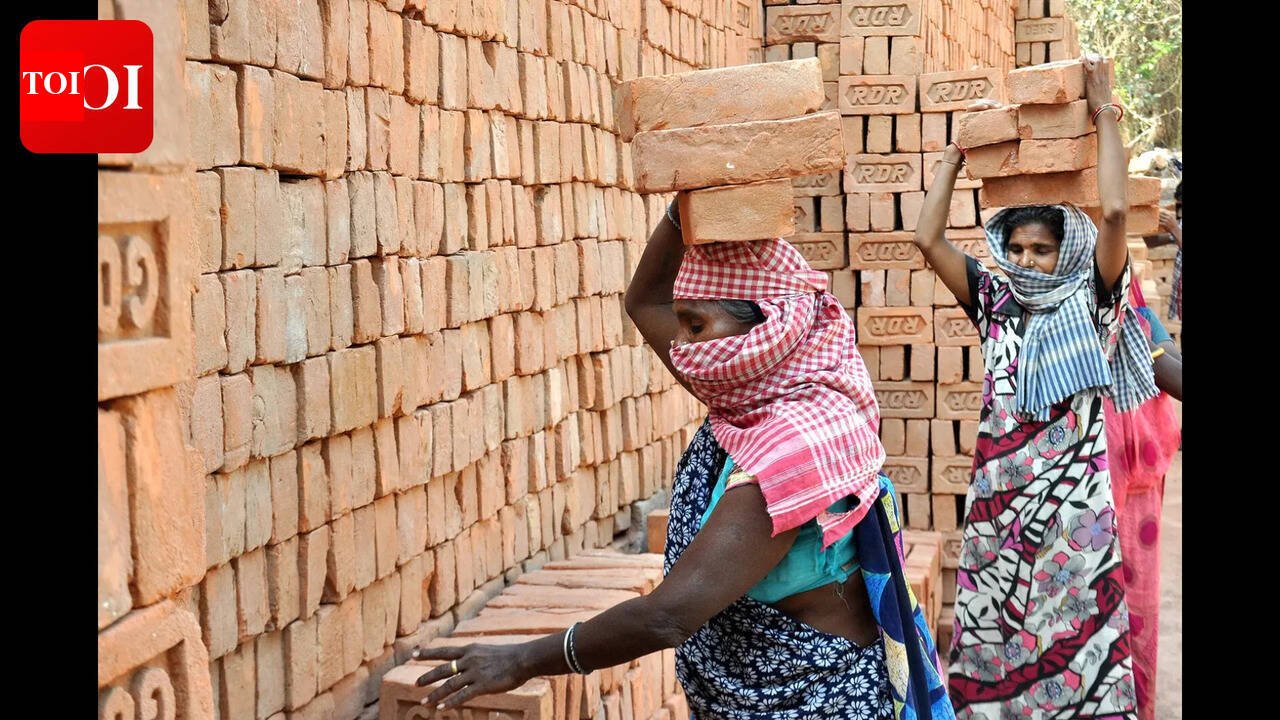
Gaya: The story of Lalu Manjhi reflects the grim reality of generational bonded labour in Gaya. A resident of Gobardaha village under Gurpa police station in Fatehpur block, Manjhi had been working at brick kilns in Uttar Pradesh and Gaya since the age of 40. Even at 75, he remained tied to the same occupation, with his son and daughter-in-law also working for the same person, who started as a labour contractor and is now the owner of a brick kiln.In a major rescue operation on March 17, at least 62 members of 15 families, including men, women and children, were freed from a brick kiln operating under Gurpa police station limits in Fatehpur block. The rescued labourers alleged prolonged harassment, coercion and financial exploitation at the hands of kiln operators.According to their statements, the workers were trapped in a well-organised system of bonded labour, where small loans were inflated into unpayable debts, forcing entire families into cycles of exploitation spanning generations.Most of the rescued labourers belong to the Manjhi community, considered among the most vulnerable sections and often targeted in cases of human trafficking and forced labour. The plight of several villagers, including Putul Devi, Preman Manjhi, Jagdish Manjhi and Parwatiya Devi, has come to light, revealing a pattern of exploitation similar to that faced by Lalu Manjhi.According to information, all of them were allegedly pushed into forced labour after falling into the trap of inflated and unpayable debts. What began as small borrowings reportedly spiralled into a cycle of bondage, leaving the victims with little means to secure their freedom. The cases highlight the continuing issue of debt-linked labour practices in vulnerable communities, raising concerns over the enforcement of laws meant to prevent such exploitation.Social worker Manoj Kumar, who has been working on child trafficking issues for nearly two decades, said such practices are widespread across brick kilns in Bihar and neighbouring states. “In most kilns across Bihar, Jharkhand and West Bengal, labourers from Mushahar and Manjhi communities are employed. Entire families, including women and children, are engaged as labourers. Wages are paid in instalments to ensure that the workers remain bound to work at the kiln for years,” he said.Kumar stressed the urgent need for effective implementation of rehabilitation schemes to prevent the recurrence of such cases. “Due to lack of proper implementation, workers from Gaya are not only found in neighbouring states like Jharkhand, Uttar Pradesh and Madhya Pradesh, but also in distant places such as Manali and Leh, working at eateries and other establishments,” he added.Assistant labour commissioner, Gaya Punam Kumari said, “A detailed report has been sent to the state headquarters seeking approval and necessary guidelines for providing rehabilitation benefits to the rescued labourers.”


