



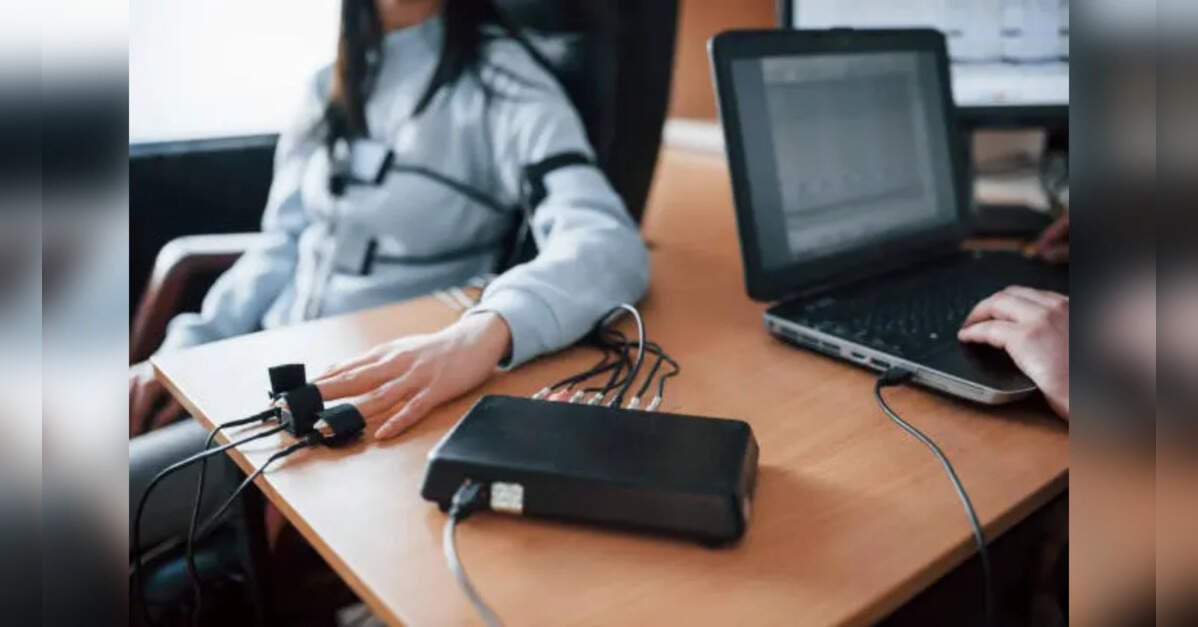
New Delhi: Researchers have developed a wearable polygraph system designed to sense underlying stress hidden deep within the body.
The lightweight, bandage-like device, described in a paper in the journal Science Advances, gently adheres to the chest, where it simultaneously measures heart activity, breathing patterns, sweat response, blood flow and temperature.
Together, the signals capture a real-time, whole-body view of stress, the researchers, from the US’ Northwestern University and Sungkyunkwan University in the Republic of Korea, said.
“Sometimes, the body manifests signs of stress before a person is consciously aware of it. Even if people don’t realize how much pressure they are under, stress is quietly affecting their health,” lead researcher John A. Rogers, professor of materials science and engineering, biomedical engineering and neurological surgery at Northwestern University, said.
Rogers added that an exposure to prolonged stress can be harmful, especially for pregnant mothers, children and critically ill patients, and ability to measure stress could empower people to take stress-relieving actions with direct benefits to health.
“Importantly, we aimed to design a device, conceptually like a polygraph system, that operates on the basis of biophysical body responses, without requiring access to chemical biomarkers found in body fluids,” Rogers said.
Current approaches to a continuous monitoring of a psychophysiological state involve polygraphy and polysomnography, which the researchers said rely on “cumbersome, wired” sensors that are limited in real-world utility and burden patients, particularly vulnerable populations such as infants.
The device is made from combining tiny sensors into a single, soft device, all of which together continuously track multiple physiological signals, produced as a reponse when the body senses stress.
A built-in motion sensor and miniature microphone capture subtle mechanical and acoustic signals from the heart and lungs, while other sensors detect skin temperature and heat flow associated with near-surface blood circulation, and changes in the skin’s electrical conductivity caused by sweat gland activity — a well-known marker of stress, the researchers said.
The device can continuously track multiple physiological signals at once and could help clinicians detect stress and potential discomfort in patients — including infants or elderlies who may be unable to communicate, they said.
Data is wirelessly transmitted to a smartphone, smart watch or tablet, where machine learning algorithms analyse patterns associated with stress in real time.
The team added that the device may also help diagnose sleep disorders without cumbersome in-laboratory equipment, monitor mental health over time and even sense early warning signs of medical complications.
The device weighs under eight grams — about the same as eight paperclips — designed to move naturally with the skin, and can operate continuously for more than 24 hours.
The researchers have tested out the device’s performance in controlled experiments and real-world environments.
During simulated lie-detector tests, the wearable device accurately captured stress responses triggered by sensitive questions and closely matched measurements from commercial polygraph systems, they said.
In cognitive tests, which required understanding speech in noisy environments, the device detected clear increases in stress-related signals in a participant as tasks increased in difficulty — the results aligned with simultaneous, independent measurements of pupil dilation, a common method to determine stress, the team said.


