






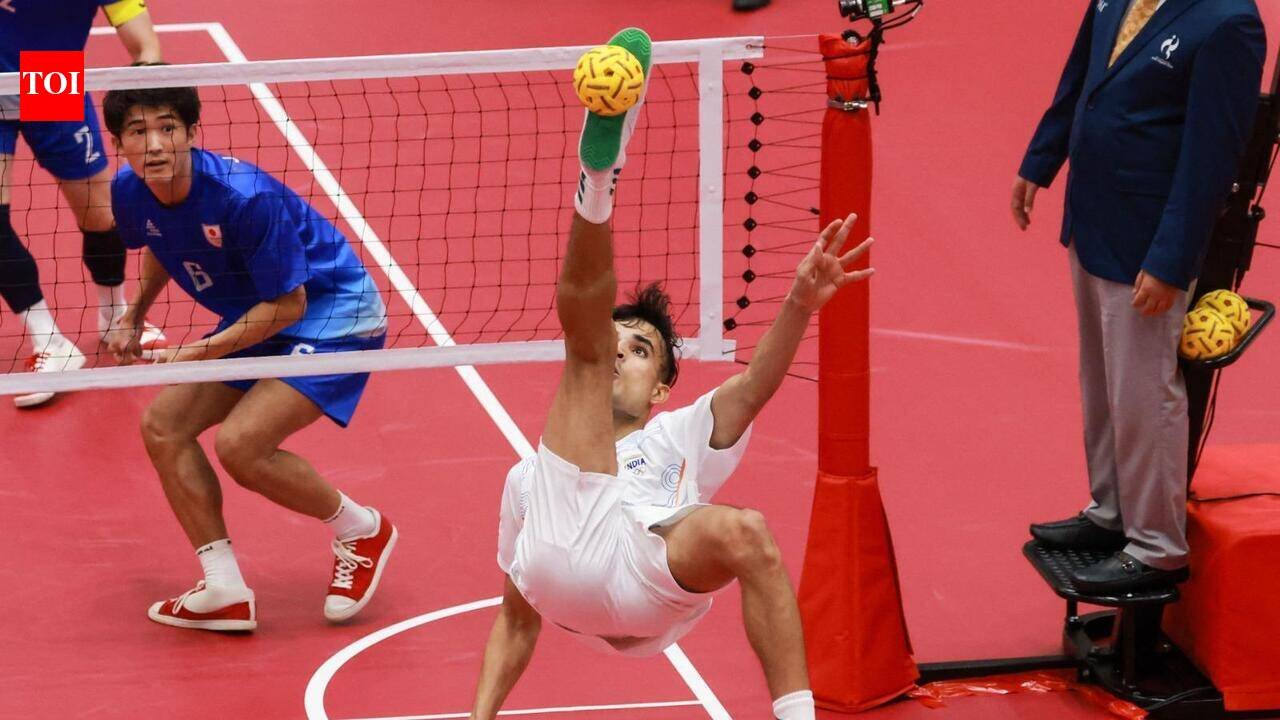
Patna: For Manju Devi, the early mornings once meant quietly helping her son slip out for training. Today, those 5am departures have taken Bobby Kumar to Japan, where the 21-year-old from Patna on Thursday assured India of a medal in sepak takraw at the Asian Games.It was, in fact, proving to be a fruitful Games edition for Bihar as Bobby was joined by cricket stars Ishan Kishan and Vaibhav Sooryavanshi as the two other athletes from the state who have confirmed a podium finish in Japan.The Indian cricket team booked a final against Pakistan by beating Sri Lanka in the semifinals while the Indian men’s quadrant team in sepak takraw secured a place in the last four and an assured medal.However, for a middle-class family in Kankarbagh, Patna, Bobby’s journey began not with an elite academy but at a small neighbourhood park, where he and his elder brother Sunny started playing. Sepak takraw — a little-known sport in which players use their feet, head and body to return a ball over a net — caught Bobby’s attention when he was around 12.“He loved being outdoors and sports in general. Whatever he does, he puts in all his effort,” said his younger sister Isha Kumari.Coach Karunesh Kumar, secretary of All Bihar Sepak Takraw Association, has trained Bobby for 13 years. He said the sport’s limited popularity meant the early training happened in a small park in Kankarbagh. Bobby gradually moved from local competitions to national camps and, over the past five years, has been part of the Indian setup.“He is young, full of energy, disciplined, dedicated and positive,” Karunesh said.However, the family’s support, particularly that from Manju, remained central. Bobby would leave early for practice, sometimes despite his father’s initial disapproval.“We wanted our son to excel in whatever he did. Coming from a middle-class background, I always supported him,” she said. Her husband, Dharmendar Upadhyay, coming from a village in Chhapra, wanted his children to focus only on studies but eventually became supportive.Dharmendar said he didn’t even know any sport called sepak takraw and was very sceptical, but Bobby’s progress and dedication won him over.There was no special diet or elaborate sports regimen at home. “He grew up eating dal-chawal, sabzi and roti. It was all home food,” Manju said.Sunny, his elder brother, remembers the brothers training together before school. Even now, they train together whenever possible. “He never misses practice,” Sunny said.Bobby’s breakthrough came after a silver in Assam and selection for a junior national camp. He went on to establish himself in the national setup and represented India internationally multiple times. In 2025, he was part of the Indian team that won gold at ISTAF Sepak Takraw World Cup in Patna — India’s first men’s Regu gold at the event.The Asian Games, however, carry a different emotion for the family. Bobby had made it to India’s final camp for the previous Games but was not selected. This time, he made the squad and is now assured of a medal.For Isha, watching him play before unfamiliar faces in a stadium in Japan is difficult to put into words.“Seeing your brother play on a national and international stage is a different feeling. When strangers in the stadium cheer for him, it makes you very proud,” she said.For his coach, the medal is also significant for Bihar, where the sport was once largely unknown. “Sepak takraw was very underrated. Now, after Bobby, more children will be inspired to play the sport in the state,” Karunesh said.And for Sunny, the journey has come full circle: two brothers who once trained together in a small park, with little idea where the sport could take them, now have one of them competing for India on the Asian stage.“He is living our dream,” Sunny added.


