



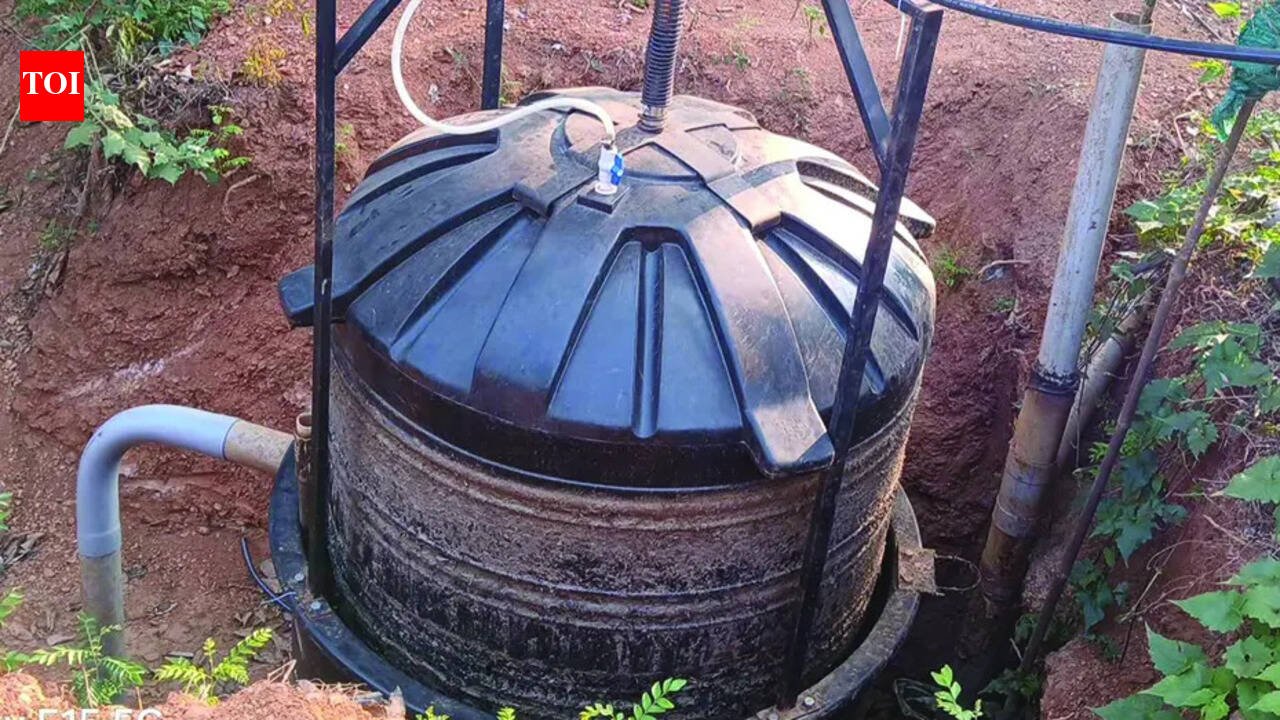
Panaji: What began as a routine application for a govt subsidy has, over the past year, evolved into a working example of how villages can adopt environment-friendly and cost-effective solutions to become self-reliant. In Valpoi and nearby villages of Sattari taluka, farmers are demonstrating how biogas can serve as the backbone of a model rural ecosystem.Valpoi-based farmer Vinod Barve, who applied for the biogas scheme with the directorate of agriculture last year, said he did not expect the system to become so crucial so soon. By the time his unit became operational in March, disruptions in LPG supply had begun affecting households.“For the last few weeks, we’ve been cooking entirely on biogas,” Barve told TOI.Barve said his family’s engagement with biogas goes back decades. “My father installed one of the first biogas plants in Goa in 1984,” he said. “With improved design and materials, today’s units deliver much better output.”Barve is among 40 farmers who have installed prefabricated biogas units under a directorate of agriculture scheme.Made from durable polymer material similar to water storage tanks, the installations are supported with a 90% subsidy, while repairs after six years attract a 20% subsidy—making the system affordable even for small and marginal farmers.Another farmer said the prefabricated units are both efficient and easy to install. “Each plant has a capacity of three cubic metres, enough for a family of up to eight. The design prevents leakage and ensures consistent gas production,” he said.Sattari zonal agricultural officer Vishwanath Gawas said the scheme also promotes community participation, a key feature of a model village approach. “The units are sourced in batches from outside the state, so a minimum of nine farmers must opt in together. This group participation makes transport and installation efficient,” Gawas said.Beyond clean cooking fuel, the biogas plants are reinforcing organic farming practices. “The slurry is weed-free and improves soil structure and fertility,” Gawas said. “Methane is efficiently processed, leaving behind high-quality organic manure, which supports sustainable agriculture.”Officials say this integrated system—where cattle waste produces energy and fertiliser—shows how villages can close resource loops and minimise waste.Officials say the economic advantage over LPG is significant. A rural household typically consumes one LPG cylinder every four to six weeks, costing close to Rs 900 per refill. Over a year, this amounts to Rs 10,000-Rs 12,000 in fuel expenses. In contrast, once a subsidised biogas plant is installed, households incur little recurring cost, relying primarily on cattle dung that is readily available on farms.“After installation, the running cost is almost zero,” said an official. “The farmers can save thousands of rupees annually, and they won’t be affected by price hikes or supply disruptions.”


