






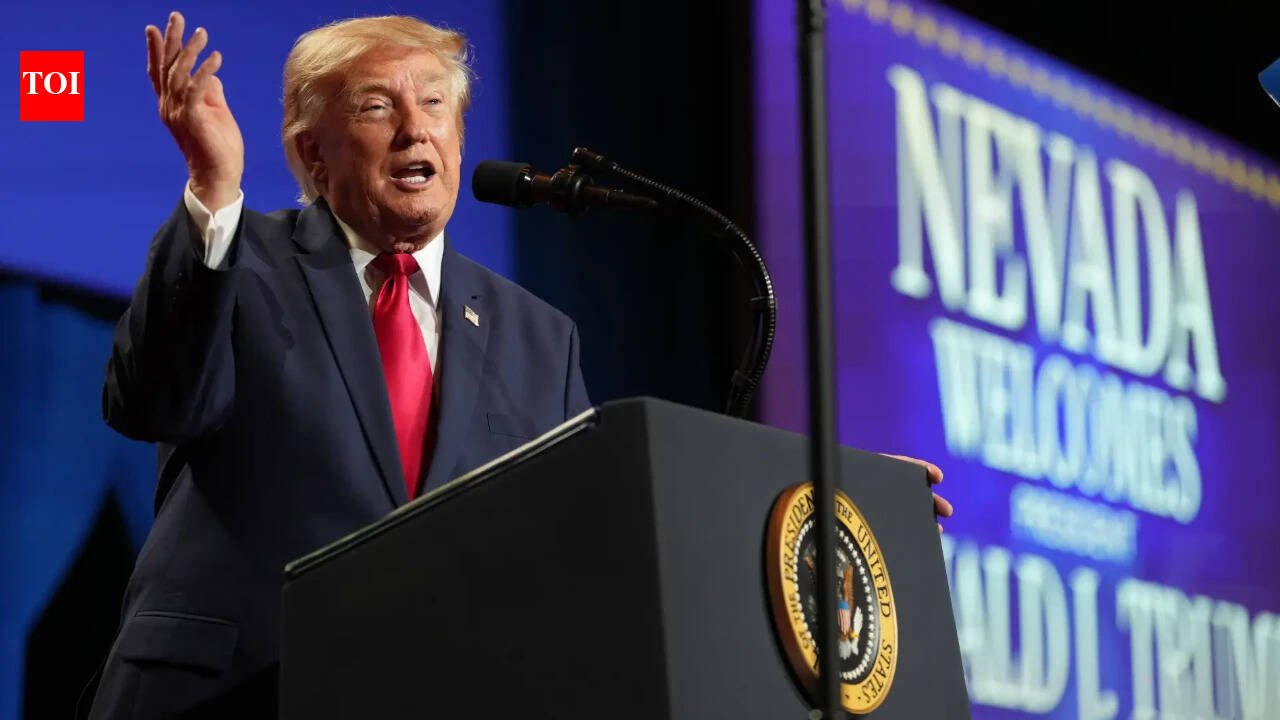
US President Donald Trump said that the United States was on the verge of launching what he described as the “biggest attack since World War II” on Iran before Tehran reached out to seek talks. He claimed that the prospect of a massive military strike pushed Iran back to the negotiating table.Speaking at an event in Las Vegas on Wednesday, Trump said Iranian officials contacted him just before the planned operation. “They called me and they said, ‘Please don’t do it, let’s talk,'” Trump told supporters, presenting the outreach as a result of sustained US military pressure.Trump maintained that while he remains open to diplomacy, Washington’s position on Iran’s nuclear ambitions has not changed. “I’d rather make a deal because I don’t want to kill people,” he said. “But Iran cannot have a nuclear weapon.”His remarks came as the Trump administration signalled that negotiations over reopening the Strait of Hormuz were nearing a breakthrough. Trump said on Tuesday that “a lot of progress” had been made and suggested an agreement could be announced “tomorrow or the next day”.Iran also indicated that talks were advancing. Foreign Ministry spokesperson Esmail Baghaei said Tehran and Oman were in the “final stage” of drafting an agreement on the strategically vital waterway and that a joint statement could follow if “certain parties do not obstruct this process”.According to regional officials cited by the Associated Press, Iranian and Omani negotiators have finalised a draft agreement and are awaiting approval from Iran’s Supreme Leader Ayatollah Mojtaba Khamenei. The proposed deal is reportedly intended as a temporary arrangement that could pave the way for renewed US-Iran nuclear negotiations.However, major differences remain. Iran has insisted on retaining a degree of control over the Strait of Hormuz, while the US has rejected any agreement that would allow Tehran to charge transit fees or strengthen its hold over one of the world’s most important energy corridors.The waterway has remained at the centre of the conflict since the war began on February 28, with disruptions to shipping sending oil prices higher and putting pressure on the global economy. Around a fifth of the world’s traded oil and natural gas previously passed through the strait.Despite the diplomatic momentum, tensions across the region remain high. Iranian-backed Houthi rebels claimed fresh missile attacks on Saudi-linked shipping in the Red Sea, while fighting also threatened to flare again along the Israel-Lebanon border, underscoring the fragile security situation even as negotiations continue.


