


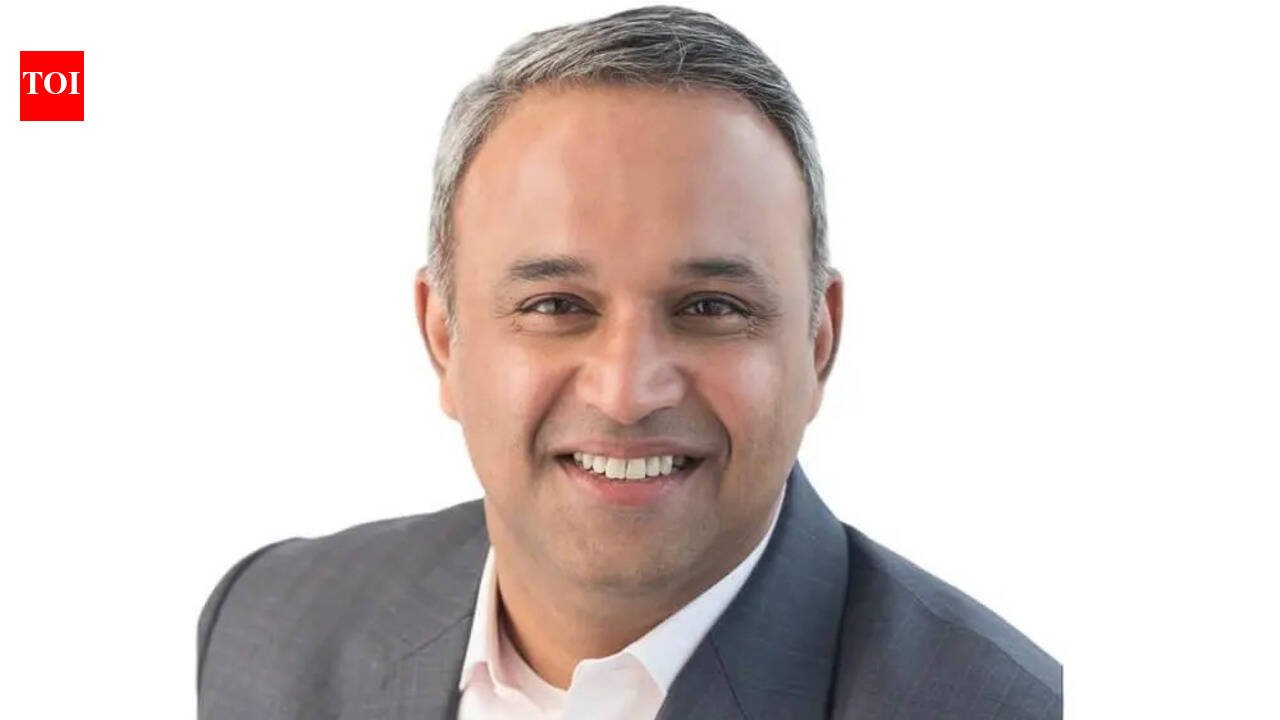
Bengaluru: Enterprise software company Workday is sharpening its focus on AI-led capabilities, expanding its strategy beyond its traditional HR and finance offerings. “Today, we are talking about Workday as an enterprise AI platform for managing people, money and agents,” Workday India president Sunil Jose said.Discussing Workday’s AI strategy, Jose said the company is embedding AI directly into enterprise workflows rather than treating it as an overlay. He said enterprises are moving beyond experimentation and entering an “agentic enterprise” era, where AI systems can execute tasks and workflows rather than simply assist users. “We’re moving from chatbots to resolution agents,” Jose said.While much of the AI conversation today revolves around conversational interfaces and copilots, Jose argued that enterprise applications require a different approach centered on accuracy and governance. “Businesses don’t run on possibilities. They run on approvals, records, reconciliations, policies and processes every single time,” he said.He stressed that enterprise software requires deterministic outcomes rather than probabilistic ones. “A payroll cannot be mostly right. If a 10,000-employee organization says payroll is 90% accurate, that means 1,000 people may not receive the correct salaries,” Jose said.According to Jose, many enterprises struggle to realize returns on AI investments because AI tools often operate outside core workflows. “AI tools often fail to deliver enterprise-grade accuracy because they don’t share the same data, compliance context or business rules as core systems,” he said.With Workday cofounder Aneel Bhusri returning as chief executive officer, the company is doubling down on its AI roadmap. Its AI assistant, Sana Core, integrates conversational AI directly into Workday, enabling employees to access information and complete tasks through Workday agents. Rather than functioning as an add-on tool, Sana is designed to automate HR and finance workflows while operating within existing organizational policies and security frameworks.Sana Enterprise extends these capabilities beyond Workday by connecting enterprise applications, enabling employees to create agents and automate workflows through a unified interface.The company is also expanding rapidly in India. Workday’s India workforce has grown from around 500 employees last year to 1,300 currently, reflecting broader investments in product development, customer support and go-to-market operations.Jose said India has evolved into a strategic hub beyond local operations. Globally, Workday serves more than 11,500 customers and over 75 million users, while it has around 1,800 customers in India.Looking ahead, Workday sees humans and AI systems increasingly working alongside each other. “We truly believe enterprises of the future will be powered by people and agents,” Jose said. “Routine work fits into the background so employees can focus on high-value decisions, relationships and innovation.”Workday projected total revenue between $10.64 billion and $10.66 billion in 2027, representing year-over-year growth of 11% to 12%.
