



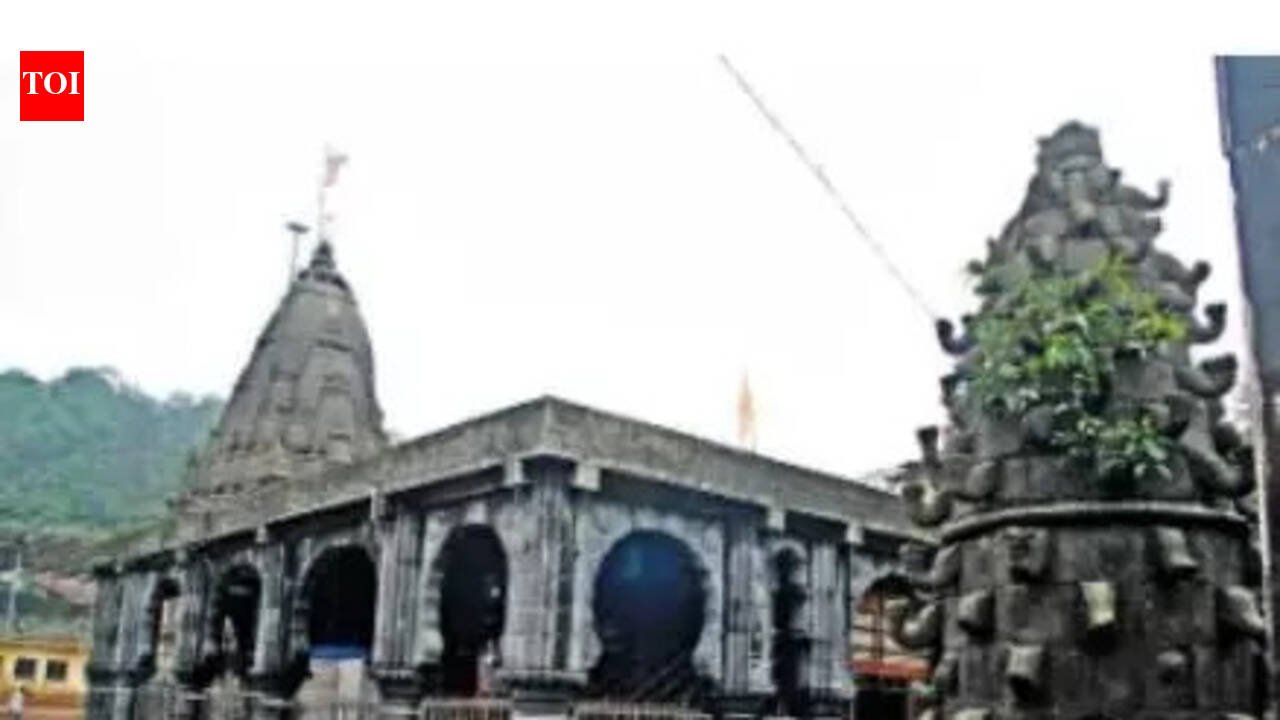
Pune: Rehabilitation of families around the Bhimashankar temple, one of the 12 jyotirlings, and decongestion of the shrine precinct to ensure better crowd management form the core of the Bhimashankar Development and Comprehensive Rehabilitation Policy presented by Pune collector Jitendra Dudi before the planning department secretary on Tuesday in Mumbai.The project put forth by Collector is expected to be executed in four phases over 18 months, starting with land acquisition and approvals, followed by infrastructure development, construction of around 120 homes, and phased relocation of families along with clearance of the temple precinctThe proposal will now be placed before the high power committee under the chief secretary and later the apex committee chaired by chief minister Devendra Fadnavis for final approval.Speaking to TOI after the meeting, Dudi said the plan aims to decongest the temple precinct and rehabilitate local families while preserving the ecology around the area. “We will be carrying out the entire process in coordination with the local villagers,”he told TOI after meeting.The proposal envisages rehabilitation of 100 to 125 families from the densely populated temple vicinity to a 36-acre site near the main village square area, with 18 to 20 acres proposed for acquisition at an estimated Rs 33.06 crore as per 2024 ready reckoner rates.“The rehabilitation of the entire village is a decision to ensure the success of the Bhimashankar development and crowd management scheme and it is being done with the support of the people ,” Dudi added.Currently, only about 150 tourists can be accommodated comfortably, while around 2,000 devotees crowd the temple steps, leading to congestion and safety concerns. The plan proposes to free up 5,800 sq m of space and expand the temple premises to accommodate 20,000 to 25,000 devotees at a time especially ahead of the Simhastha Kumbh Mela next year.“The project will significantly improve crowd management, emergency movement and overall devotee experience while protecting the ecological balance of the sanctuary,” Dudi said.The proposed settlement will include 500 sq ft houses for 80% families and 1,000 sq ft houses for 20% families, along with shops and service centres linked to temple tourism, community building, primary health centre, primary school and open civic spaces. Commercial spaces in the temple area are proposed to be reserved for rehabilitated families to ensure economic stability and local cooperation.The policy also provides for holding areas, queue corridors, open spaces and emergency routes in the temple precinct after relocation, enabling smoother darshan and safer movement of devotees.The new heritage smart village will feature solar street lighting, underground cabling with zero overhead wires, rainwater harvesting, sewage treatment plant with zero liquid discharge, herbal gardens and civic infrastructure, designed with a circular layout and central community space to create a self-sustaining settlement.Officials said the project is expected to serve as a model for sustainable development and heritage preservation at religious sites, balancing spiritual tourism, environmental conservation and local development.


