


In 1998, Tamil director Mani Ratnam sent his Hindi musical Dil Se… in an “international cut” version without the songs to the Berlin International Film Festival. Juror and British critic Derek Malcolm exclaimed, in mock horror, to the then South Asia programming delegate Meenakshi Shedde that it is the songs that they want in Indian cinema, that the song picturisation sets it apart. In 2000 came Sanjay Leela Bhansali’s Hum Dil De Chuke Sanam. Both these very mainstream films were shown in the ‘experimental films’ segment: International Forum of New Cinema. Berlinale began in 1951, shaped by the politics of the Cold War and West Berlin’s positioning as a cultural outpost of the “free world”. Early editions veered towards Hollywood films. Former curator at Berlinale, Dorothee Wenner, told Shedde that “Indian cinema is one of the very few cinemas that has successfully resisted Hollywood domination.”
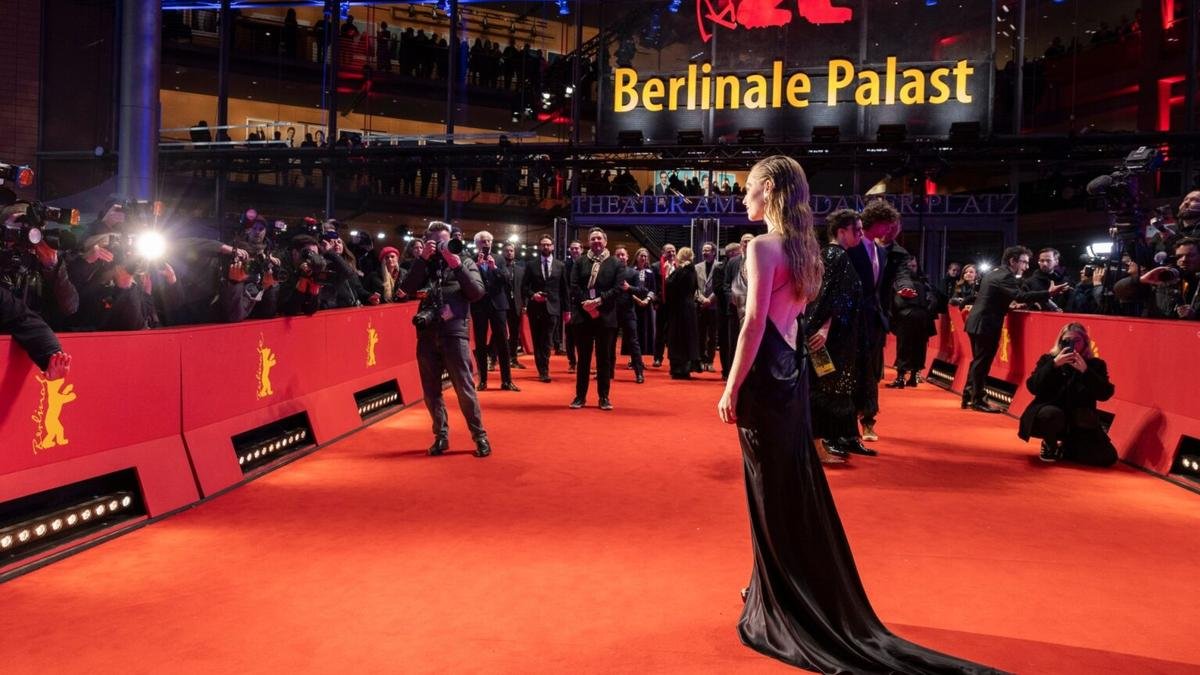
From then to now, South Asia’s independent voices have been popping up across all sections of the festival. Come February 12, for 10 days, the red carpet is set to be rolled out, welcoming the cinema world to the 76th Berlin International Film Festival. Among a line-up from around the world is also a spotlight on the pulsating and often overlooked narratives of South Asia, including the first-ever Pakistani film — produced fully in its home country — to make its festival debut in the Panorama segment this year: Sarmad Khoosat’s Lali.
Festival director Tricia Tuttle opens the Berlinale with No Good Men, by the brilliant Afghan filmmaker Shahrbanoo Sadat, who was born in Iran and lives in exile in Germany. Over a Zoom call, she says, “We are really proud and excited to be opening with the Afghan film No Good Men. We also have the first Nepalese filmmaker [Min Bahadur Bham] in our official jury, along with an Indian filmmaker, festival director and archivist [Shaunak Sen; Saagar Gupta; and Shivendra Singh Dungarpur respectively]. It shows our interest in South Asian cinema. We really want to open our perspectives and strengthen our networks at the festival.” There’s also Assamese filmmaker Rima Das’s Not a Hero, her third outing at the festival. Booker Prize-winning author Arundhati Roy’s first ever film, In Which Annie Gives It Those Ones (1989), is in the festival Classics. And there are seven Indian Talents this year, among others.
Berlinale festival director Tricia Tuttle.
| Photo Credit:
Udall Evans
Meenakshi Shedde, the former South Asia programming delegate at Berlin International FIlm Festival.
New frontiers
Tuttle, who was the director of the BFI London and BFI Flare LGBTQ+ Film Festivals, took charge of Berlinale in the last edition. She “rebuilt the programme team to a certain extent” and brought in the Perspectives first-feature competition. “We’ve always given awards to first features, but I wanted to bring it into a competition so that we can shine a spotlight on new filmmakers and really foreground one of the things that’s very important and has been important to the Berlinale, which is about renewal and supporting the next generation of filmmakers and film-goers,” she says. Tanushree Das and Saumyananda Sahi’s Tillotama Shome-starrer, Baksho Bondi / Shadowbox, was shown in Perspectives last year.
This year, they received 8,000 submissions. Tuttle adds, “ We want our programme to be a snapshot of filmmaking from all over the world. Our programme of 280 films reflects that diversity. We had 340,000 admissions last year. We are also one of the biggest marketplaces in the world, with the Berlinale Pro activities and the European Film Market; almost 20,000 professionals are accredited.”
Between 2007 and 2025, 88 Indian films have been showcased at Berlinale, with four-five films on average each year. In 2025, Berlinale showcased 14 South Asian/diaspora films and Talents, and 19 in 2024. Last year, Bham’s exquisite Shambhala — made despite Nepal’s meagre resources — became the first South Asian film in the Berlinale’s main Competition. It was “a historic milestone and a slap in the face of Indian cinema (the largest annual film producer in the region),” quips Shedde, National Award-winning critic, and the former South Asia programming delegate at the festival, who has bowed out after 27 years (Programmer-producer Anu Rangachar steps into that role). Delegates work pre-selection, bringing film recommendations from their regions for consideration to the festival programmers, with whom rests the final selection. The task is to tread the slippery slope of “loving your region’s cinema and perceiving how a Western programmer might see it.”
Nepali filmmaker Min Bahadur Bham (right) is part of the Berlinale international jury this year; a still from his film Shambhala, which was in main Competition last year.
An eye on South Asia
In 1973, Satyajit Ray’s Ashani Sanket (Distant Thunder) won the Golden Bear, the festival’s top prize, marking the first (and, so far, only) time an Indian film bagged this award at Berlin. Filmmaker Wim Wenders — who is the chair of the international jury this year at the 76th Berlinale — recalled in interviews about meeting with Ray and his impact on world cinema.
Over the years, South Asian cinema has risen the festival ladder. “We [South Asia] produce about 4,000 feature films a year (17,000 total films if you include shorts; with India being the largest contributor). Hollywood makes only about 700 features. We make eight times as many films as Hollywood. Furthermore, we make films in 55 languages and dialects, which is double the linguistic diversity of the entire European Union (EU),” says Shedde.
The region keeps shifting and expanding. There’s no fixed idea of what South Asia should look like on screen. Rangachar, who’s been a MAMI Mumbai Film Festival programmer since 2009, adds, “ The work coming out of South Asia stands shoulder to shoulder with contemporary world cinema. There is a strong sense of authorship, a deep grounding in place and social reality and a growing comfort with diverse genres. The themes are often rooted in lived experience and ask bigger questions around identity, migration, labour, caste, gender and ecology. What’s exciting is how varied the cinematic language has become. South Asian plurality makes the moment vital.”
Tuttle has a deep interest in South Asia and travelled to India last year. “Across all of our activities, there’s much more depth and breadth from South Asia represented. The region is so overwhelmingly vast. India, in particular, has one of the most vibrant film-producing cultures and traditions in the world,” she says, “As an international festival, we can only represent the tiniest glimpse of that for our audiences. Here, I wish there was more space, but I was really struck by how diverse the filmmaking community is. I loved being there and I came back and raved about going to Mumbai and then going to Goa to the [IFFI] Film Bazaar. The filmmakers I met are so interesting, engaged and creative. There’s a lot of diversity of style, perspective and, obviously, language.”
Road ahead
If South Asia, with one-fourth of the global population, stops its political infighting and comes together creatively (aka co-productions) as one strong entity, much like the EU, it will have just as many stories to tell and show the West what diverse, inclusive storytelling the developing world can offer. Pakistan’s Cannes-winning and Oscar-shortlisted Saim Sadiq’s Joyland (2022) is an example, for it has been co-produced by Indian-origin Apoorva Guru Charan. The 2023 Berlinale Talent and LA-based producer-screenwriter is a Sundance-winning co-producer of Liz Sargent’s engaging Take Me Home [in Perspectives segment], about an American couple who adopt a Korean child with disabilities.
Anu Rangachar, South Asia delegate, Berlinale 2026.
In India and South Asia, the festival isn’t as popular as, say, Cannes. Does a Berlinale premiere bring in easy distribution? Rangachar says, “I’m glad this question comes up, because circulation and distribution are still widely misunderstood. Distribution doesn’t always begin at a market or a festival premiere. It begins much earlier. One of the structural challenges for South Asian independent cinema is the lack of a sustained arthouse distribution system at home. There’s very little institutional support and no consistent theatrical circuit for independent films (unlike, say, in the EU).” She adds that this gap is compounded by the fact that OTT platforms in India are largely agnostic to festival premieres. “A Berlinale premiere and the EFM work best when it’s engaged with early, as a space to deepen conversations already underway. Avinash Arun’s Killa, Pushpendra Singh’s The Shepherdess and the Seven Songs, and Shambhala have benefited from that ecosystem. Strong producers are crucial, but filmmakers today need to think beyond completing the film by engaging with markets early and understanding how sales and visibility work. Rather than seeing Berlinale as an endpoint, it’s more useful to see it as part of a longer journey,” Rangachar concludes.
Published – February 10, 2026 07:22 pm IST


