


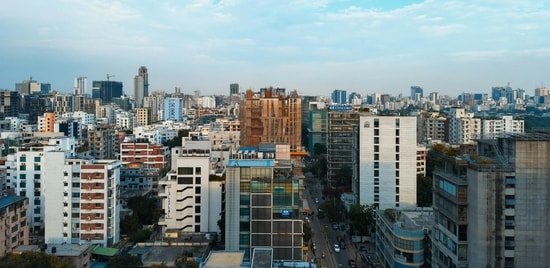
Is the ₹1 crore ‘dream home’ in Bengaluru now a myth? Increasingly, a ₹1 crore home is no longer seen as ‘premium’ but the new normal in the city’s property market. Buyers, said a personal finance expert, Nitin Kaushik, are no longer paying extra for luxury finishes such as marble flooring. Instead, they are willing to pay for a shorter, stress-free commute, often a 15-minute drive to work. “Time is the new currency,” he noted, adding that proximity to office hubs has become a decisive factor in home-buying decisions.


“If you’re buying to live in the house, stop trying to ‘time’ the market,” Kaushik wrote. “Focus on infrastructure, water security and proximity to your workplace.”
In a post on X, Kaushik noted that Bengaluru’s residential market has structurally reset. He argued that buyers waiting for prices to “cool off” to earlier levels may be misreading the new ground reality.
“Is the ₹1 crore ‘Dream Home’ in Bengaluru officially a myth? The ₹1 Cr house isn’t ‘premium’ anymore, it’s the new normal. If you’ve been sitting on the sidelines waiting for prices to ‘cool down’ to where they were a few years ago, you might want to look at these numbers,” Kaushik said on X.
According to him, a few years ago, a ₹1 crore budget was firmly associated with luxury housing. Today, it barely covers a standard 2BHK in IT corridor areas such as Whitefield or Sarjapur Road. In prime IT corridors, quoted rates range from ₹10,000 to ₹15,000 per sq ft.
“Do the math on a standard 3BHK – you’re looking at ₹1.5 Cr to ₹2 Cr before you even think about interiors. Even the “affordable” pockets near the airport or far North Bengaluru are now touching ₹7,000+ per sq ft,” he said.
Why prices aren’t coming down
Kaushik noted that the surge is not driven by speculation alone but by changes in how buyers value homes. “It’s easy to blame builders, but there’s a deeper shift in how we’re living,” he said.
According to him, homebuyers are increasingly “buying life, not just square feet,” as long daily commutes take a toll on quality of living.
“Many are no longer paying a premium for luxury finishes like marble flooring, but for a shorter, stress-free commute, often a 15-minute drive to work. TIME is the new currency,” he said, noting that the proximity to offices has become a decisive factor in purchase decisions.
Safety and execution certainty have also taken precedence. After years of project delays, Kaushik said that buyers are increasingly willing to pay 15–20% more for projects by established developers, valuing delivery assurance over lower prices.
Rising rents are adding further pressure. “When a 2BHK rent hits ₹45,000, the ‘Rent vs EMI’ debate ends.
People are jumping into EMIs because the rent is starting to hurt just as much. Bengaluru isn’t becoming the next Mumbai; it’s carving its own path. The middle class is being pushed further and further out,” he said.
“If you’re buying to live in it, stop trying to ‘time’ the market. Look for infrastructure, look for water security, and look for proximity to your work,” Kaushik wrote.
Where the ₹1-crore budget still works
Finding a ₹1-crore apartment in Bengaluru is no longer about prime pin codes but about timing and location. Real estate brokers say buyers at this price point must shift focus to the city’s fast-expanding outskirts, where infrastructure is still catching up but supply remains relatively affordable.
Southern corridors like Kanakapura Road, northern belts such as Devanahalli and Doddaballapur Road, and eastern extensions beyond Varthur are emerging as realistic choices for budget-conscious end users.
Developers continue to test demand in these pockets with smaller-ticket launches, often within integrated or township-style developments that offset distance with amenities. Projects like Brigade Orchards in North Bengaluru, for instance, are offering select 2 BHK configurations at or below the ₹1-crore mark, real estate experts pointed out.
Brokers, however, warn that such price-led opportunities are confined largely to the city’s outer edges. In established neighbourhoods like Indiranagar, Koramangala, JP Nagar, and other central business areas, new apartment launches are priced at ₹2 crore and above, even for smaller 2BHK homes. Within the city, sub- ₹1 crore options do exist, but they are almost entirely restricted to the resale market and often involve clear trade-offs.
“Inside the city, one can get resale units for around ₹1 crore, but buyers must be prepared to compromise on the age of the building and, in many cases, the quality of construction,” Kiran Kumar of Hanu Reddy Realty said. “A 30-year-old apartment in Indiranagar, for instance, might fall within this price bracket, but it may not include essential features such as dedicated car parking and will lack the common amenities, clubhouse, gym, and security systems that modern apartment complexes offer.”
However, for the outskirts, daily commute times can be significantly higher, and supporting civic infrastructure, such as wider approach roads, reliable water supply, public transport connectivity, and social infrastructure like schools and hospitals, is still evolving in many of these pockets, Kumar said.


