


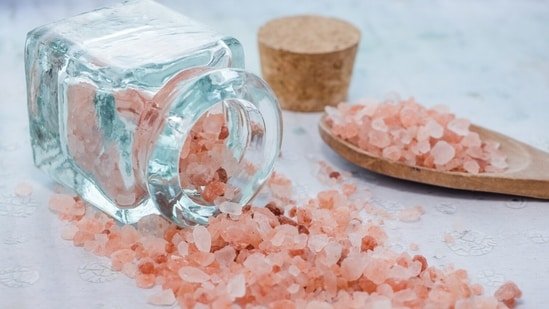
With people becoming more health-conscious, they are taking a closer look at their dietary choices and opting for supposedly healthier alternatives that promise more nutrients. Table salt is increasingly being replaced by pink salt for its perceived mineral content, but this common misconception and oversight may come at a cost to your health.
Bengaluru-based fitness coach Ralston D’Souza recently brought this concern to light in his latest post on February 20, cautioning against the growing habit of replacing iodised salt with non-iodised varieties for everyday use.
Not enough mineral content
Pink salt is chosen for its perceived mineral content, but this switch may be misguided. The coach pointed out that the trace minerals in pink salt exist in negligible amounts, and to gain any meaningful benefit from them, one would need to consume unrealistically large quantities, which is neither practical nor healthy.
As a result, the advantage people associate with pink salt is predominantly smart marketing rather than actual scientific value. Relying on it as a ‘healthier; altenative may also create a false sense of nutritional security, that you are getting more of the minerals, but actually it replaces one of the essential components required for supporting thyroid health: iodine. The other obvious disadvantage is the price, as pink salt is double the price.
The iodine crisis
Because of the growing popularity of fancy salts, concerns about iodine deficiency are resurfacing, which may be contributing to a rise in thyroid-related cases.
The coach alarmed, “Regular table salt is iodised to prevent iodine deficiency disorders. In the 1960s, iodine deficiency was a serious public health problem. It caused thyroid dysfunction, pregnancy complications and impaired brain development in children.”
It reminds us that iodised salt is not just a basic kitchen staple, but a major public health intervention. The coach noted that in India, the iodisation of regular salt was made mandatory, and cases of iodine deficiency significantly declined after the universal iodisation of salt began in the 1960s.
These mineral salts may cater to different dietary preferences, and with the surge of various diet trends, they may seem appealing. However, completely replacing iodised salt with sea salt, pink salt, or other non-iodised varieties may unintentionally lower iodine intake. Iodine plays a key role in supporting thyroid function and helping reduce the risk of thyroid disorders.
For better practicality purposes, iodised salt makes more sense, as it is affordable, widely available and nutritionally reliable.
Note to readers: This report is based on user-generated content from social media. HT.com has not independently verified the claims and does not endorse them.


