



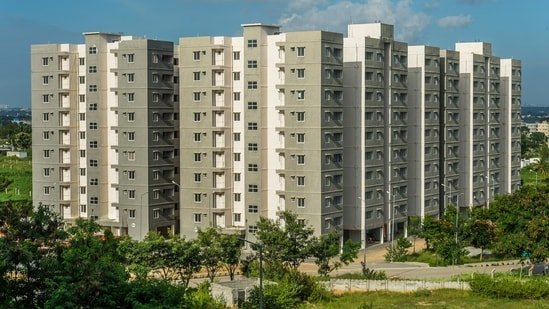
The Karnataka Real Estate Appellate Tribunal (KREAT) dismissed an appeal filed by the Bangalore Development Authority (BDA) and upheld an order from the Karnataka Real Estate Regulatory Authority (KRERA) that classified BDA as a ‘promoter’. KREAT ruled that the authority qualifies as a promoter because it develops and sells plots or buildings to the public and must therefore comply with the provisions of the Real Estate (Regulation and Development) Act, 2016.


Upholding the KRERA order, KREAT also directed the authority to register the Nadaprabhu Kempegowda Layout (NPKL) project under the RERA Act.
“The appeal filed by BDA under Section 44 of the RERA Act is hereby dismissed at the stage of admission, holding that the provisions of the RERA Act are squarely applicable to it,” the order dated March 3 said.
BDA appeals against the KRERA order
Earlier, BDA sought exemption from the provisions of the Real Estate (Regulation and Development) Act, 2016, in a plea made before KRERA.
It argued that the BDA Act is a self-contained legal framework that has been repeatedly upheld by the Supreme Court, and that the RERA Act therefore does not apply to its projects or complaints. The planning authority insisted that it cannot be treated as a ‘promoter’ under Section 2 of RERA, since its role is that of a statutory planning and development body, not a commercial developer.
However, in November 2025, KRERA ruled that BDA qualifies as a ‘promoter’ under the state’s RERA Act. The authority had also directed the BDA to register its Nadaprabhu Kempegowda Layout project, which has been under development since 2014, and to upload all relevant documents, including layout plans and approvals.
BDA had appealed against the order on the grounds that “BDA is a Planning Authority and therefore does not fall within the definition of the term Promoter under Section 2(zk)(iii). The RERA Authority has failed to appreciate the distinction between a Development Authority and a Planning Authority, such as the BDA. Therefore, it cannot be treated as a Promoter in the normal sense of the term.”
“The RERA Authority has failed to appreciate the fact that Nadaprabhu Kempegowda Layout was conceived and land for the same was acquired well before the RERA Act and as such, the scheme does not fall under the purview of the RERA Act,” the tribunal order mentioned.
“Various Rules and Regulations were framed by the BDA Act, 1976, to regulate its procedures, which make it clear that the BDA is a statutory authority regulated by its own Act and Rules and hence has to be excluded from applicability of the provisions of the RERA Act, 2016,” it further said.
Tribunal upholds KRERA order
The KRERA tribunal rejected BDA’s arguments, observing that the definition of “promoter” under the RERA Act includes development authorities and public bodies that construct buildings or develop plots for sale.
“We are of the considered view that the definition of promoter in RERA Act is an inclusive definition and explicitly includes the Development Authority, and other Public bodies in respect of plots as well as apartments developed by such Authority or body on lands owned by them, or placed at their disposal by the Government, for the purpose of selling all or some of the apartments or plots to the Allottees,” the order said.
The definition applies uniformly to all developers, whether in the private or public sector, with the objective of ensuring accountability and improving transparency across the real estate sector, it said.
KREAT further said that, in the case of private developers, the relationship between the allottee and the promoter is governed by legally binding agreements, such as the agreement of sale or construction agreement, which specify the project completion timeline and the compensation payable in case of delays.
Similarly, the BDA enters into lease-cum-sale agreements with allottees, and both parties are required to comply with the terms related to possession timelines and other conditions outlined in these agreements. “These conditions have to be complied with mutually and reciprocally by both the BDA and the allottees,” the order said.
“However, insofar as the applicability of RERA enactment is concerned, BDA is equally required to follow all the Rules and Regulations with respect to issues such as registration of all projects with RERA under Section 3 of RERA Act, functions and duties of the Promoter under Section 11 (2), 18 of RERA Act,” it said.


