



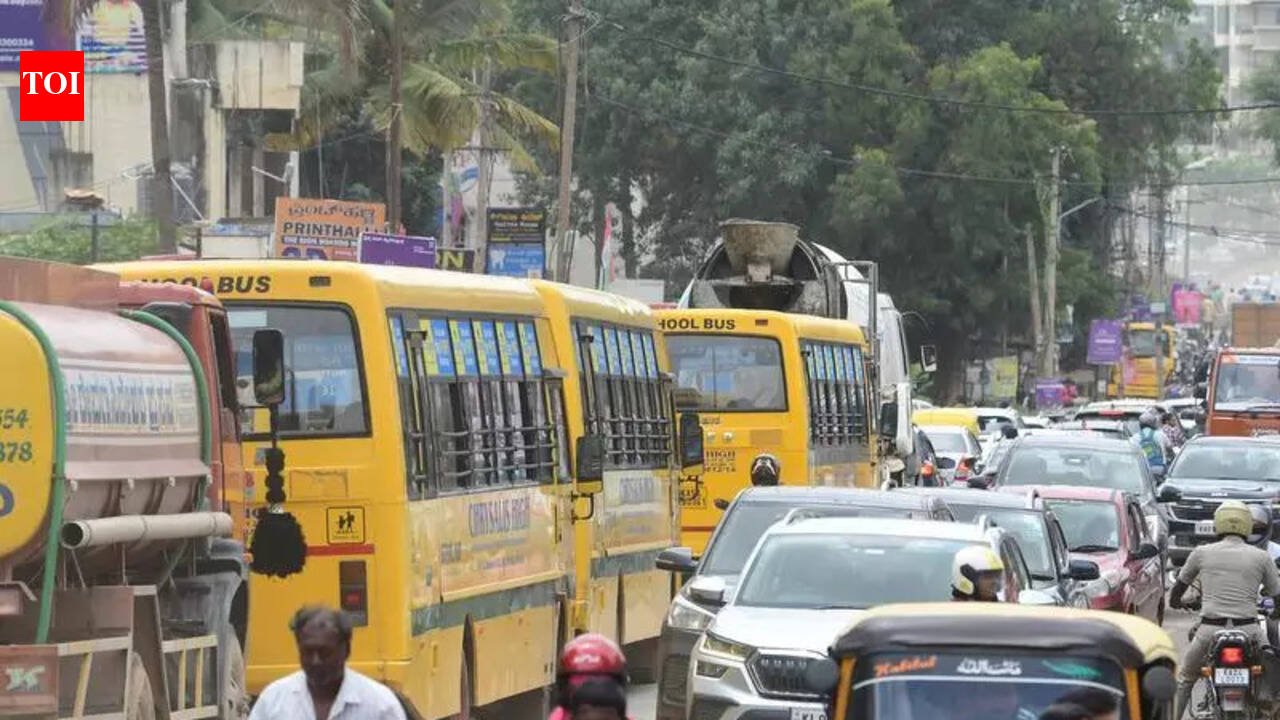
The stretch of state highway-35 between Varthur and Gunjur is, by most accounts, a daily ordeal. Thousands of IT professionals inch towards Outer Ring Road (ORR) and Whitefield each morning through a narrow carriageway that has not kept pace with the apartment towers that now line it on both sides. The Bengaluru East City Corporation’s (BECC) 2026-27 budget carries an ambitious answer: a Rs 150-crore elevated corridor that would, for the first time, take this congested stretch off-grade.The proposed flyover extends approximately 1.5km beyond the structure currently under construction by the Karnataka Road Development Corporation Limited, which is building a 1.9km flyover from Varthur Kodi to Varthur near Vinayaka Theatre. BECC’s plan is to pick up where KRDCL leaves off — creating a seamless four-lane elevated corridor, 7.5 metres wide with a central median, that would run the full Varthur-to-Gunjur length. Funding will come through municipal bonds.Many deadlines missedThe logic is straightforward enough. This corridor has seen rapid, dense urbanisation over the past decade, with hundreds of high-rise residential layouts absorbing a large working population with almost nowhere to go but the same bottlenecked road. Once both stretches are complete, the corridor is expected to substantially reduce travel time and take pressure off one of the eastern belt’s most dysfunctional junctions.The caveat is just as straightforward. The KRDCL project — which includes road widening alongside the flyover — has been underway for over five years. Officials say side drain works are nearly complete and about 80% of land acquisition is done; a 2027 completion target has been set. For a project already delayed past multiple internal deadlines, that target carries its own uncertainty, and the BECC extension cannot begin until KRDCL finishes its portion. Coordination between agencies, residents say, has historically been the weakest link in Bengaluru’s infrastructure chain.The rest of the public works budget attempts to address East zone’s infrastructure deficit at scale. Arterial and sub-arterial road improvements across multiple divisions have been budgeted at Rs 298.1 crore — covering Marathahalli (Rs 30 crore), Doddanekundi (Rs 32.5 crore), Whitefield (Rs 17 crore), Ramamurthy Nagar (Rs 27.4 crore), and KR Pura (Rs 20.5 crore), among others. Road and drain maintenance across 50 wards gets Rs 112.5 crore; ward-level roads under the chief minister’s Infrastructure Development Programme draw Rs 50 crore.Pedestrian infrastructure — chronically neglected in this part of the city — receives notable attention. The budget earmarks Rs 160 crore for 9km of footpaths along Metro viaducts under the ORR Companies Association, alongside a stated target of 100km of footpath development across the zone. Special funds for ORRThe ORR’s long-term future is addressed separately, with Rs 450 crore from the state govt set aside for development of the Silk Board-to-KR Pura stretch — a corridor that functions as the spine of Bengaluru’s IT economy and regularly collapses under its own traffic weight.Taken together, the East corporation’s budget is among the most ambitious in the city’s recent civic history. Whether it translates into completed roads rather than announced ones is the question residents along SH-35 have learned, through years of waiting, not to answer too quickly.Free scooters lead welfare pushFree electric two-wheelers for working women and civic workers headline the welfare budget, which accounts for 7% of total spending (Central corporation has also announced a similar scheme). The Rs 221-crore social upliftment allocation covers housing subsidies of Rs 5 lakh for 1BHK units, free laptops for students from disadvantaged backgrounds, and fee reimbursements extending to overseas education — targeting SC/ST, backward class, minority, and other vulnerable groups.AI to hunt down defaultersEast corporation is deploying AI to close a long-standing revenue gap. A new system will cross-reference Bescom, BWSSB, trade licence, building plan, and e-Aasthi databases against the property tax network to identify defaulters and map unassessed properties — with the potential to generate an additional Rs 100 crore annually. A parallel AI-driven attendance system will monitor staff punctuality across the corporation.City gets 1st civic vet clinicsTwo dedicated veterinary clinics — a first for East corporation — will be established in 2026-27 to serve both small and large animals within city limits. An initial Rs 2 crore has been allocated to set up and maintain the facilities, expanding civic infrastructure to include animal healthcare.Rs 5cr sought, Rs 2.2cr grantedBengaluru MLAs had pushed for Rs 5 crore per ward at a pre-budget meeting chaired by DCM DK Shivakumar. The East corporation has settled at Rs 2.2 crore across all 50 wards — mirroring the Central corporation’s allocation — earmarked for road and drain development and maintenance. The gap between legislative expectation and budgetary reality leaves discussions on ward-level funding unresolved.WB money targets flood spotsRs 629 crore in World Bank-assisted funding is driving stormwater drain upgrades across the East corporation — Rs 540 crore in Mahadevapura and Rs 89 crore in KR Pura, across six work packages. Of 58 identified flood-prone areas, 38 have been addressed. Completed works include the Panathur drain and retaining walls along key stretches, with the remaining hotspots still under intervention.Citizens reactRK Misra | director, B-SmileThe budget largely feels like more of the same, about 60% is going into infrastructure, but there are no big transformative projects. The Varthur-Gunjur flyover extension is a good step, but it only makes sense once the existing KRDCL flyover is completed. The real need is improving basic infrastructure like drains and footpaths. Otherwise, issues like waterlogging and potholes will continue. The intent seems to be there, but execution and coordination remain the biggest concernsManas Das | president, Outer Ring Road Companies AssociationThe allocations are a step in the right direction, especially with the focus on easing traffic along key stretches like ORR and the Varthur-Gunjur corridor. However, the real test lies in execution. Employees are back in office, and their biggest concern is reducing commute time. If this money is spent well and projects are coordinated properly, it could significantly improve daily travel.Anjali Saini | resident of East corporationOn paper, the budget has many good initiatives, but the real issue is accountability and execution. There is no clear way to track whether the allocated funds actually translate into work on the ground. Without transparency, real-time monitoring, and fixing systemic issues like corruption and inefficiency, these allocations risk becoming just numbers on paper rather than meaningful improvements for the cityBalaji Raghotham | lake activistThey say lakes are being rejuvenated and more works are planned, but what is the point if sewage continues to flow into them? This is the biggest issue affecting most of our lakes. As volunteers, we do our best to protect these spaces and maintain the greenery, but without stopping sewage inflow, true rejuvenation is impossibleA Raghavendra | of Purva Palm Beach Owners AssociationRoads remain the biggest challenge, with several bottlenecks and poor coordination with GBA engineers. However, there has been an increase in streetlights, improving commuter and pedestrian safety. Stringent action to remove stormwater drain encroachments is welcome, and overall, we are satisfiedAjit S | of Whitefield RisingThe most important takeaway is the proposed public digital dashboard. It will make all the difference. Many of the projects announced are those carried over — promised before but not seen on the ground — and this is where real-time transparency and tracking can drive accountability. The urban design cell is a welcome step, though its mandate needs clarity


