



Last Updated:
While Bengal’s demographics worry the Centre, SIR may fix It, hopes the BJP
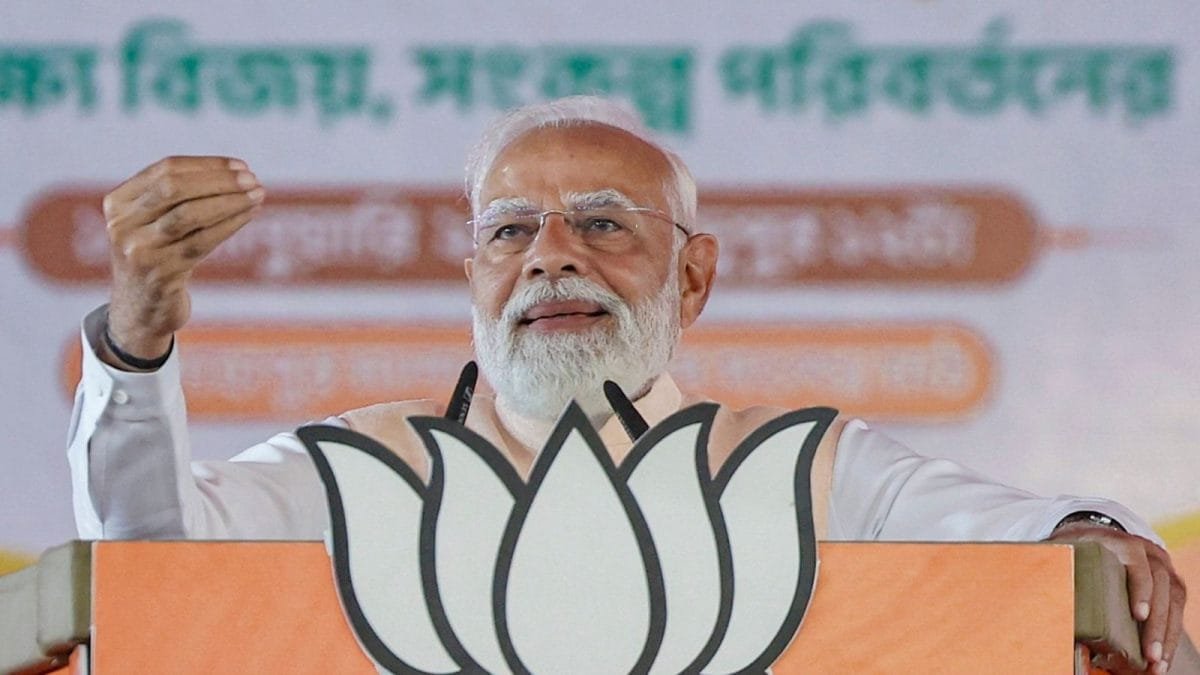
PM Narendra Modi addresses a public meeting in Malda district, West Bengal. (narendramodi.in via PTI)
This January, Prime Minister Narendra Modi was in West Bengal’s Malda, a district that has 51% Muslim population according to the 2011 census.
The neighbouring district is Murshidabad — Bengal’s highest Muslim concentrated district with 66% population following Islam. Both these districts share an international border with Bangladesh. Modi, addressing a crowd in Malda, said, “Infiltration is impacting local culture and language and riots in districts like Murshidabad and Malda are on the rise because of this. You have to break the nexus of infiltrators and those in office.” The Prime Minister claimed “demographic balance” was being “disturbed at a few places”.
This was not a one-off reference by the Prime Minister. Last year in October, while addressing the centenary celebrations of the Rashtriya Swayamsevak Sangh (RSS) in New Delhi, PM Modi said that the bigger challenge today comes from demographic changes undermining social equality. “There’s a conspiracy to change our demographics,” he had warned.
Bihar’s Seemanchal
In Bihar, there is a geographic and socio-political region in the northeastern part of the state bordering Nepal and Bangladesh consisting of four Muslim-dominated districts that have come to be known as Seemanchal. The word literally translates into bordering area.
Kishanganj, which has 65-70% Muslim population, Aararia, which has roughly 40-45%, Katihar, which boasts of having around 40% and Purnea, which has around 38% Muslim population, make up Seemanchal — Bihar’s most underdeveloped regions. Seemanchal has become significant in Bihar politics, especially with the rise of leaders like Asaduddin Owaisi and his AIMIM, which won five seats each time in the 2020 and 2025 assembly elections, indicating that the party has carved out a durable regional pocket of support, riding on Muslim votes.
Bengal’s Seemanchal?
Government sources say the Prime Minister’s repeated assertion about ‘demography’ and particularly singling out West Bengal, in Malda, comes from his concern. Will Bengal’s four top Muslim-dominated districts — Murshidabad, Malda, Uttar Dinajpur and Birbhum emerge as the state’s very own ‘Seemanchal’? Uttar Dinajpur has a 49-50% Muslim population, while Birbhum has 37%, according to the 2011 census.
Many of these districts have been facing problems, like last year, Murshidabad was rocked by communal attacks that killed three; in Malda’s Kaliachak mob violence in 2016 resulted in 30 police personnel being injured and the police building being damaged.
On last Independence Day, Prime Minister PM Modi announced a “high-powered demography mission” would deal with the “conspiracy” of irregular migration.
The SIR challenges
But with the Bengal election knocking on the door, this will be an often talked about issue. On his very first day of taking charge as BJP President, Nitin Nabin set the tone, “In the coming months, elections will be held in Tamil Nadu, Assam, West Bengal, Kerala, and Puducherry, where demographic changes are altering the political landscape. Through dedication, struggle, and perseverance, BJP Karyakartas will ensure the party’s success in all five states.”
But can the ongoing Special Intensive Revision (SIR) by the Election Commission lessen the concern of the government that goes beyond the election? The top three districts out of the top five with the highest number of voters under scrutiny out of sixty lakh pending cases are Murshidabad, Malda and Uttar Dinajpur. 11,01,145 from Murshidabad; 8,28,127 from Malda, and 4,80, 341 from Uttar Dinajpur are under the lens on whether they are authorised to vote or not. Government sources believe that many of them are illegal infiltrators whose large-scale presence over the years has been slowly changing the demography of these border districts.
March 13, 2026, 13:58 IST
Read More


