






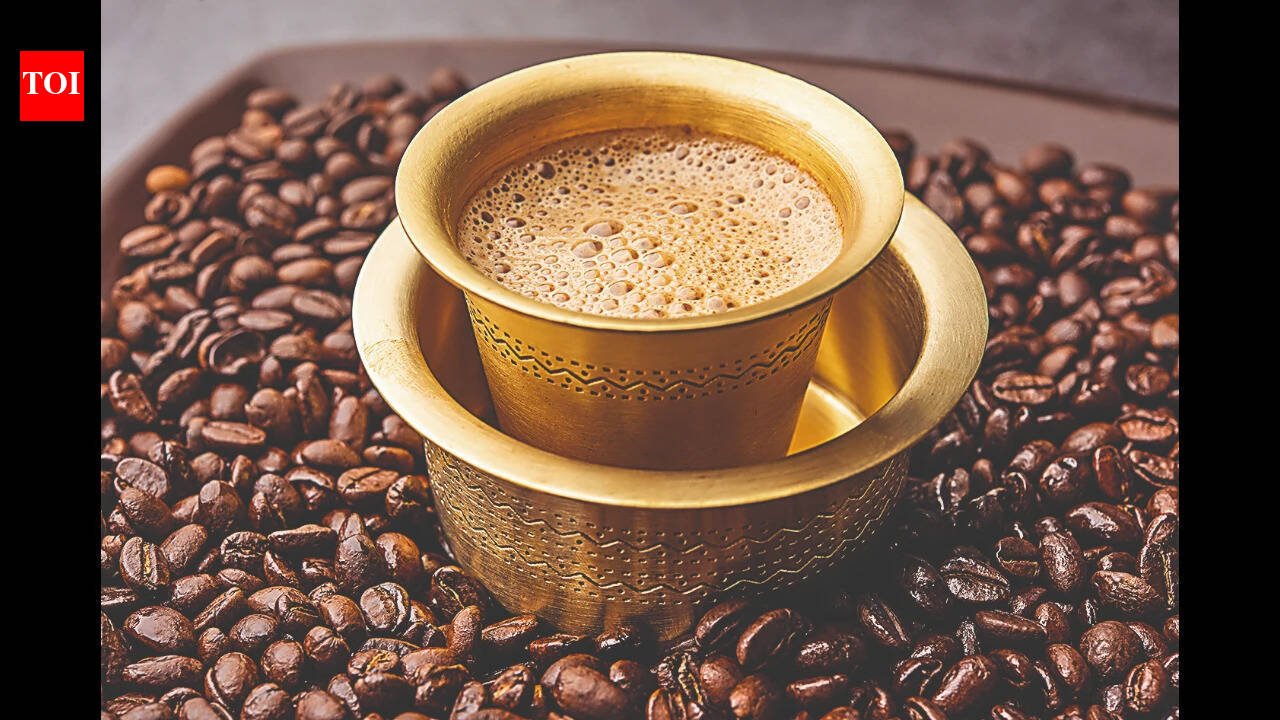
Every time we write about coffee, we receive a mix of passionate reminders and gentle rebukes from our readers: real coffee isn’t just what you see on your Instagram feed, nor is it confined to chic cafés serving pineapple-fermented pourovers in minimalist ceramic cups. Decades before a new generation “discovered” specialty roasts, coffee culture was already deeply woven into the daily rhythm of South India—served piping hot in signature brass or stainless steel dabarah and tumbler sets engineered to aerate, cool, froth, and savour every last sip of filter kaapi.Unlike third-wave coffee cultures across the globe that treat the bean with clinical isolation, South Indian filter kaapi—crafted from beans nurtured in the shade-grown estates of the Western Ghats (across Chikmagalur, Coorg, Wayanad, and the Nilgiris) and brewed using a traditional metal drip filter—makes no apologies for what it is. Bold, chicory-infused, decoction-strong, milky, and distinctively sweet, it has held its ground against wave after wave of transient global trends. (One can only gawp at the sheer absurdity of “iced coffee infusion” IV bags served at gimmick cafés.)Moreover, filter kaapi, with its instantly recognisable aroma and taste, has been traveling remarkably well beyond the traditional breakfast table. Its signature flavour profile now infuses everything from artisanal ice creams, popsicles, and panna cottas to craft chocolates.Which brings us to the imperative of owning it, embracing it, and reminding the world of how we took the legendary seven seeds smuggled from Yemen by Baba Budan centuries ago and made the brew entirely our own. While raw regional beans like Coorg Arabica, Bababudangiri Arabica, or Wayanad Robusta have rightly earned their individual Geographical Indication (GI) tags over the years, the cup itself remains unrecognised.Ergo, the question. Should South Indian Filter Kaapi get GI tagged? Not just for the raw agricultural ingredients, which have already been acknowledged, but for the process, the decoction ritual, and the unique culinary technique. Not very different from Neapolitan pizza making or traditional Belgian beer brewing.Because filter kaapi after all, is an irreplaceable, region-rooted cultural IP.It is International Coffee Dayand while we celebrate how the world keeps reinventing coffee, and finds newer ways to brew a cup, we may want to pause, sip some filter kaapi and reflect on how SouthIndia simply keeps perfecting what’s in the dabarah.


