



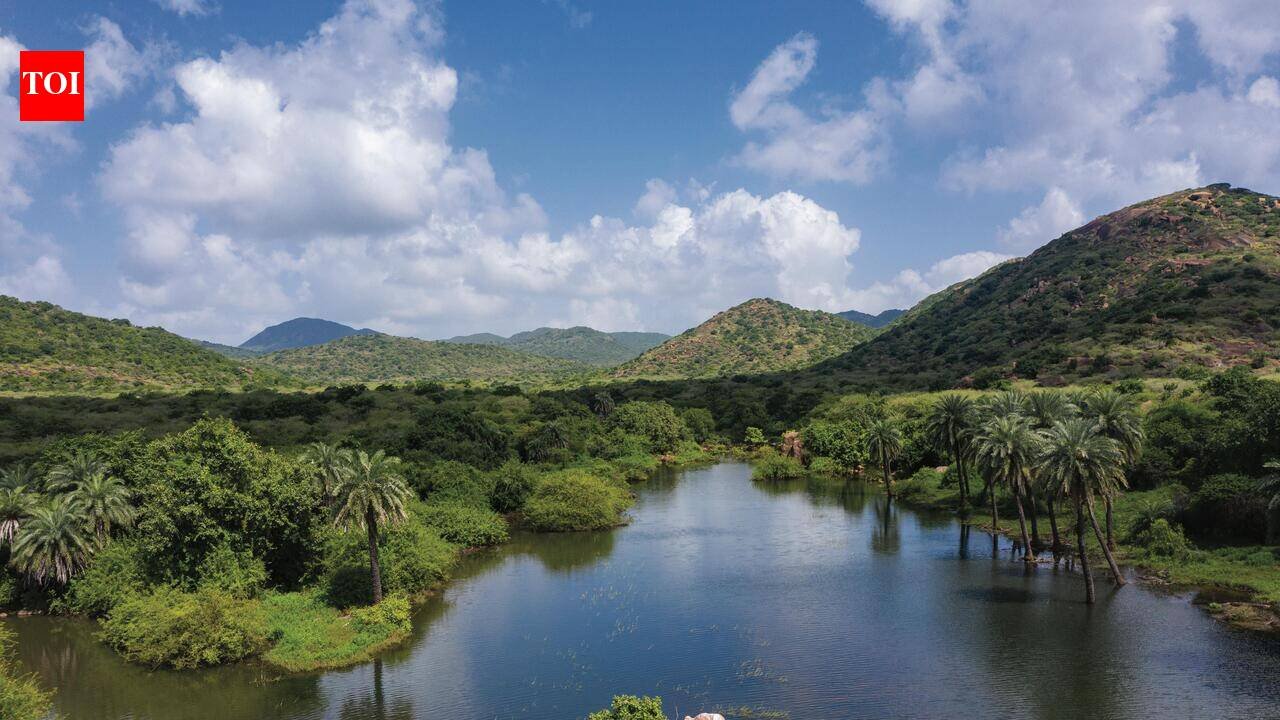
Rajkot: Barda Wildlife Sanctuary has recorded a significant natural increase in its Asiatic lion population, strengthening the case that the habitat is suitable for the big cats.The lion population in the sanctuary has risen to 26 from 17 recorded in Aug 2025.The latest count was carried out during the full-moon observation exercise. “We counted 26 lions during the last Poonam Avlokan. The majority of them are cubs. If the population is increasing naturally, the lions are mating and finding adequate food, which indicates that the habitat is suitable for them,” said Chirag Chandgude, deputy conservator of forests, Porbandar.Barda had no resident lion population until 2023, although the area was historically a lion habitat nearly 145 years ago. The forest department had, for several years, worked to create a suitable prey base by establishing breeding centres for chital and sambar.The efforts began to yield results in Jan 2023, when a sub-adult male lion travelled to Barda on its own and stayed in the area for an extended period. The department later relocated five lionesses from Gir to Barda. Following successful breeding, the sanctuary became home to 17 lions.The department has operated dedicated chital and sambar breeding centres since 2014 and continues to release herbivores according to the requirements of the area. Blue bulls and wild boars are also naturally present in the sanctuary, providing the sufficient prey base for lions.Forest officials are monitoring the availability of prey and drinking-water sources to ensure that the lions have adequate food and water.Spread across 192.31 sq km across Porbandar and Devbhumi Dwarka districts, the Barda landscape has a total area of 410 sq km and is an important biodiversity hotspot and key habitat for the conservation of Asiatic lions.Tourism potential growsLocated close to the Dwarka–Porbandar–Somnath tourist circuit, Barda also has considerable potential for wildlife tourism. A lion-safari route launched in October 2024 received a positive response from tourists. The number of visitors who undertook lion-sighting safaris rose to around 3,300 in 2025–26, compared with 2,200 in 2024–25. The first phase, a 19-km route beginning at Kapurdi Naka, became operational in 2024. A second route from Gulabsagar Naka is expected to open in the next tourist season. With Madhavpur Beach, the Dwarka temple and Shivrajpur Beach located in the wider region, the circuit is expected to gain further momentum.


