






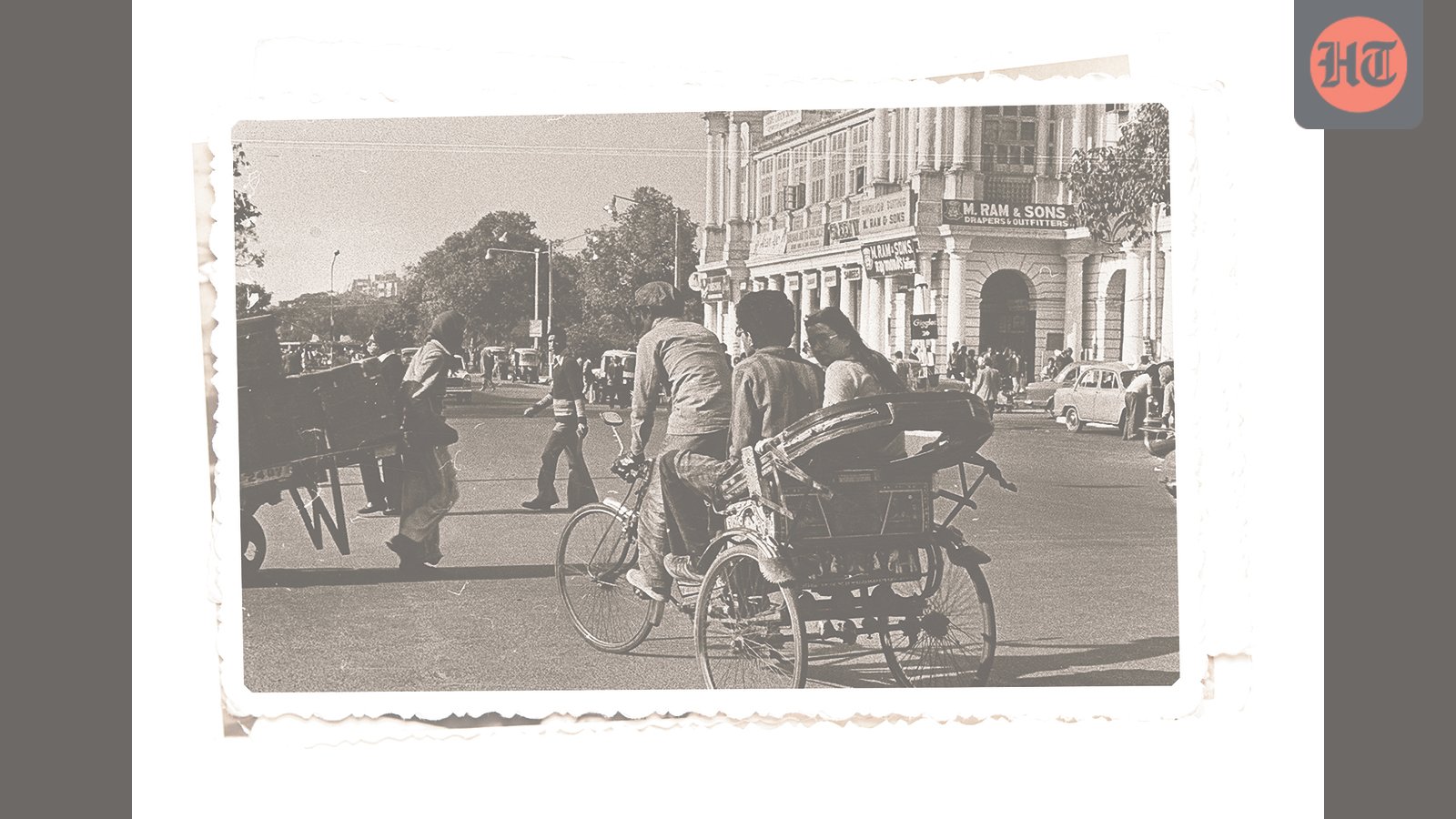
I’ve been looking at the ’80s throwbacks, of what people looked like or might have looked like then, and it’s been fun to see the big hair, vivid makeup and padded shoulders. But I couldn’t help but think: how little these trends capture of that era.
Middle-class Indian cities were an entirely different world then. Let me fill in the rest of the picture for you.
In offices, computers were still years away. We used typewriters for everything. There were sleek portable ones for personal use, while offices had the big, heavy-duty machines. Their clackety-clack was a constant hum in offices.
One had to have white correction fluid handy, to cover up typing mistakes. There was no Ctrl-Z or backspace, and no one wanted to start over from Line 1.
Landline phones still rang, and we talked to friends and family, often for hours. There wasn’t the kind of anxiety we feel today around strangers reaching out; everyone’s number was printed, in fact, in the big, floppy telephone directory. To date, I haven’t seen paper that thin or print that small anywhere else!
In our free time — and we had so much of it — we sauntered into bookshops, or chatted with the incredibly well-informed owner of the local lending libraries that were a fixture in almost every big market. Most of these libraries maintained a register of regular users and kept a generous credit line going. So many of us still owe a few rupees to the man who suddenly, one day, was just gone from the marketplace.
When we made plans to see a movie, meet for lunch or dinner, or watch a play, everyone showed up. There was no way to text and back out, and honestly we wouldn’t have wanted to.
We watched films in big single-screen theatres, and bought burgers with pumpkin sauce or chicken-mayo rolls and Thums Up in the interval. I still remember watching Muzaffar Ali’s Umrao Jaan (1981), Shekhar Kapur’s Masoom (1983), Gulzar’s Ijaazat (1987).
Sometimes a fragrance will waft past me and I’m right back there, watching Sai Paranjpye’s Chashme Buddoor (1981) or Kundan Shah’s Jaane Bhi Do Yaaro (1983) for the first time.
Eating out was uncomplicated. There were only a few restaurants, and three cuisines: Indian, “Chinese” and Continental. Nirula’s in Delhi and Sundance cafe in Mumbai were where one went for exotic things like hot dogs and chocolate milkshake. In the more formal Continental restaurants, one ate Chicken a la Kiev or Chicken Stroganoff and felt very in tune with the world.
You’d think having one TV channel, Doordarshan, was a deprivation, but it didn’t feel like it. TV began to boom (in colour! after 1982). India’s first Hindi soaps, Hum Log (1984-85) and Buniyaad (1986-87), captivated the nation. Shyam Benegal’s Bharat Ek Khoj (1988-89) and Kavita Choudhary’s Udaan (1989; the inspiring story of a woman IPS officer) are still riveting to watch. And of course, there was Ramanand Sagar’s Ramayana (1987-88) and BR Chopra’s Mahabharat (1988-90).
This was also the golden age of theatre. The National School of Drama (NSD) ruled. The likes of Manohar Singh and Amal Allana brought love, myth, history and hard-hitting political novels to life on stage.
We didn’t have too many brands, but we trusted the ones we did have. Godrej almirahs held heirloom saris and family gold. Everyone wore Bata shoes and used Colgate toothpaste.
Amid the Ambassador and Fiat cars, a zippy new model was born, the Maruti; but the streets were still blessedly empty. One drove along to the sound of birds and the wind rustling through old trees. The air was clean and pure.
These were years of scheduled power cuts that could last several hours. People found all sorts of ways to beat the airless heat at night: sprinkle water on the bed, move to the balcony or garden, ring up the electricity board to ask, over and over, “Bijli kab aayegi?”
It was an uncluttered, stable everyday world. Looking back, it feels like a time of close friendships, conversations, shared confidences, dreams, and yes difficulties. But what a time it was to be alive.
(Email Poonam Saxena on poonamsaxena3555@gmail.com. The views expressed are personal)


