



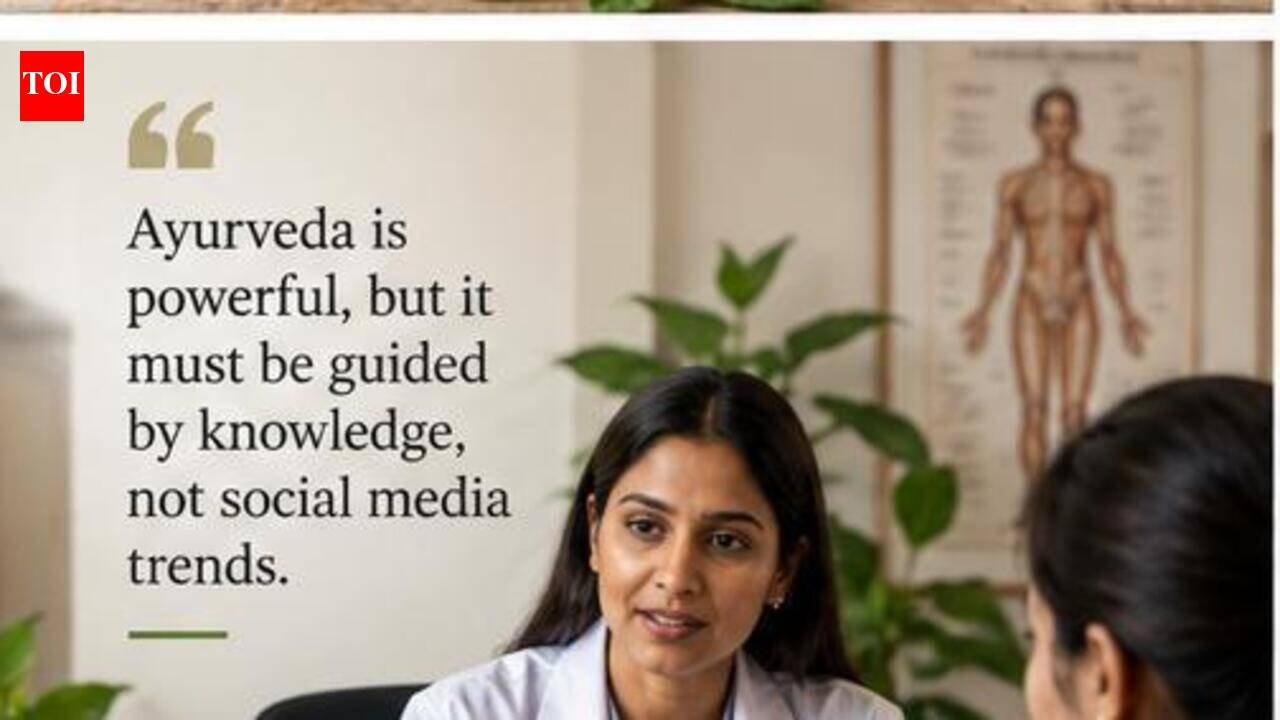
New Delhi: A 30-second Instagram reel can make a complex Ayurvedic principle look deceptively simple— drink this kadha for immunity, take this herb for stress, have this powder for weight loss or undergo panchakarma to flush out toxins. But Ayurveda practitioners say such one-size-fits-all advice often misses one of the fundamental principles of the traditional system— individualisation.On this Ayurveda Day, practitioners are urging people to look beyond social media wellness trends and ask whether a particular remedy is actually appropriate for them.“Ayurveda is personalised, not generalised,” said Dr Dinesh Sharma Bhardwaj from Purna Ojas Multispeciality Clinic. He said Ayurvedic treatment considers several factors, including a person’s prakriti (constitution), vikriti (current state of imbalance), digestive capacity, age, lifestyle, diet and season, before deciding on a treatment, dosage and duration.The growing popularity of Ayurveda on social media has also made self-prescription easier. Ashwagandha, for instance, is widely promoted in wellness circles for stress management, strength and recovery. But practitioners caution that no herb or supplement is universally suitable for everyone.“The question should not simply be whether a herb is safe, but whether a particular herb, formulation and dose is appropriate for a particular person”, says Dr Abhilasha Bhardwaj, MD Ayurveda and Ayurveda physician at The Wellness Co Retreat, Karma Lakelands.The same applies to common kitchen remedies. Ajwain water, jeera water, ginger shots and turmeric-black pepper combinations are increasingly promoted online for bloating as the go-to detox drinks. While these ingredients may have traditional uses, excessive or unnecessary consumption may not suit everyone. Bhardwaj said even foods widely considered healthy, such as ragi, bajra and makka, cannot necessarily be treated as universally suitable because Ayurveda considers factors such as quantity, preparation, season and individual constitution.Detox is another term experts say has been heavily simplified by the wellness industry on social media. Ayurveda has concepts such as shodhana and panchakarma, but these are therapeutic interventions with specific indications, preparation and post-procedure care. Panchakarma, therefore, should not simply be presented as a routine wellness package for everyone.Experts also caution against equating natural products with harmless products. “Natural tells us where something comes from. It does not tell us whether it is appropriate,” Bhardwaj said. Prolonged use of herbal products is not necessarily harmful, she said, but unsupervised or inappropriate long-term use can be.Practitioners recommend seeking professional advice when symptoms are persistent, recurrent, severe or unexplained, or when a person has an existing medical condition or is taking other medicines. Sharma also stressed the importance of consulting qualified and registered practitioners rather than relying on informal advice or products with unclear ingredients and credentials.As interest in Ayurveda continues to grow, experts say the need is not to dismiss traditional medicine or accept every online wellness claim, but to distinguish between traditional knowledge applied through professional assessment and simplified advice designed for social media.
