



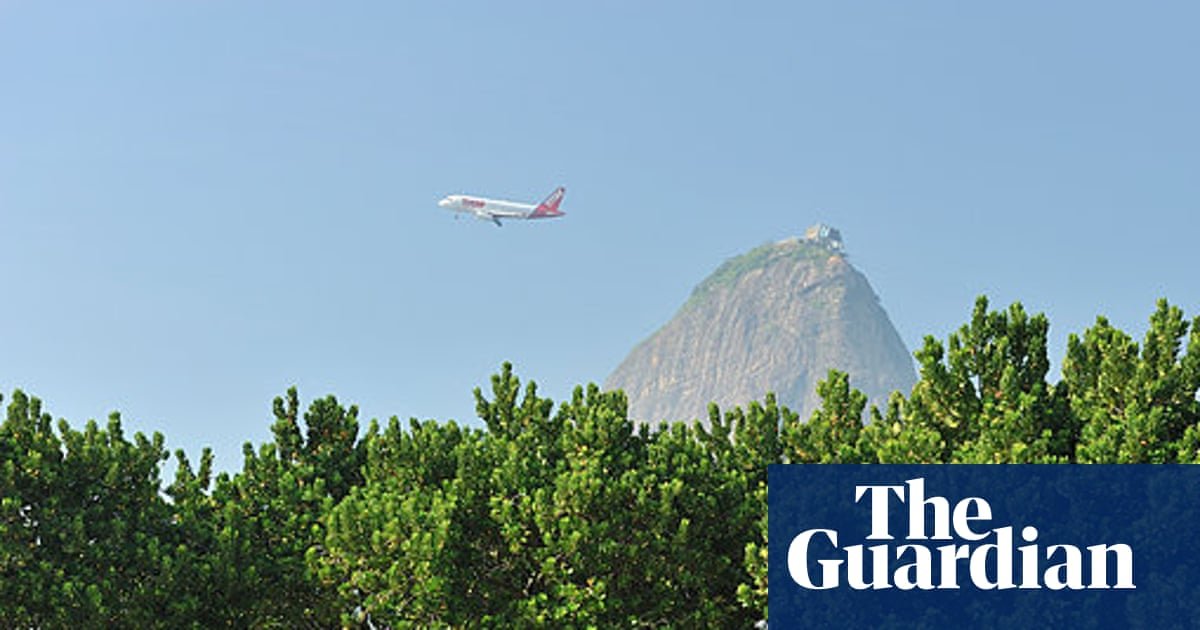
Nothing says jet fuel crisis, as one prospective attender put it, like flying everyone to Rio de Janeiro. Aviation leaders will converge in Brazil this weekend for the Iata AGM, the annual global airline summit, with the industry still, for the most part, looking resolutely skyward.
The oil tankers may still be stuck behind the strait of Hormuz as the conflict between the US, Israel and Iran flickers on, but for now, airlines continue to defy dire warnings of impending shortages which had stoked fears of a summer of chaos for European holidaymakers.
If the AGM acts as a barometer of the aviation industry’s boom and bust, choosing to hold a gathering in Rio might have been read as the good times rolling again, not least because the event was abandoned during the Covid years and then held online.
Rio was announced as host city at the last summit in Delhi, which was addressed personally by the prime minister, Narendra Modi, underlining aviation’s importance in India. Global air traffic had rebounded and jet fuel was just over $80 a barrel then. Despite the slide down from last month’s peak, it remains over $140 a barrel.
According to the aviation analysts Cirium, jet fuel was just over a quarter of global airlines’ costs in 2025 – and every dollar on a barrel adds the best part of $3bn to the annual fuel bill. About 6% of available seats were removed from airline schedules worldwide over the last month, with costs high and demand uncertain.
European carriers, originally seen as among the most exposed, have largely kept flying full schedules, with the lucrative peak season ahead. New sources of kerosene in the US and West Africa have been found, with supply chains responding to the premium on jet fuel.
On Friday, the EU’s transport commissioner, Apostolos Tzitzikostas, further allayed concerns. “There is currently no jet fuel shortage in Europe. We have no signs that we will have a shortage in the coming period,” he told Reuters.
Many big carriers hedge most of their fuel supply, insulating them from the price shock. But no analyst can confidently forecast the cost to airlines, and the amount that customers will stomach in a prolonged war. EasyJet’s chief executive, Kenton Jarvis, admitted recently that his airline had suspended hedging due to the volatility of the fuel price which he said “bumps up and down depending on what [Donald] Trump has for breakfast”.
A current industry subplot is who might yet have easyJet for breakfast, its tumbling share price attracting a takeover bid from the US private equity firm Castlelake, potentially alongside another European airline. EasyJet is not part of the Iata world, predominantly the legacy airlines, national carriers and long-haul operators whose fares may be more elastic than airlines built on a short-haul budget model. But others might likewise be swallowed up, or worse.
The US-Israel-Iran war has affected some of the biggest global players: the Gulf carriers whose geography, deep pockets and rapid growth had reshaped how and where intercontinental travel takes place.
Industry observers are watching keenly to see how they respond, having seen operations completely grounded in the Middle East when war broke out in late February, with hub airports hit by drones and airspace closed. Emirates, the host airline for Iata in Dubai in 2024 and one of the most powerful movers and shakers, will be an unusually quiet presence in Rio, its chief executive absent.
Conversations about the industry’s environmental impact are likely to play an even smaller role in airlines’ thinking this year – although, as ever, those pondering the accounts have a congruent interest in cutting fuel costs per passenger. The last prolonged step change in oil prices in the 2000s helped drive orders for new, more efficient planes. But flight numbers keep growing faster than efficiency, growing aviation’s carbon footprint remorselessly.
Sustainable aviation fuels [SAF] remain on the agenda in the conference halls, although perhaps with vanishing faith from proponents. The director general of Iata, Willie Walsh, who browbeat Iata members to get on board with SAF as the only viable solution, has since turned his invective on governments for imposing mandates while production has faltered.
The ex-British Airways boss has also announced his departure from the Iata post he has held since 2020 and is due to take over as the boss of India’s fast-growing budget carrier Indigo – an airline that has just axed its direct Delhi-Manchester route citing high fuel costs.
Iata has yet to confirm if a successor will be announced in Rio, or take their bow next year. But after months of fresh crisis, more of its airlines still believe they will have a next year.
Flights to the Iata summit were provided by Iata and Latam airline


