



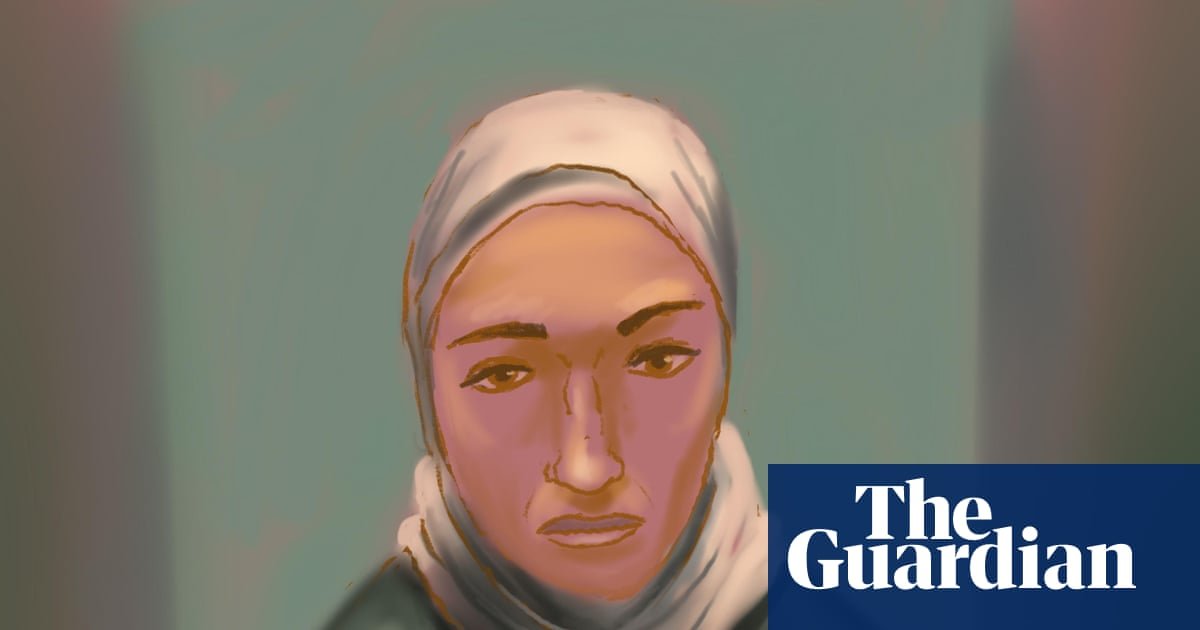
An Australian woman charged with joining Islamic State in Syria has been refused bail despite concerns expressed by her lawyer over the loss of connection it would cause with one of her family members.
Janai Safar, 32, appeared before New South Wales bail court on Friday after she was arrested at Sydney airport on Thursday evening, after almost a decade in a Syrian refugee camp. She was one of four women allegedly linked to IS who returned to Australia with children this week.
Safar faces one count of entering, or remaining in, declared areas, and another charge of being a member of a terrorist organisation. Each offence she faces carries a maximum penalty of ten years in prison.
Two other women, a mother and a daughter, were charged with crimes against humanity including slavery offences and are expected to make bail applications in Melbourne on Monday.
It will be alleged that Safar travelled to Syria in 2015 to join her husband, who had previously left Australia and joined IS.
Judge Daniel Convington refused her application for bail on Friday afternoon because it did not meet the exceptional circumstances test.
Safar’s lawyer, Michael Ainsworth of Samuel Griffith Chambers, argued she should be released on bail for a number of reasons, including that the alleged offences date back to when she was 21 and she has been in a refugee camp for nine years. Safar returned from Syria with her child, who is now being cared for by her father.
“She’s been in a situation that is, is, in itself, custodial in another country,” Ainsworth told the court.
He also argued that one of her family members needed her support.
“This young lady … lived in truly horrific conditions in these refugee camps for many years,” he said adding she is likely to be suffering from post-traumatic stress disorder and “other psychological conditions”.
“She has significant community ties here in Australia, she’s one of seven children. There’s a place for her to live.”
Ainsworth also questioned Safar’s degree of involvement in the terrorist organisation, and whether it was of her own free will.
But the crown prosecutor, Brian Massone, argued the case against her, the investigation for which began a decade ago, was “strong and straightforward”.
“The submission is the nature and seriousness of the offences, coupled with the strength of the crown case, militates against the threshold of exceptional circumstances being met,” he said.
He said the crux of the crown case for both charges is that Safar left Australia “in a premeditated and considered fashion” to join IS. He said the steps she took to travel to the area also suggested she was taking steps towards becoming a member of IS or “is in fact a member”.
He said allegation she was a member of a terrorist organisations relies on messages sent to her mother.
The two other women who have been charged upon their return to Australia this week, a mother and a daughter, faced a Melbourne court on Friday and are expected to bail applications on Monday.
Kawsar Ahmad, 53, also known as Abbas, and her daughter Zeinab Ahmad, 31, were arrested by officers from the Victorian joint counter-terrorism team at Melbourne airport on Thursday.
Kawsar Ahmad’s eldest daughter, 33-year-old Zahra Ahmad, also returned on the same flight along with eight children. She was not arrested or charged.
Kawsar and Zeinab Ahmad were charged with crimes against humanity including enslavement and using a slave. Kawsar Ahmad was also charged with possessing a slave and engaging in slave trading, Australian federal police confirmed on Friday.
Police would allege the pair travelled to Syria in 2014 with their family and knowingly kept an enslaved woman in their home, the AFP said. They would additionally allege that the 53-year-old, who travelled to Syria with her husband, was complicit in the purchase of an enslaved woman for US$10,000.
The enslavement offences each carry a maximum penalty of 25 years’ imprisonment.
The pair appeared separately before the chief magistrate, Lisa Hannan, on Friday, with the Melbourne magistrates court hearing that they would apply for bail on Monday.
The AFP will allege the offences were terrorism-related and are expected to oppose bail.
Neither woman was required to speak or enter a plea during the short hearing, before they were remanded in custody.
Hannan, who described the matters as “unusual charges” heard that the attorney general had been required to consent to them being laid.
A summary of the allegations, which the court heard was “significant”, is expected to be read at Monday’s hearing.
The summary includes information from the alleged enslaved woman, and a witness to the alleged offences, the court was told.
A small group of supporters attended court, including a brother of Kawsar who was also at the airport on Thursday night.
The AFP assistant commissioner for counter-terrorism, Stephen Nutt, said on Thursday night that planning for the potential return of individuals from the Middle East had started in 2015 and had later been formalised under an overarching operation named Kurrajong.
“Australian joint counter-terrorism teams methodically investigated all Australians who travelled to declared conflict areas and will ensure those who are alleged to have committed a criminal offence are put before the courts,” Nutt said.
“JCTTs include some of the most experienced national security investigators and analysts in our country.
“This remains an active investigation into very serious allegations.”


