



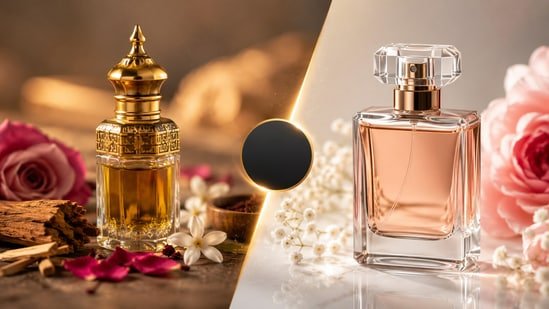
I recently visited a mall and passed by a store that had a pleasant, aromatic fragrance. Amidst the other scents that were in the air, this fragrance captivated my mind and soul to the core. And to curb my excitement, I entered the store only to find that the fragrance was not from a luxurious bottle of perfume. It was rather the sweet scent of a natural, floral attar.


A forever fan of luxe perfumes, I started researching more on attars and perfumes. I figured out that while both are designed to provide pleasant scents, they differ greatly in composition, manufacturing process, longevity, and cultural significance.
What is Attar?
Attar is a natural perfume oil derived from botanical sources such as flowers, herbs, spices, and woods. It is traditionally made through steam distillation and blended into a sandalwood or other natural oil base. They are alcohol-free, making them suitable for people with sensitive skin or those who prefer natural products. Attars have deep roots in Middle Eastern and South Asian cultures and are widely appreciated for their rich, earthy, and long-lasting aromas. Common varieties include rose attar, jasmine attar, oud attar, vetiver attar, musk attar, and many more. Since they are concentrated oils, only a small amount is needed for the fragrance to last throughout the day.
Advantages of using an attar
- Made from natural ingredients
- Free from alcohol
- Long-lasting fragrance
- Gentle on sensitive skin
- Traditional and luxurious appeal
Things to consider
- Limited fragrance variety
- Can feel oily on skin
- Usually more expensive than perfumes
How is Attar different from a perfume?
Perfume is a fragrance blend made using aromatic compounds, essential oils, solvents, synthetic molecules, and alcohol. Modern perfumes are produced commercially in various strengths such as Eau de Parfum, Eau de Toilette, and Cologne. Perfumes often contain synthetic ingredients along with natural extracts, allowing manufacturers to create a wide range of scents, from floral to woody and aquatic. Perfumes are usually packaged in spray bottles, making them convenient for daily use and are widely used across the world due to their versatility, variety, and easy application.
Attar vs perfume: Which one should you choose?
Choosing between attar and perfume depends on your personal preference, lifestyle, and skin type. If you prefer natural, long-lasting, and alcohol-free fragrances, attar may be the ideal choice. It is especially suitable for traditional occasions, meditation, or people with sensitive skin.
On the other hand, if you enjoy experimenting with different scents and want something convenient for everyday use, perfume is a better option. Modern perfumes offer a wide range of fragrances suitable for every mood, season, and event.
You can even use a combination of both, attars for special occasions and perfumes for daily wear.
Both attar and perfume offer unique fragrance experiences. Attars are deeply rooted in tradition, valued for their natural ingredients and long-lasting aroma, while perfumes represent modern versatility with endless scent possibilities. Understanding the differences between the two helps you make an informed decision and select a fragrance that matches your personality and needs. Whether you choose the richness of attar or the freshness of perfume, the right scent can leave a lasting impression wherever you go.
Similar articles for you:
Smell good all day with these 5 unisex perfumes that actually last longer than you think
Roll-on perfume vs spray perfume: Which fragrance option is better for everyday use?
For a month, I used the luxurious Ajmal Aristocrat perfume, but does it last long? Find out
At Hindustan Times, we help you stay up-to-date with the latest trends and products. Hindustan Times has an affiliate partnership, so we may get a part of the revenue when you make a purchase. We shall not be liable for any claim under applicable laws, including but not limited to the Consumer Protection Act, 2019, with respect to the products. The products listed in this article are in no particular order of priority.


