



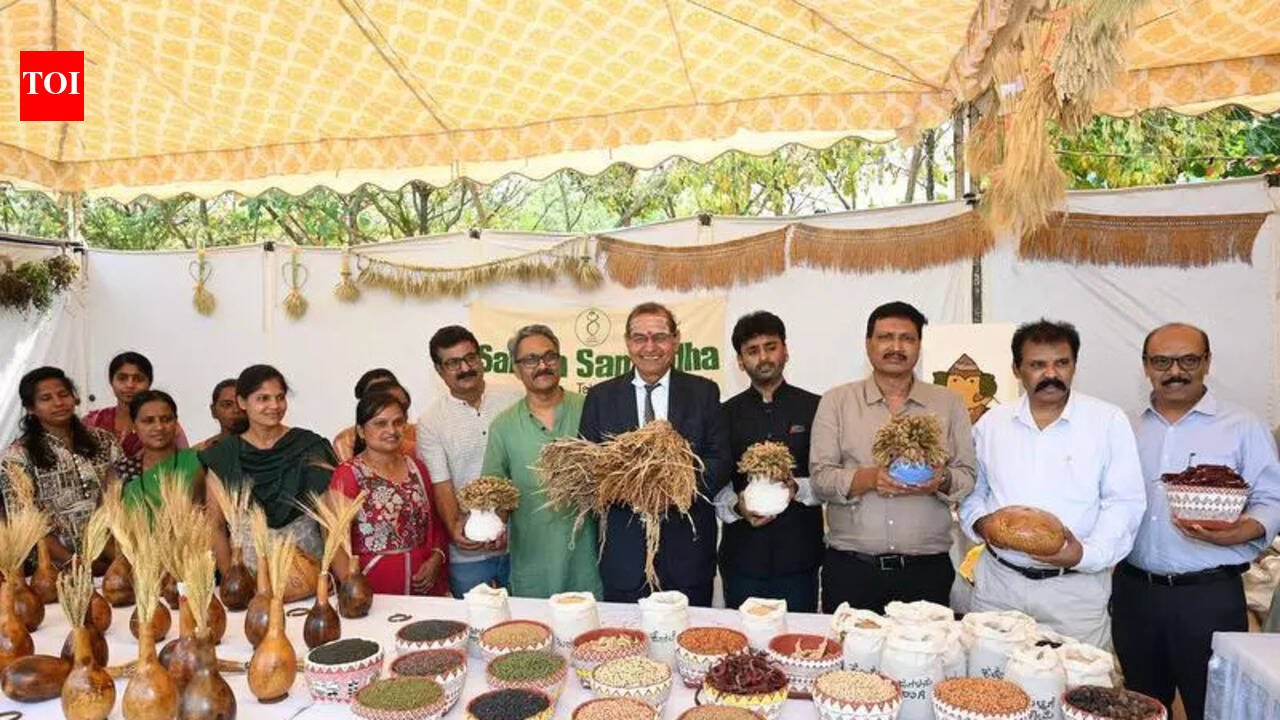
Mysuru: The Kisan Swaraj Sammelan, aimed at raising awareness among farmers about the importance of traditional and sustainable agricultural practices, began at the KSOU campus in Mysuru on Friday. The three-day mela is jointly organised by the Sustainable and Holistic Agriculture Alliance (ASHA) and the Prasaranga wing of KSOU, and has brought together nearly 1,000 delegates from across India.Inaugurating the event, KSOU vice-chancellor Sharanappa Halase said the Union govt launched an agricultural revolution in the 1970s to boost food production and meet the needs of a rapidly growing population. However, he noted that the excessive use of chemical fertilisers to increase yields has harmed the ecosystem and caused serious health issues. He appealed to farmers to adopt natural and organic farming methods and minimise the use of chemical inputs.Halase added that Indian farmers are facing distress due to falling prices of agricultural produce and frequent crop losses caused by erratic weather. He stressed the urgent need for national policymakers to support farmers, who play a key role in ensuring food security.Davanagere-based natural farmer Raghava Aikanthika urged farmers to stop using hybrid seeds and instead conserve indigenous varieties, which he said are more resistant to diseases.Kerala-based natural farmer Vishalakshan said the govt must consult farmers’ organisations before entering into a free trade agreement with the US involving agricultural imports, seeds, and related issues.Bibi Jan, a farmer leader from Kundagol and recipient of the United Nations Equator Initiative Award, spoke about the vital role of women in agriculture. She highlighted the work of the Bibi Fatima Women’s Association, which established a community seed bank and revived disappearing varieties of millets and pulses, enabling more than 5,000 farmers to resume millet cultivation.A vibrant biodiversity fair was the main attraction of the Sammelan. More than 100 seed conservators from various states displayed over 2,000 varieties of seeds, tubers, and fruits across 40 stalls.The event also features 37 organic product stalls and seven traditional food stalls from different states. Demonstrations include a traditional bullock-driven oil extraction unit and charkha-based hand spinning by weavers from Andhra Pradesh.


