



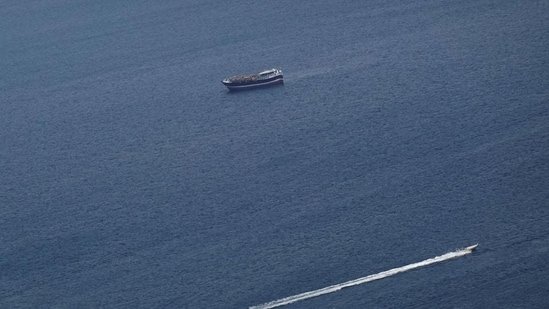
The Indian Navy’s statement on March 6 about its search-and-rescue efforts for the sunken Iranian frigate IRIS Dena was brief, factual and restrained. Two days after the vessel sank off the coast of Galle, the Navy confirmed it had dispatched maritime patrol aircraft and deployed the sail training ship INS Tarangini, while INS Ikshak sailed from Kochi to assist the Sri Lankan authorities in the ongoing rescue operation.


The tone of that statement offers a window into how India should approach a rapidly escalating conflict now edging closer to its maritime neighbourhood.
On March 4, a submarine from the US navy sank the Iranian warship in the Indian Ocean near Sri Lanka. The attack marked the first time since World War II that an American submarine had used a torpedo in combat to destroy an enemy vessel. Pete Hegseth, the US defence secretary, confirmed the strike, saying a Mark 48 torpedo had struck the ship and caused it to sink rapidly.
Sri Lankan authorities recovered dozens of bodies and rescued survivors, while several sailors remain missing. The frigate had been returning from the multinational naval exercise MILAN 2026, hosted by India in Visakhapatnam, when it was attacked.
That detail has drawn India into the diplomatic crossfire.
Iran’s foreign minister Abbas Araghchi said the vessel had been “a guest of India’s Navy” and condemned the strike as an attack in international waters without warning. Meanwhile, speculation emerged about whether intelligence-sharing arrangements between India and the US — including the Communications Compatibility and Security Agreement and the Logistics Exchange Memorandum of Agreement — could have indirectly enabled the targeting.
New Delhi moved quickly to reject such claims. The ministry of external affairs dismissed allegations that the US navy had used Indian facilities or intelligence for the operation, calling them “baseless”.
Still, the episode underscores a growing reality: A conflict centred in West Asia is beginning to spill into waters that form part of India’s strategic environment.
The risks for India are already visible. Maritime traffic across the region has been disrupted as tensions escalate between the US, Israel and Iran. According to Indian officials, more than thirty Indian-flagged commercial ships carrying over a thousand seafarers are currently stranded in waters near the Strait of Hormuz amid security concerns and shipping disruptions.
For India — one of the world’s largest importers of crude oil — such instability carries serious economic implications. Nearly 40% of the country’s energy imports transit through the Hormuz corridor.
The political pressures are also mounting. Speaking at the Raisina Dialogue, US deputy secretary of state, Christopher Landau, urged partners including India to work with Washington to stabilise West Asia and consider the US as an alternative energy supplier amid the crisis.
For India, however, the most prudent response lies not in choosing sides but in maintaining restraint.
India’s long-standing doctrine of strategic autonomy allows it to deepen partnerships with the US while maintaining ties with Iran and the Gulf states. Being drawn into a war that does not directly involve India would undermine that balance.
More importantly, it would expose India to risks far greater than any strategic benefit. Military alignment in the conflict could jeopardise energy supplies, endanger millions of Indian citizens working across West Asia and complicate India’s carefully cultivated diplomatic relationships across the region.
The IRIS Dena episode illustrates how quickly geopolitical proximity can translate into political pressure. A ship that had participated in a cooperative naval exercise suddenly became the centre of an international controversy once it was attacked outside India’s waters.
India’s response so far has reflected clarity of purpose. The Navy’s deployment of aircraft and vessels was framed strictly as a humanitarian mission. Government statements have avoided rhetoric. And New Delhi has consistently emphasised the need for de-escalation and dialogue.
This approach may appear understated in an era of sharp geopolitical alignments, but it reflects a deeper strategic calculation.
India’s primary interests lie in protecting maritime stability, safeguarding its citizens and ensuring uninterrupted energy flows. Those objectives are best served by diplomacy and regional stability — not by becoming a participant in a widening conflict.
As tensions rise and major powers seek support or alignment, India will face increasing pressure to move beyond neutrality. Resisting that pressure will require discipline. But if India is to preserve its strategic autonomy and safeguard its national interests, the message must remain clear: it will assist where it can, de-escalate where possible, but it will not allow other nations’ wars to become its own.
This article is authored by Hriday Sarma, senior fellow, South Asia Democratic Forum, Brussels.


