



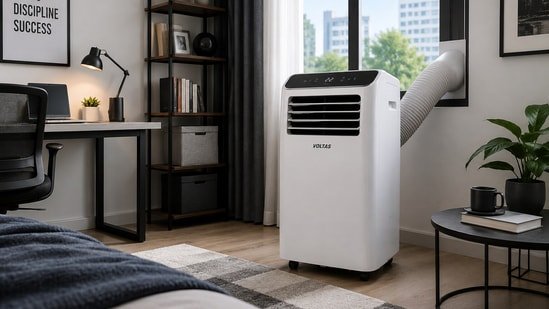
As Delhi NCR continues to battle extreme summer temperatures crossing 46°C, cooling a rented apartment has become more complicated than simply buying an air conditioner. For many tenants, installing a split AC means dealing with landlord permissions, drilling walls, high installation charges, shifting hassles, and expensive reinstallation every time they move homes. That’s exactly why portable ACs are suddenly seeing renewed attention among renters in 2026.
Unlike traditional split or window ACs, portable air conditioners offer a plug-and-play setup that works well for temporary living spaces, studio apartments, PG accommodations, and small bedrooms. They can be moved between rooms, require minimal installation, and eliminate the stress of permanent fittings. While portable ACs may not completely replace split ACs in terms of cooling efficiency, many users now see them as a practical compromise between convenience, mobility, and immediate relief during North India’s intense summer heatwaves.
Why traditional AC setups are becoming difficult for renters
For tenants living in cities like Delhi, Noida, Gurugram, Bengaluru, Hyderabad, and Pune, installing a split AC often comes with multiple complications.
The upfront cost itself can feel overwhelming once you add installation charges, copper pipe extensions, outdoor unit stands, and shifting expenses. In many rental apartments, tenants also need landlord approvals or society permissions before drilling walls for installation.
The bigger issue appears during relocation. Every move usually means dismantling charges, gas refilling costs, technician visits, and the risk of installation damage. For people who frequently change apartments because of jobs or lease renewals, this quickly becomes expensive and inconvenient.
Window ACs solve some of these problems, but many newer apartments no longer have dedicated window AC spaces. In compact high-rise apartments, installation restrictions have made portable ACs look far more practical than before.
The sudden rise of portable ACs in Indian homes
Portable ACs are now emerging as a “plug-and-play” cooling solution for renters who want flexibility without permanent installation.
Unlike split ACs, portable air conditioners do not require wall-mounted indoor units or external compressors fixed outside the building. Most models simply need a nearby power socket and a window outlet for hot air exhaust.
This setup allows users to move the appliance between rooms depending on where cooling is needed most. For example, many people now use portable ACs in home offices during the day and shift them to bedrooms at night.
The convenience factor is becoming especially important during extreme summers, when temporary cooling solutions are no longer enough in metro cities.
Why renters are choosing portable ACs over split ACs
No permanent installation required: This is the biggest reason behind the growing popularity of portable ACs. Most units can be installed within minutes without drilling walls or modifying interiors. For renters, this removes the stress of landlord disputes, security deposit deductions, or complicated shifting procedures.
Easier to relocate during house shifting: Portable ACs are designed with caster wheels, allowing users to move them from one room to another or transport them during relocation. Compared to split ACs that require professional dismantling and reinstallation, portable ACs are far easier to manage for people living in temporary accommodations.
Works well for compact apartments: Many studio apartments, PG accommodations, and modern rental flats lack proper ventilation space for window ACs or outdoor units. Portable ACs work around this issue with compact installation requirements. They are also becoming popular in home office setups where cooling only one section of the room is enough.
Growing popularity of rental appliance services: Another major reason behind this trend is the rise of appliance rental platforms in India. Instead of purchasing expensive cooling appliances outright, many young professionals are now opting for monthly rental plans.
Portable ACs are increasingly available under short-term rental subscriptions, often bundled with maintenance and servicing support. This reduces the upfront investment significantly during peak summer months.
Top 5 portable ACs every tenant can buy
The AMFAH 1.5 Ton Portable AC is designed for users who want strong cooling without permanent installation hassles. Suitable for larger rooms, this portable AC combines cooling, dehumidification, and air filtration in a single movable unit. It comes with remote control support, sleep mode, timer functionality, and auto-evaporation technology that reduces manual drainage issues.
The wheeled design makes it easier to move between rooms, making it particularly useful for renters, offices, and temporary setups where split AC installation is difficult.
Who should buy this portable AC?
Renters, office users, and people in temporary accommodations needing powerful cooling without permanent AC installation or relocation headaches.
The Voltas 241 CZMM 2 Ton Slimline AC is aimed at buyers looking for heavy-duty cooling in larger rooms without relying on fixed split AC installations. Its slimline portable design makes it suitable for offices, rental homes, commercial spaces, and rooms where structural installation is difficult.
The AC includes features like turbo cooling, dehumidifier mode, sleep mode, anti-dust filter with antimicrobial protection, and self-diagnosis support. The use of R-32 refrigerant also makes it comparatively more eco-friendly than older refrigerants.
Who should buy this portable AC?
Large-room renters, office users, and buyers needing powerful movable cooling where split AC installation is restricted or impractical.
The ZAPORA Mini Portable Air Conditioner is a compact personal cooling device designed for small spaces like desks, bedrooms, study areas, or office cabins. Its lightweight body and portable form factor make it easy to move around the house.
The unit offers oscillating airflow, multiple fan speeds, timer support, and a digital display for convenient usage. While it is better suited for spot cooling rather than full-room air conditioning, it can work as a personal cooling companion during hot summer days.
Who should buy this portable AC?
Students, desk workers, and users needing compact personal cooling for small rooms, workstations, or temporary summer setups.
The Ubervia Portable Air Conditioner Fan is a compact personal cooling device designed for desks, small rooms, offices, and outdoor usage. It combines fan cooling with a water-based air cooling function and offers three adjustable speed modes. The 700ml water tank supports several hours of continuous cooling, while USB charging adds portability for camping, workstations, or travel use.
Its low-noise operation and colourful ambient lighting make it more suitable for personal comfort rather than cooling an entire room.
Who should buy this portable AC?
Students, office users, campers, and budget buyers needing lightweight personal cooling for desks, small rooms, or temporary outdoor use.
The Voltas 4 Ton Portable Tower AC is built for heavy-duty cooling in large commercial or spacious residential environments. Designed with instant cooling support and wide-angle airflow, this portable tower AC is suitable for banquet halls, offices, retail spaces, and large living areas.
It also features an anti-bacterial filter for cleaner airflow and an Insta Cool compressor for faster temperature reduction during extreme summer conditions.
Who should buy this portable AC?
Businesses, event spaces, large offices, and users needing industrial-level cooling without complicated fixed commercial AC installations.
Top 3 features of the best portable ACs for tenants
What buyers should know before purchasing a portable AC
Room size matters a lot: Portable ACs work best in small and medium rooms. Choosing lower-capacity models for bigger rooms can result in slower and less effective cooling.
Single-hose vs dual-hose models: Single-hose portable ACs are cheaper, but dual-hose models cool rooms more efficiently by separating air intake and hot air exhaust functions.
Noise levels are higher than split ACs: Since the compressor stays inside the room, portable ACs usually produce more operational noise compared to quieter inverter split AC systems.
Electricity consumption can be slightly higher: Portable ACs may consume slightly more electricity than inverter split ACs, but renters often prefer them for flexibility and easy installation.
Why portable ACs are becoming more relevant in 2026
The ongoing heatwave has changed how urban consumers think about cooling appliances. Buyers are no longer choosing products purely based on cooling capacity alone. Installation flexibility, portability, rental-friendliness, and shifting convenience are now becoming equally important.
For renters dealing with frequent relocations, strict landlords, compact apartments, or temporary stays, portable ACs are filling a gap that traditional cooling appliances often fail to address.
They may not completely replace split ACs for large homes, but for urban renters trying to survive extreme Indian summers without permanent installation headaches, portable ACs are suddenly making far more sense than they did a few years ago.
Similar stories for you
The Research & Expertise
I’ve been covering consumer technology and home appliances for several years and have closely tracked how air conditioners have evolved in Indian homes, from basic fixed-speed ACs to modern inverter models with AI cooling, smart connectivity, convertible modes, and energy-saving technologies.
For this guide, I researched multiple window ACs and split ACs across different budgets, tonnage options, and feature categories from brands like LG, Samsung, Voltas, Daikin, Blue Star, Lloyd, Panasonic and more.
I compared factors such as cooling performance, inverter compressor efficiency, noise levels, airflow throw, energy ratings, installation requirements, maintenance costs, smart features, and real-world usability in Indian weather conditions. I also analysed buyer reviews, long-term user feedback, and service experiences to understand durability, after-sales support, electricity consumption, and everyday practicality. Like all HT journalists, my recommendations and insights are based entirely on independent research, category expertise, and consumer relevance.
Disclaimer: At Hindustan Times, we help you stay up-to-date with the latest trends and products. Hindustan Times has an affiliate partnership, so we may get a part of the revenue when you make a purchase. We shall not be liable for any claim under applicable laws, including but not limited to the Consumer Protection Act, 2019, with respect to the products. The products listed in this article are in no particular order of priority.


