






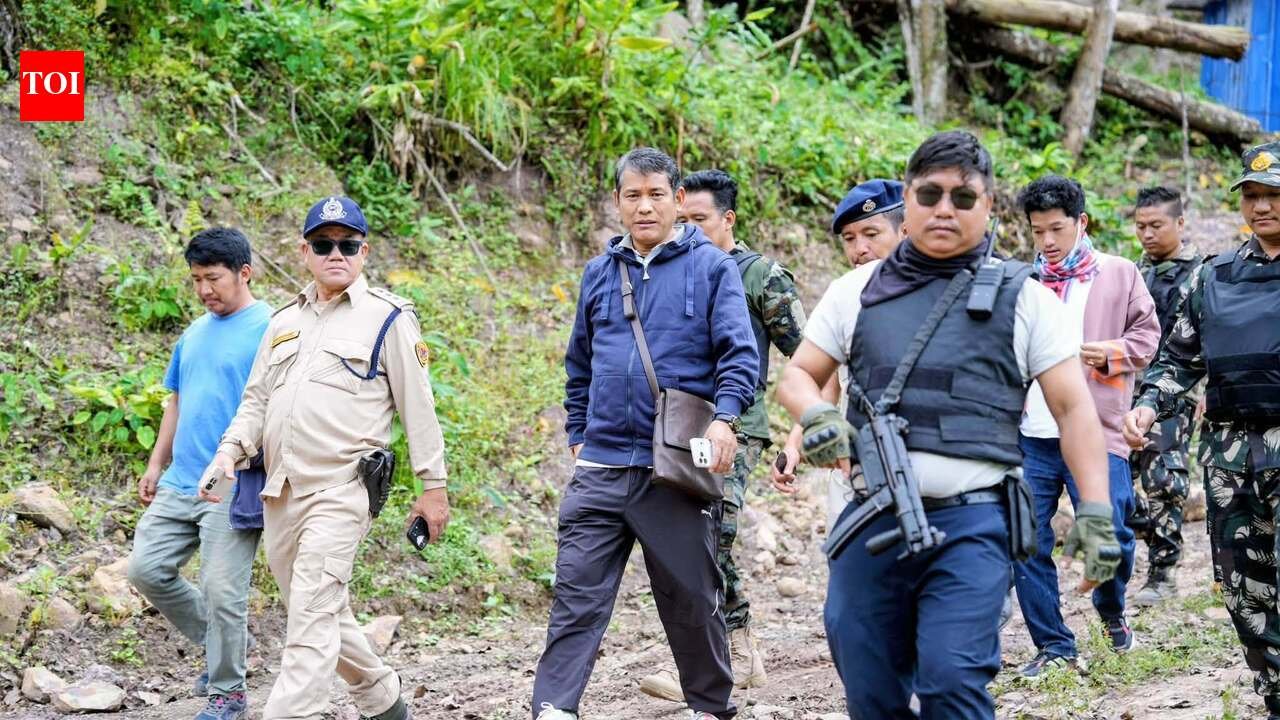
Itanagar: Arunachal Pradesh rural development and panchayati raj minister Ojing Tasing visited the pre-feasibility report (PFR) drilling site of the proposed Siang Upper Multipurpose Project (SUMP) at Ugeng in Riga to assess ground conditions, review ongoing work and inspect damage caused during earlier incidents.In a social media post, Tasing said he undertook a comprehensive assessment of the site, including the pace of work, coordination among the agencies involved and the damage caused by previous incidents.Describing SUMP as a project of national interest, Tasing said it was linked to India’s long-term water security, energy resilience and strategic interests. However, he stressed that pursuing the project must go hand in hand with protecting the rights and legitimate aspirations of local communities.The minister called for an approach based on prudence, mutual trust, constructive dialogue and collective responsibility.The visit comes amid opposition from sections of the indigenous Adi community to the proposed project and the ongoing PFR-related surveys and drilling activities. Protests at Ugeng and neighbouring areas have brought the concerns of project-affected families to the forefront, with disagreements over the deployment of security personnel and the conduct of field investigations adding to tensions.The Siang Indigenous Farmers’ Forum (SIFF) has raised concerns over the project’s potential implications for local communities, including land, livelihoods and the environment. The process has also drawn calls from local groups for greater consultation and assurances on the rights of affected residents.SUMP is a proposed large hydropower and multipurpose project on Siang river, with a planned capacity of over 11,000 MW. It is being pursued partly in the context of India’s strategic concerns over China’s upstream hydropower development on the Yarlung Tsangpo, which enters India as the Siang.The PFR stage involves preliminary technical investigations, including geological surveys and drilling, to assess potential project sites. However, the process has faced repeated disruptions because of local opposition, concerns over community consent and the presence of security forces. In Sept and Oct, resistance to the fieldwork intensified, with competing accounts emerging over clashes and injuries during protests.Tasing’s visit comes as the project moves through its preliminary investigation phase. The broader challenge remains to reconcile the project’s stated national objectives with local concerns through transparent communication, careful assessment and meaningful engagement with affected communities.


