



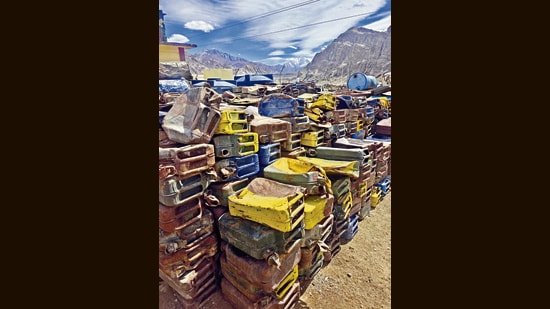
In a historic move to de-clutter the ecologically fragile Himalayan frontiers, the Indian Army has launched a massive initiative to retrieve thousands of rusted iron jerry cans—some nearly 80 years old—scattered across the glaciers and mountains of Ladakh.


The project marks a shift from decades of air maintenance dependency to sustainable ground logistics. Since the 1962 conflict, remote posts along the Indo-China border remained inaccessible by road, forcing the military to airdrop essential food, kerosene, and fuel in iron containers. Over time, these containers accumulated into “tin wastelands,” corroding in temperatures as low as -25°C and scarring the pristine landscape.
Logistics to legacy
The scale of this legacy scrap became fully visible only recently, following an infrastructure push by the Border Roads Organisation (BRO). The expansion of the border road network has finally allowed access to high-altitude zones that were previously accessible by flight only.
Environmentalist Colonel PS Bindra (retd), who flagged the issue to the Northern Command six months ago, said hundreds of tonnes of scrap was lying in the mountains.
He said while these cans ensured troop survival for decades, they left a silent scar. “Critical supplies like ration and kerosene were dropped in cans dating back to the 1960s. While some were repurposed for bunkers or makeshift steps, most continued to corrode across ecologically sensitive zones,” he said.
The movement gained momentum after field insights from Stenzin Dorje (Veeru), superintendent of jails, Leh, led to the recovery of a 1944-vintage jerry can from a glacier. Experts warn that the metal oxidation of these containers poses a long-term threat, as iron oxides can leach into the soil and glacial meltwater, potentially affecting the Indus river system.
Back-loading waste
Under the direction of the Northern Command army commander Lt Gen Pratik Sharma, the army is now using “reverse logistics.” Ashok Leyland Stallion (ALS) trucks, which carry fresh supplies to forward camps, are no longer returning empty. Instead, they are being loaded with metal waste.
So far, 15 to 20 truckloads have been brought down to Leh and Karu. The collected material is slated for a transparent e-auction via Metal Scrap Trade Corporation (MSTC) Limited. This ensures that the operation not only restores the plateau’s natural state but also generates national revenue from the disposal of surplus military stores.


