



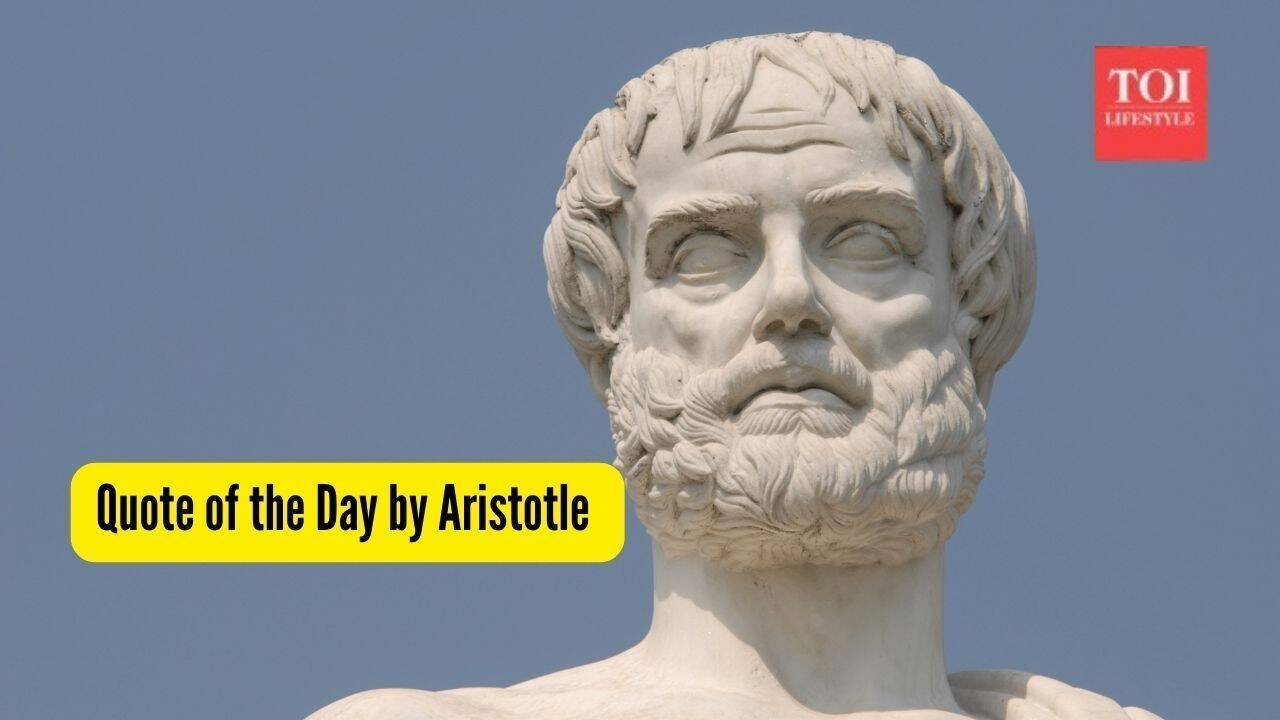
Aristotle was one of the greatest philosophers in the history of humankind. His ideas have impacted almost every field of life from philosophy, science, politics, ethics, education to modern logic. Philosophers were often concerned with just abstract theories, but Aristotle thought that wisdom should be used to help people live better lives. More than 2,300 years later, his teachings still influence schools, universities, governments and scientific thought. Aristotle was born in the Greek northern city of Stagira in 384 BC. His father Nicomachus was physician to the Macedonian royal family. Aristotle came from a medical family and was exposed to observation, biology and scientific inquiry from an early age. These early influences later led him to study nature closely, instead of relying on speculation alone.At the age of seventeen he went to Athens, the intellectual capital of the Greek world, and joined Plato’s Academy. Plato, a student of Socrates, was already one of the great philosophers of Greece. Aristotle stayed for nearly twenty years, becoming one of Plato’s most brilliant pupils. Aristotle greatly respected his teacher , but frequently disagreed with Plato ‘s ideas . Plato was interested in perfect forms and abstract realities . Aristotle thought that knowledge should start with observations of the real world . After Plato’s death, Aristotle left Athens and spent several years travelling and conducting research. King Philip II of Macedonia invited him to tutor his son, the future Alexander the Great, which he accepted c. 343 BCE. By teaching the young prince, Aristotle achieved influence over one of the greatest military leaders in history.Aristotle returned to Athens after Alexander’s ascension to the throne and founded his own school, the Lyceum. Unlike many of the schools before it, the Lyceum did not concentrate on philosophical debate, but promoted systematic study of subjects ranging from biology and astronomy to politics, literature, ethics and logic. Aristotle and his students collected plants, animals, constitutions and scientific observations, making the Lyceum one of the first research institutes in the history of the world. Anti-Macedonian feeling rose in Athens after Alexander the Great died in 323 BCE. Afraid of political persecution, Aristotle left the city, reportedly remarking that he would not allow Athens to “sin twice against philosophy,” a reference to the earlier execution of Socrates. There he moved to the island of Euboea where he died in 322 BCE at the age of sixty-two.His philosophy Aristotle believed that all men, by nature, desire to be happy, but he took happiness much deeper than pleasure or comfort. He spoke of eudaimonia, a Greek word often rendered as “human flourishing” or “living well.” Aristotle thought leading a life of virtue, wisdom, responsibility and purpose is the key to true happiness. One of his most famous philosophical concepts is the Golden Mean. Aristotle claimed that virtue generally lies between two harmful extremes. Courage, for example, is between cowardice and recklessness. Generosity is a mean between selfishness and wastefulness. Confidence is a place between insecurity and arrogance. A wise man is never too much or too little.Aristotle also emphasised practical wisdom that he called phronesis. Intelligence was insufficient. A truly wise man can make the right decision in everyday life combining reason and experience with a sense of moral character. Many philosophers considered mind and body as separate, but Aristotle viewed human beings as social creatures who achieve their full potential only through engagement in family, friendship and community. He is famous for calling people “political animals” which means that people naturally live and thrive in society.For about 2000 years his work on logic gave the basis for rational thinking. His systems of deductive reasoning became central to philosophy, mathematics and scientific inquiry. His work in biology was also revolutionary, as he studied hundreds of animal species with great care and tried to classify living organisms.Aristotle’s legacy in the worldFew thinkers have had as much influence on human civilisation as Aristotle. His writings influenced the ancient Greece, the Roman Empire, mediaeval Europe, the Islamic Golden Age, and the Renaissance. His ideas were central to ethics, political theory and metaphysics in philosophy. In the Middle Ages, Thomas Aquinas and other scholars combined Aristotle’s philosophy with Christian theology, and so his works became the foundation of European intellectual life.Islamic scholars, such as Avicenna and Averroes, translated, preserved, and expanded the works of Aristotle, allowing his ideas to live on into the Middle Ages. His influence reaches into science as well. Although many of his scientific conclusions were revised by modern research, his insistence on observation, classification and logical reasoning became the foundation of scientific methodology. Political scientists today still study Aristotle’s analyses of constitutions , citizenship and good governance . He believes in education that builds knowledge and moral character, a notion educators admire. His moral lessons are still used to provoke discussion on leadership, responsibility and personal growth.Quote of the DayOne of the most iconic quotes of Aristotle with a profound meaning is, “The main aim of men who are wise is not just to secure pleasure in life but to try and stay away from things that can cause pain.” This quote reflects Aristotle’s pragmatic view of happiness. This might initially seem surprising, because so many people assume that happiness comes from the pursuit of pleasure. Aristotle did not concur. Instead, Aristotle says, wise people think ahead. They avoid the habits, decisions and behaviours that lead to pain in the end. This pain can be physical, emotional, financial, moral or social.For instance, an individual may love to spend recklessly today but later financial problems bring stress and hardship. Another may like unhealthy eating but bad health comes years later. The student may prefer to enjoy himself now rather than study, but then later he faces academic challenges. And always, temporary pleasure is the mother of lasting pain. The point Aristotle makes is not that pleasure is bad. He never said people should reject enjoyment altogether. Pleasure, he thought, should come naturally from living a virtuous, balanced life. This philosophy is still very relevant today. In our world today, we are always tempted by social media, online shopping, fast food, gambling and entertainment to seek instant gratification. Most of these activities provide instant gratification, but too much of any of them can cause anxiety, debt, addiction, ill health or damaged relationships. Aristotle would advise people to ask one simple question before making important decisions: Will this choice make my life better in the long run, or will it cause problems later? That habit of reflection, of thoughtfulness, is what separates wisdom from impulse. His quote also reminds us that part of being happy is being resilient. Life is a rollercoaster. Wisdom does not remove all pain. It helps people to not cause unnecessary suffering to themselves through bad decisions. With moderation, self-discipline and good judgement, people are capable of creating more stable, meaningful and fulfilling lives.Aristotle was more than just a philosopher. He was a scientist, a teacher, a researcher and one of the great intellectual pioneers of history. His thinking about ethics, logic, politics, education and science still influences the modern world. Aristotle was not like those thinkers who only wanted abstract theories. He wanted to help people live well, using reason, virtue, and practical wisdom.


