



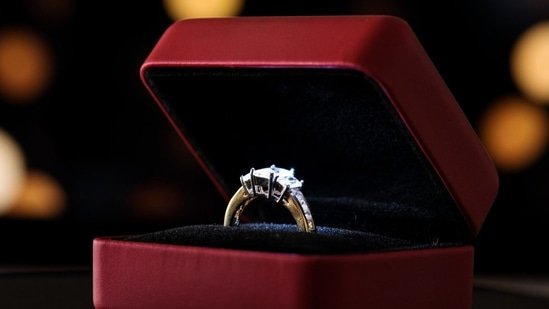
Jewellery purchase is a major decision, especially when it involves precious diamond. Apart from the serious financial commitment, it also carries deep emotional weight, as a diamond is seen as an heirloom in itself. It may celebrate a career achievement, a personal milestone, a birthday, an anniversary, or another life-defining moment. So, buying jewellery is never casual. It needs to be a well-thought-out decision. This means you need to have clarity along with a comprehensive understanding of what exactly one is investing in.
ALSO READ: 8 things every first time diamond buyer should know: From budget to natural vs lab-grown options


Diamond purchase typically is surrounded by a lot of confusion, whether it is about pricing, certification, quality, authenticity, or long-term value. So buyers need to know what they are purchasing and if it aligns with their expectations and purchase.
For a detailed FAQs guide on diamonds, HT Lifestyle spoke to Shyamala Ramanan, business head of BEYON, from the house of Titan. Here’s the full conversation presented as an easy guide for diamond buyers confused about natural and laboratory-grown diamonds:
1.Are laboratory-grown diamonds real diamonds or are they some kind of substitute?
Both are diamonds: The answer is unambiguous: they are real diamonds. Not diamond-like. Not diamond-inspired.
Same properties: A laboratory-grown diamond is chemically, optically, and physically identical to a mined diamond- the same carbon crystal structure, the same hardness, the same fire and brilliance.
Different origin: The only difference is where the diamond is formed. A mined diamond is created deep inside the earth over billions of years, while a laboratory-growth diamond is grown in a controlled facility by scientists who replicate the natural geological process in a matter of weeks.
Correct terminology: Since these diamonds are created in a laboratory, they should be referred to as laboratory-grown or laboratory created diamonds.
Hard to tell apart: Even a gemologist cannot tell the difference between a mined diamond and a laboratory-grown diamond simply by looking at them.
2. If they’re identical, why are laboratory-grown diamonds so much more affordable? Should one be worried?
Different journey, different price of natural diamond: Price of mined diamond reflects its entire journey – billions of years in the earth, extraordinary extraction, complex global supply chains.
Shorter creation process of lab diamonds: Laboratory-grown diamonds have a different, shorter journey – grown in weeks in a controlled facility, without those layers of cost. The result is a gemstone of equivalent quality at a fraction of the price.
Equivalent quality: Despite the lower price, lab-grown diamonds offer equivalent quality, as they have same physical, chemical and optical properties like mined diamonds.
More freedom for buyers: Affordability gives buyers more freedom to buy.
Different emotional purposes: A person may cherish a family’s mined diamond solitaire for its sentimental value, while also choosing laboratory-grown diamond necklace for everyday or occasion wear.
3. Is a laboratory-grown diamond a good investment? Should one be thinking about it the way one thinks about gold?
Gold has a different role: Gold has its own logic and place. Diamonds, whether mined or laboratory-grown, should not be competed for gold, or thought in the same way.
Shift the mindset: Mindset has made people better at storing jewellery than enjoying it. Many pieces are bought, kept safely in lockers, brought out only for weddings and then left unseen for most of their life.
Step away from the calculation: Laboratory-grown diamonds, she said, allow consumers to step away from this constant calculation of resale and returns. They open the door to buying jewellery for indulgence, beauty and everyday joy.
Buy it for joy: The larger takeaway is that laboratory-grown diamonds should be aimed to be bought for design, self-expression, and the pleasure of wearing them, rather than being treated like gold or a financial investment.
4. Are buyers now looking beyond bigger stones and lower prices?
Bigger stones starting point: The idea of getting bigger stones at better prices helped introduce laboratory-grown diamonds to consumers. It gave buyers a practical reason to consider the category when it was still new.
Shift towards design: Consumers are now looking beyond carat size and affordability. The conversation is shifting towards design, feeling, wearability and personal style.
More personal questions: Buyers asking whether a piece feels like them, whether it is practical, whether it is easy to wear and whether it still looks special.
Not a replacement: Laboratory-grown diamonds do not replace traditional solitaires or mined diamonds. Instead, they exist alongside them.
5. Should buyers worry about resale value?
Market evolving: The market is evolving, prices have come down significantly, which means buyers get more for your money today than someone did three years ago. Future prices hard to predict.
Purpose matters: More important question is whether resale value matters if buyer is purchasing the piece to actually wear and enjoy.
Different kinds of value: Mined diamond may carry sentimental or heritage value, especially if it is passed down through generations. A laboratory-grown diamond, on the other hand, may carry meaning because of its design, wearability, and the joy it brings to the person wearing it.
Resale anxiety from investment thinking: Concerns around resale value becomes prominent when jewellery is treated like financial instrument only rather than adornment.
Young buyers think differently: They are approaching jewellery without investment value as the primary lens.


