


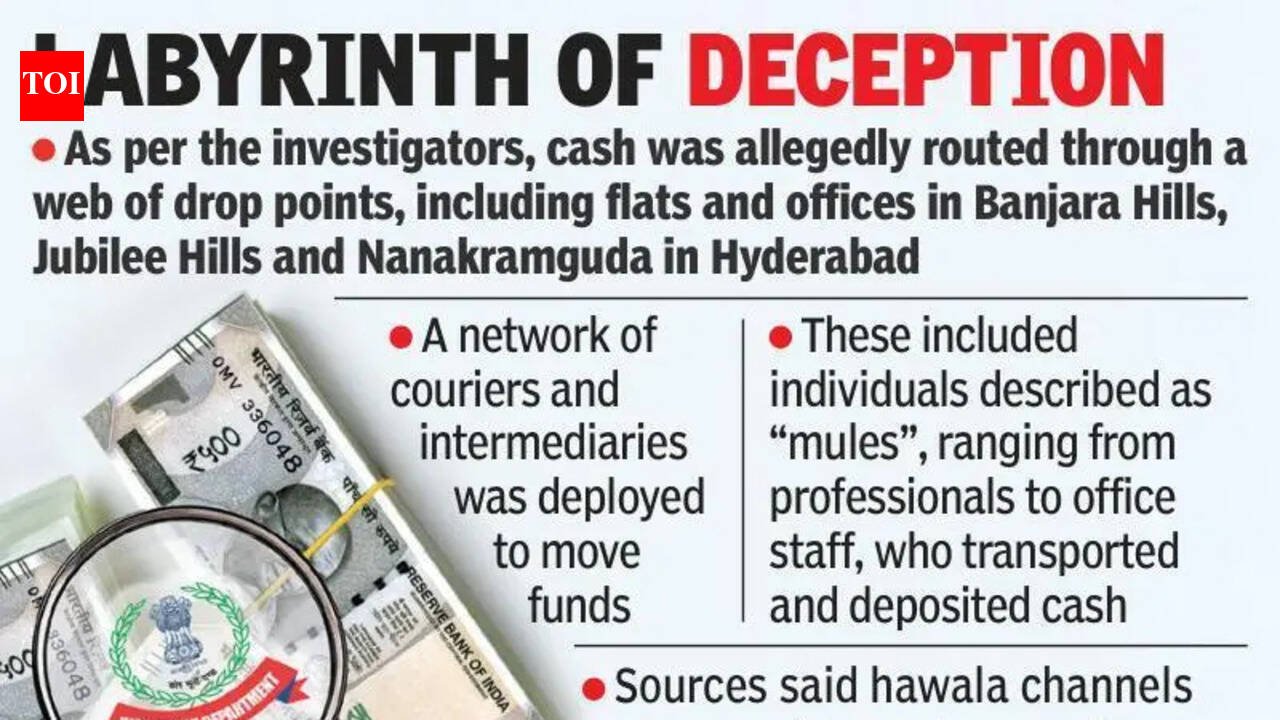
Hyderabad: The Income Tax Department has begun a probe into the alleged Andhra Pradesh liquor scam, after action by the state police, the Enforcement Directorate (ED) and the Serious Fraud Investigation Office (SFIO). The department is suspecting that nearly 2,000 crore in unaccounted cash was generated through the alleged fraud, even as the overall scam value is estimated at around 3,500 crore.According to sources in the Income Tax wing, demand notices are set to be issued to the key accused, seeking tax on the unaccounted income. Statements of the accused are already being recorded as part of the proceedings.Cash generation model under scrutinyInvestigators have documented a system that allegedly generated and routed unaccounted cash between Oct 2019 and March 2024. The total illegal gains are estimated at about 3,500 crore, with monthly collections at the peak ranging between 50 crore and 60 crore. Witness accounts cited in the probe suggest kickbacks may have touched 70-80 crore per month linked to the sale of around 30 lakh liquor cases.The primary source of cash generation was a per-case kickback mechanism, ranging between 15% and 20% of the base price. Rates varied across categories — from 150 per case for low-cost brands to 600 for high-end brands.Sources in the Income Tax wing said the probe has also flagged inflated procurement practices, where distilleries allegedly paid vendors three to five times the market price for raw materials such as bottles, caps and extra neutral alcohol. The excess amounts were allegedly returned in cash. Investigators have further identified the use of bogus invoices by entities such as Adan Distilleries and Leela Distilleries for goods not supplied, with about 76.92 crore suspected to have been diverted through such transactions.Another method under scrutiny is the approval of similar-sounding brands with higher base prices, which allegedly enabled suppliers to generate margins for kickbacks.Cash movement network mappedThe probe has also traced the logistics of cash collection and movement designed to avoid a digital trail. As per sources in the Income Tax wing, operatives used VPNs, international numbers and encrypted applications such as Signal and WhatsApp to coordinate deliveries.
