



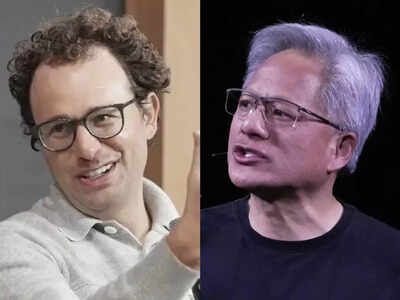
Anthropic CEO Dario Amodei has once again made it clear that he thinks selling advanced AI chips to China is a terrible idea. In a wide-ranging conversation on the Dwarkesh Patel podcast, Amodei laid out his case for why the US should keep its compute advantage locked down—directly contradicting what Nvidia CEO Jensen Huang has been lobbying Washington to do for months now.Amodei didn’t mince words. He said the US shouldn’t be building data centres in China or shipping chips there, arguing that AI models powered by those chips are “essentially cognition, essentially intelligence.” His framing was blunt: sell cures for diseases to whoever wants them, build pharmaceutical industries in developing nations, but keep the data centres and the chips firmly out of authoritarian hands.He even floated a scenario where AI tools could be designed to protect citizens inside authoritarian countries from their own governments’ surveillance—a kind of individualized digital shield. It’s a bold idea, and Amodei admitted he doesn’t know if it would work. But he seemed genuinely interested in exploring it.
Anthropic CEO frames AI chips as a national security chokepoint, not a trade commodity
This isn’t the first time Amodei has gone after Nvidia’s China ambitions. At Davos last month, he compared selling H200 chips to China to “selling nuclear weapons to North Korea and bragging that Boeing made the casings.” On the podcast, he went further—warning that if both the US and China end up with equally powerful AI systems, the result could be a standoff far more dangerous than nuclear deterrence.His reasoning: unlike nukes, where mutually assured destruction keeps things stable, two rival AI superpowers might each believe they’d win a direct confrontation. That kind of mutual overconfidence, Amodei argued, is historically what starts wars. He also raised the prospect of offensive cyber dominance—a threshold where one side’s AI could make every computer system transparent to it, unless the other side has an equally strong defence.
Why Amodei says ‘growth will come easy’ but political freedom won’t
Amodei also reframed the entire export debate around something bigger than quarterly revenue. He said economic growth from AI will arrive almost “faster than we can take it.” The hard part won’t be generating value—it’ll be distributing it fairly and protecting political freedom in a world where authoritarian governments can weaponise AI against their own people.Rather than cutting developing nations out of the AI boom, he suggested building data centres in Africa and ensuring AI-driven industries like biotech take root outside the West. The pitch: spread the benefits without handing authoritarian governments the keys to the entire AI stack.He went as far as to say that dictatorships might eventually become “morally obsolete”—not because someone overthrows them, but because the technology itself makes that form of government unworkable. Whether that’s optimism or wishful thinking is up for debate.
The Nvidia-Anthropic rivalry is becoming the defining feud in AI policy
What makes all of this spicier is that Nvidia has poured over $10 billion into Anthropic. Yet Amodei keeps publicly torching Nvidia’s biggest policy ask. Huang, for his part, has accused Amodei of wanting more AI regulation only because it benefits Anthropic’s competitive position. He’s also taken shots at Amodei’s warning that AI could eliminate half of entry-level white-collar jobs, calling it self-serving fear-mongering.The two have been trading barbs for the better part of a year now—and if this podcast is anything to go by, neither seems remotely interested in backing down.

