



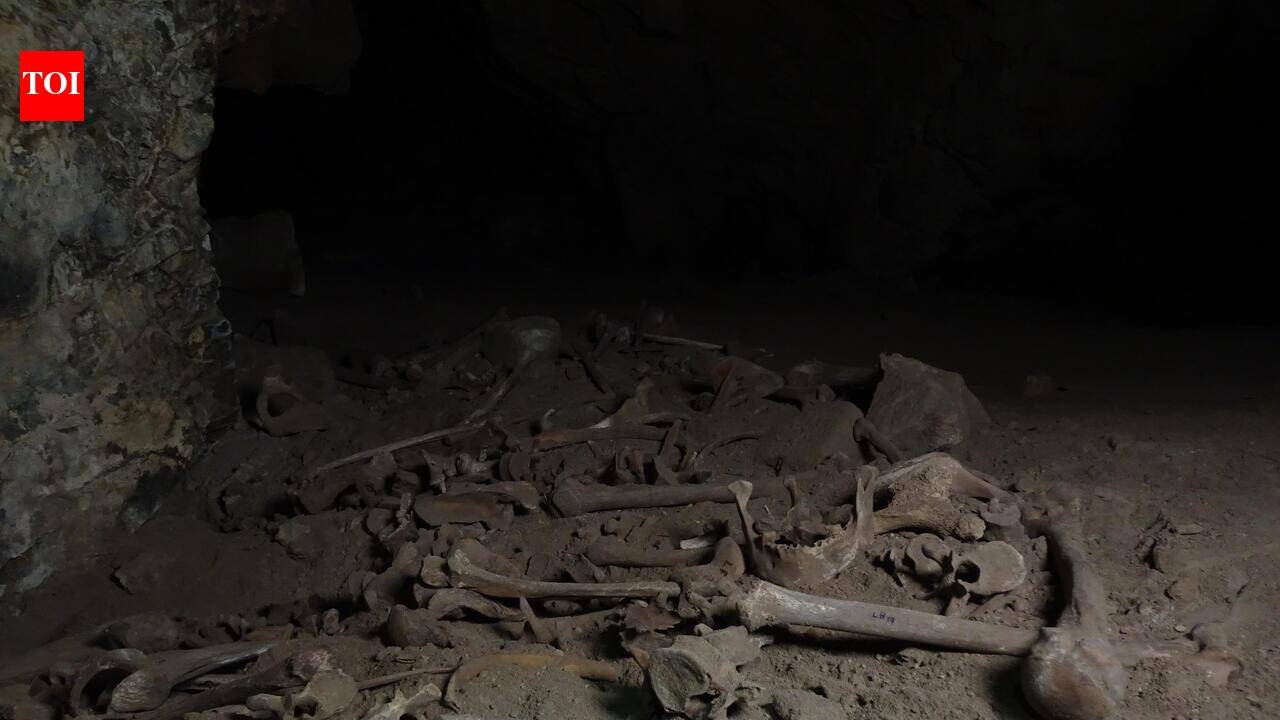
Pune: Ancient DNA taken from Old Lady Spider Cave, a burial place in Ladakh, 4,000m above sea level, has identified a population that no longer exists.Ten people, laid to rest here some 1,450 years ago, carried ancestry that was about half-Tibetan and half-North Indian. That combination is almost unheard of among South Asians now. The two ancestries first came together around 2,800 years ago, centuries before any written record of contact across these mountains, researchers said.The findings, published in Science Advances, are the strongest proof yet that the Himalayas were an active corridor for human migration and interaction.Scientists from Harvard Medical School, Broad Institute of MIT and Harvard, Collège de France, Deccan College Post Graduate and Research Institute, Pune, University of California, Santa Cruz, and several other institutions across Europe, United States, and India collaborated on the research.Co-senior author Veena Mushrif Tripathy of Deccan College said, “The study changes our understanding of how populations moved and settled across the Himalayas and highlights Ladakh’s role as a meeting point of diverse cultures.”Reconstructing population history is harder in South Asia than in many other regions due to a paucity of ancient DNA. Using advanced genetic modelling, researchers estimated that this admixture first occurred nearly 2,800 years ago, at least 50 generations before the date of the individuals. It created a stable Himalayan community that persisted for centuries.Mark Lipson, a population geneticist at Harvard Medical School and Broad Institute, also a co-senior author of the study, said the genomes reveal a population that was never before documented. “Rather than acting as an impassable wall, the Himalayas facilitated repeated interactions between people from the Tibetan Plateau and South Asia,” he added.The discovery also fills a major gap in South Asian archaeology because ancient DNA from the region is exceptionally rare. Warm climatic conditions usually degrade DNA, making well-preserved ancient genomes from the Himalayas invaluable for reconstructing early population history.“This work demonstrates the importance of integrating archaeology with ancient DNA. The findings show that Ladakh was a key crossroads where people, cultures and ideas came together long before the Silk Route became prominent,” Tripathy added.The study combined archaeological evidence with sophisticated genome sequencing and involved experts in archaeology, anthropology and genetics.Senior authors include David Reich of Harvard Medical School and Broad Institute, among the world’s leading experts in ancient DNA, and Frantz Grenet of Collège de France, an authority on archaeology and history of Central Asia.The findings also reinforce archaeological evidence that Ladakh connected South Asia, Central Asia and the Tibetan Plateau through long-standing networks of mobility, trade and cultural exchange.The authors believe that expanding ancient DNA research across the Himalayas and the Indian subcontinent could reveal many more previously unknown populations and transform the understanding of prehistoric migration in Asia.


