



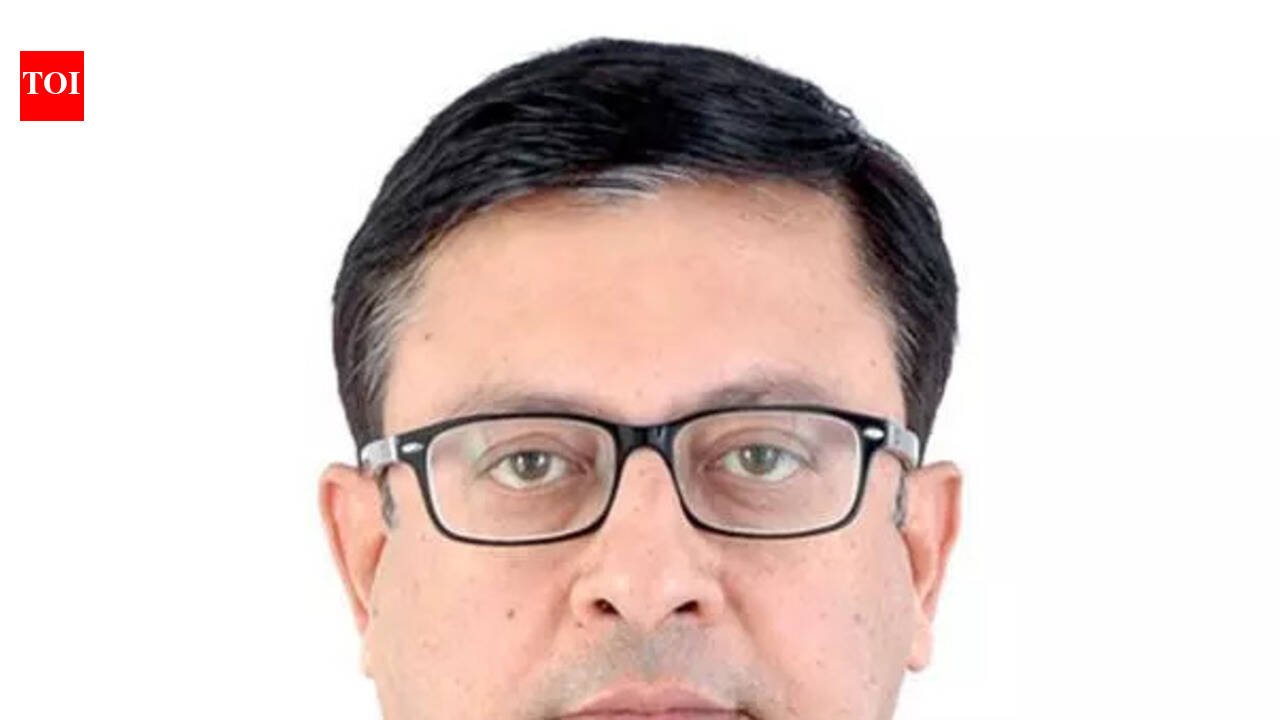
Jyoti Chatterjee, a mechanical engineering graduate of 1977, now settled in California, signed an MoU with IIT-Kharagpur on Monday. The school, which will be named after Chatterjee, will be integrated within IIT-Kgp’s innovation system, including the School of Medical Science and Technology, the Centre for Research in Digital Healthcare Technology, Dr Shyama Prasad Mookerjee Super Speciality Hospital, AI and high-performance computing clusters, and institute-wide innovation and entrepreneurship platforms.“It will be India’s first fully integrated digital engineering and applied AI engine embedded inside a super-specialty hospital ecosystem, where algorithms meet patients, chips meet clinics and innovation meets society,” said IIT-Kgp director Suman Chakraborty. “Jyoti Chatterjee School will power responsible AI for Bharat — converging robotics, cyber-physical systems, edge intelligence, deep neural architectures and digital infrastructure into deployable national capability.” TOI had reported on Chatterjee’s $ 1 million donation to IIT in Nov 2025 to develop the country’s first indigenous low-field bedside MRI system. “I was born in Kolkata but I spent the first six months of my life on the IIT-Kgp campus. My father was a faculty member at the metallurgical engineering department. It gives me immense satisfaction to be back in IIT Kharagpur and foster this collaboration,” Chatterjee said. “Through this initiative, I aim to position IIT-Kharagpur as a world leader in digital engineering, AI, IoT-driven applied tech, and translational innovation. It will support my alma mater in building a school that will advance frontier research in AI and data science, foster affordable healthcare innovation, enable translational product development and deep-tech entrepreneurship.” Chakraborty said the school would begin with the initial seed fund of the earlier $1 million, backed by a structured five-year $5 million funding. “Unlike other AI centres, this school unifies digital engineering, AI and ML, IoT, cyber-physical systems, robotics, edge intelligence and biomedical AI, enabling full-stack innovation,” he said. “It will host industry labs, deploy AI and IoT testbeds, run pilot-scale field validations and support translational maturation towards real-world adoption across healthcare, manufacturing, energy and infrastructure sectors.“The IIT Kharagpur alumnus is a recipient of Henry M Chance Research Fellowship at the University of Pennsylvania and National Science Foundation Fellowship by the US govt.


