






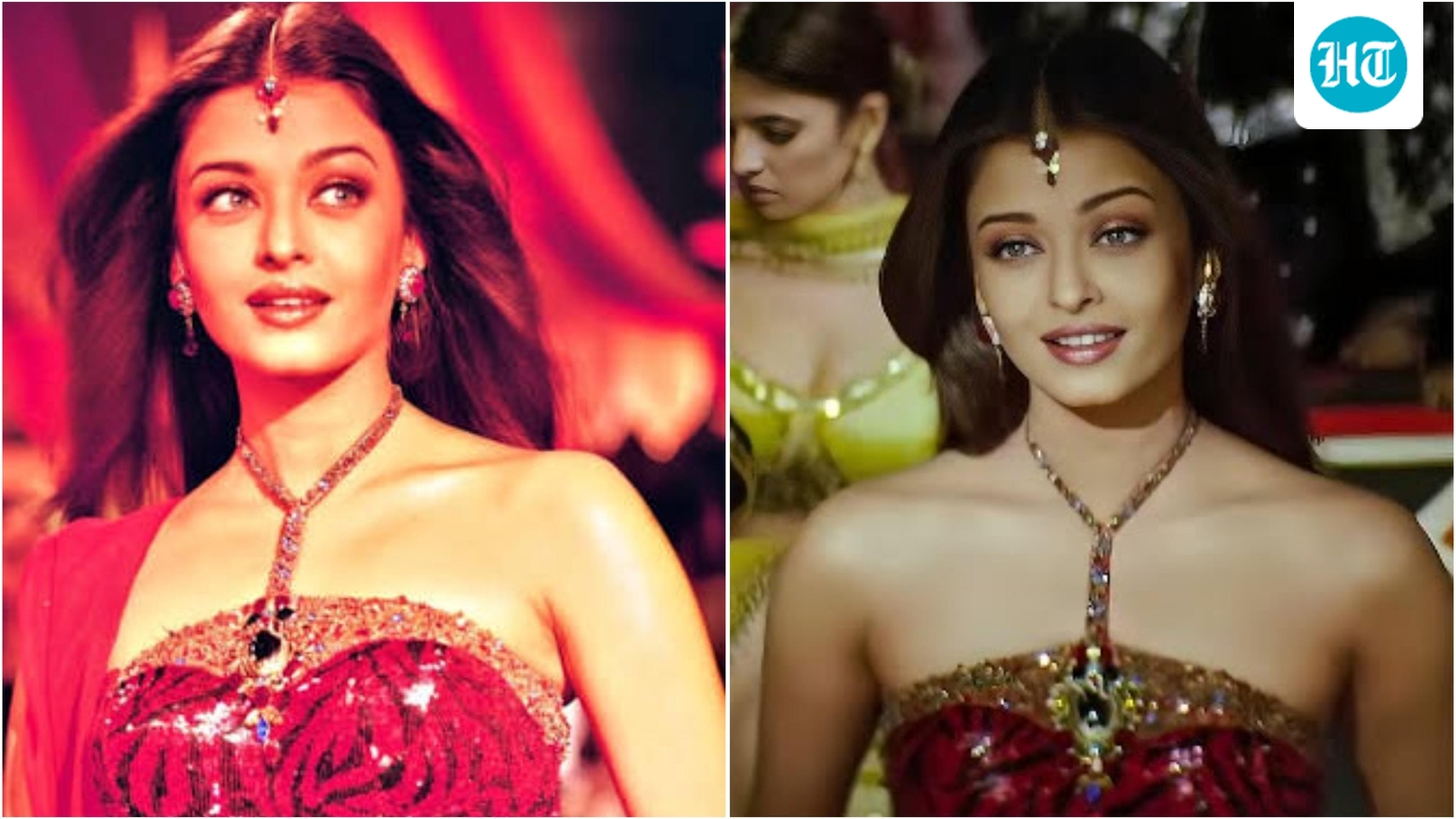
Some Bollywood outfits stay with us long after the song ends, and every once in a while, a look from the past reminds us just how far ahead of its time it really was. One such look is fashion designer Neeta Lulla’s striking ensemble for Aishwarya Rai in the song Saajan Saajan from the movie Dil Ka Rishta.
Revisiting the iconic creation, Neeta shared the story behind the outfit in her October 15 Instagram post, offering a glimpse into the thought process and craftsmanship that went into creating this memorable piece of Bollywood fashion. (Also read: Isha Ambani’s ethnic look at Swadesh anniversary is a masterclass in maximalism, vibrant colours and traditional craftsmanship; take fashion notes )
Neeta Lulla revisits Aishwarya Rai’s iconic 90s look from Saajan Saajan
Describing it as “every girl’s dream outfit,” Neeta shared, “I designed this outfit for a song. The intention was to create something sensual and glamorous. This outfit had to be rooted in Indian craft.”
The ensemble was a striking departure from conventional lehenga styling. It featured a structured blouse with an almost corset-like construction, paired with a slim skirt and trousers underneath, complete with a slit. The result was an experimental silhouette that challenged traditional proportions while retaining the essence of Indian dressing.
The defining element was its bold red-and-black leopard print, embellished with intricate zardozi work. Recalling the fashion sensibilities of the 1990s, Neeta explained that leopard print was a prominent trend at the time, and she frequently explored the motif through zardozi embroidery and turquoise-toned variations. The ensemble became a memorable on-screen expression of this aesthetic with Aishwarya Rai.
A corset-inspired silhouette with a bold 90s twist
“What we might call a fusion lehenga or a contemporary silhouette today was already a part of the thinking then,” Neeta reflected, describing how she reimagined Indian dressing by changing proportions and construction to create a fresh design language.
The styling was equally considered. Rather than treating jewellery as a separate accessory, Neeta envisioned it as an extension of the garment. A statement neckpiece complemented the corset-inspired blouse, while a heavily embellished belt, detailed with trinkets and stones, replaced the conventional waistband treatment on the skirt.
The accessories were designed to move with Aishwarya, lending the outfit rhythm, movement and a distinctive visual identity. Every element served a purpose, contributing to a look that was as expressive in motion as it was striking on screen.
“For cinema, it couldn’t only look beautiful in a still or in a visual. It had to move, it had to work while dancing, turning and performing,” Neeta explained.
That understanding of movement was central to the outfit’s appeal. Created for a cinematic moment, it had to meet the demands of performance while maintaining its glamour and visual impact.
A 90s fashion moment that still feels relevant
Looking back today, Neeta finds the design vocabulary remarkably relevant. Corsetry, bustiers, draping and sculptural silhouettes have once again become prominent in contemporary fashion, including bridal wear. The ensemble’s fusion of traditional craftsmanship with experimental construction feels particularly resonant as designers continue to reinterpret heritage through modern forms.
The look also stands as a reminder that fashion is cyclical. What was considered daring and unconventional in the 1990s can return decades later as a source of inspiration, reimagined for a new generation.


