


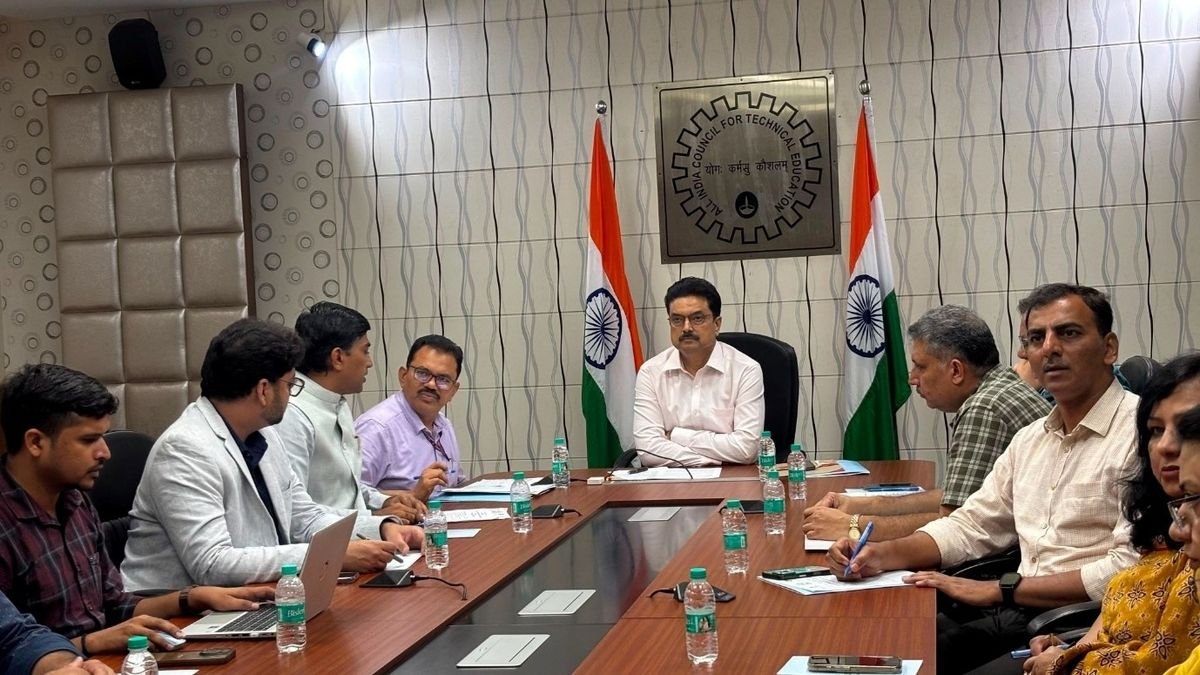
New Delhi, Aug 21: The All-India Council for Technical Education (AICTE) and the Ministry of Education’s Innovation Cell (MIC) on Friday launched the 9th Edition of Smart India Hackathon (SIH) 2026 through an online ceremony.
The launch was led by Prof. Yogesh Singh, Chairman, AICTE, in the presence of Deputy Secretary (Higher Education), MoE, Dr. Tapasya Raghav, institute/university representatives, faculty members, Single Point of Contacts (SPOCs) of different ministries, department, PSU, industry and students from across the country. With the launch, Team Nomination and Idea Submission for SIH 2026 were officially opened.
Addressing the gathering, Prof. Yogesh Singh said, “SIH is a dynamic movement that bridges the gap between student creativity and societal, governmental and industry challenges. What makes SIH unique is its collective effort. This year, we have received 226 problem statements across domains, including AI, ML, IoT, 6G, agriculture, cybersecurity, clean and green technologies, and disaster management, contributed by over 27 Ministries, 12 PSUs and industries and 02 State Governments.”
“SIH is not a competition; it is a key driver of Aatmanirbhar Bharat and a reflection of NEP 2020 in action, promoting experiential, multidisciplinary learning. We look forward to transforming ideas into sustainable, scalable solutions and startups.”
Prof. Yogesh Singh called upon all participating institutions and SPOCs to begin team nominations and encourage students to develop innovative solutions to real-world challenges.
He urged institutions to treat the launch as the starting point for internal hackathons, team formation and mentoring, and encouraged students to work on ideas addressing the country’s pressing needs.
Institutions and students can approach their respective SPOCs for nomination and participation-related guidance. Detailed information on problem statements, themes and participation guidelines is available on the official SIH portal, sih.gov.in.
The platform is designed to encourage collaborative, solution-oriented participation across disciplines and institutions, while enabling students to work closely with mentors, faculty members and problem owners across the country.