



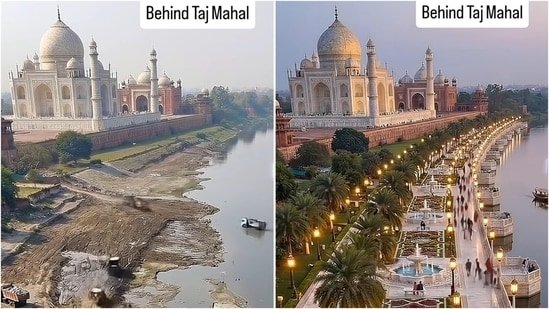
AI can be used in so many ways, from creating art to solving real-world problems, and this latest example is both imaginative and inspiring. On March 13, Instagram page Dream India, which frequently posts content related to AI, shared a stunning visual reimagining the polluted banks of the Yamuna behind the Taj Mahal as a sprawling Mughal-style garden. (Also read: AI reimagines Sridevi-Janhvi Kapoor, Hema Malini-Esha Deol and other famous Bollywood mother and daughters in glam looks )
AI reimagine polluted riverbank as lush garden
The AI-generated transformation showcases lush lawns, fountains, and tree-lined pathways, offering a glimpse of what the historic site could look like if technology and environmental restoration came together.
“From polluted riverbank to royal Mughal promenade. The Yamuna riverbank behind the Taj Mahal has long faced pollution and neglected shoreline space. This concept imagines a Mughal-inspired marble promenade, designed to reflect the elegance and symmetry of the Taj itself,” reads the caption of the post.
The Yamuna riverbank, situated directly behind the crown jewel of Mughal architecture, the Taj Mahal, has been a focal point of environmental concern for decades. Receding water levels, industrial pollutants, and seasonal toxic foam have left the shoreline in stark contrast to the pristine white marble of the monument.
How AI bring the vision to life
The AI-generated visual sequence of the transformation is as striking as it is imaginative. It begins with a realistic “construction” phase, showing a massive grid of steel rebar and a line of concrete mixers stretching along the riverbank. This gritty, industrial opening grounds the fantasy in a sense of possibility before the AI renders the final result: a breathtaking expanse of gleaming white marble. It allows viewers to move beyond the current reality of pollution and envision a meticulously crafted, idealised future.
The final AI-rendered promenade is a masterclass in architectural symmetry, featuring intricate Charbagh-style gardens with vibrant marigolds and petunias arranged in traditional Persian patterns. Multi-tiered fountains and vintage-style lampposts line the walkway, creating an atmosphere that feels like a natural extension of the Taj Mahal’s own plinth.
Beyond its visual beauty, this concept acts as a form of visual advocacy: by proposing a marble walkway, the AI evokes the original urban planning of the 1600s, when the river was a celebrated part of the monument’s experience rather than a neglected backdrop.
How internet reacted
The AI-generated video has gone viral, racking up over 10 million views and hundreds of comments. Social media users were quick to react, mixing admiration with sarcasm. One of the top comments read: “Only AI can fix India.” Another added, “It was only possible while Shah Jahan was alive.”
Some users lamented the gap between imagination and reality: “Unfortunately, this will only happen on AI in our country,” and “We’re so desperate for clean spaces that we have to use AI to see what it would be like.” One user commented, “400 crore ₹worth project right there,” another added, “I wish this becomes reality.”
Comparisons to other countries also appeared: “If the Taj Mahal were in Spain, France, or any European country, they would have made it look exactly like this.” Playful takes like “Taj Mahal in a parallel universe” popped up alongside more critical observations: “We can travel to the moon or conquer the world, but this is not possible in India.”


