



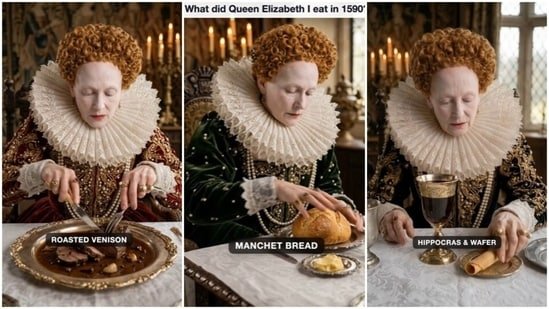
In a blend of history and technology, content creator History Remastered has released an AI-generated look at a royal ‘dinner’ from the year 1590. While the AI-generated video features a stunningly detailed Queen Elizabeth I, the real stars are the hyper-realistic recreations of 16th-century delicacies, from dessert to wines. Also read | AI reimagines young Dharmendra, Amitabh Bachchan, Rishi Kapoor in chic streetwear; fans swoon over Vinod Khanna
The main event: 11am ‘dinner’
In the Elizabethan era, ‘dinner‘ wasn’t an evening affair, it was the primary meal of the day, usually served around 11 am, History Remastered shared. For the Queen, this was a display of the crown’s resources:
⦿ Manchet bread: The video showcases Elizabeth breaking into a loaf of Manchet — the finest, most expensive white bread. Made from triple-sifted wheat flour, its stark white colour was a direct signal of status, as the poor were relegated to dark, gritty rye or barley bread.
⦿ Roasted venison: As a staple of royal feasts, this was almost always sourced from the Queen’s private hunting parks. Hunting was a strictly regulated aristocratic sport, making the presence of deer on the table a legal and social flex.
⦿ Roasted partridge: Small game birds were seasoned with exotic imports like cinnamon and ginger — spices that were becoming more available as trade routes with Asia expanded.
The ‘banquet’: a sweet finale
History Remastered added that, in 1590, the term ‘banquet’ did not refer to a large, multi-course feast as it does today; rather, it was the specific name for the final dessert course.
This sweet finale was often served in a separate location — such as a different room or a dedicated garden ‘banquet house’ — to provide a change of scenery and a fresh atmosphere. Because sugar was an incredibly expensive luxury imported from the Americas, the banquet served as a direct display of the host’s immense wealth.
Guests would indulge in delicacies like marchpane (a Tudor version of marzipan) made from ground almonds and sugar, which was frequently shaped into elaborate sculptures and gilded with real gold leaf. Other staples included candied citrus fruits, spiced gingerbread, and Hippocras, a sweetened, spiced wine paired with light, crisp wafers to help settle the stomach after a long meal.
A world of meat and ale
While the AI imagery focuses on the glamour, the historical reality of 1590 was a mix of abundance and caution. According to records from the period, shared in a 2020 Worldhistory.org article, most Elizabethans — rich and poor alike — shared a deep distrust of water, which was often contaminated. Instead, they survived on ale and beer. Even children drank ‘small beer’, a low-alcohol brew that was safer than the local well water.
The absence of forks also marked the era. In the video, the Queen is seen using her hands and a knife; forks were known in Italy but were considered an effeminate ‘foreign affectation’ in England until the 17th century. Food was served pre-cut, and diners used bread or spoons to navigate their trenchers (wooden plates).
The lavishness reportedly had a social function. The Queen and her court ate through multiple courses of meat, and the leftovers were passed down to servants. Anything remaining after that was traditionally distributed to the poor at the palace gates.
Note to readers: This report is based on user-generated content from social media. HT.com has not independently verified the claims and does not endorse them.
This article is for informational purposes only.


