






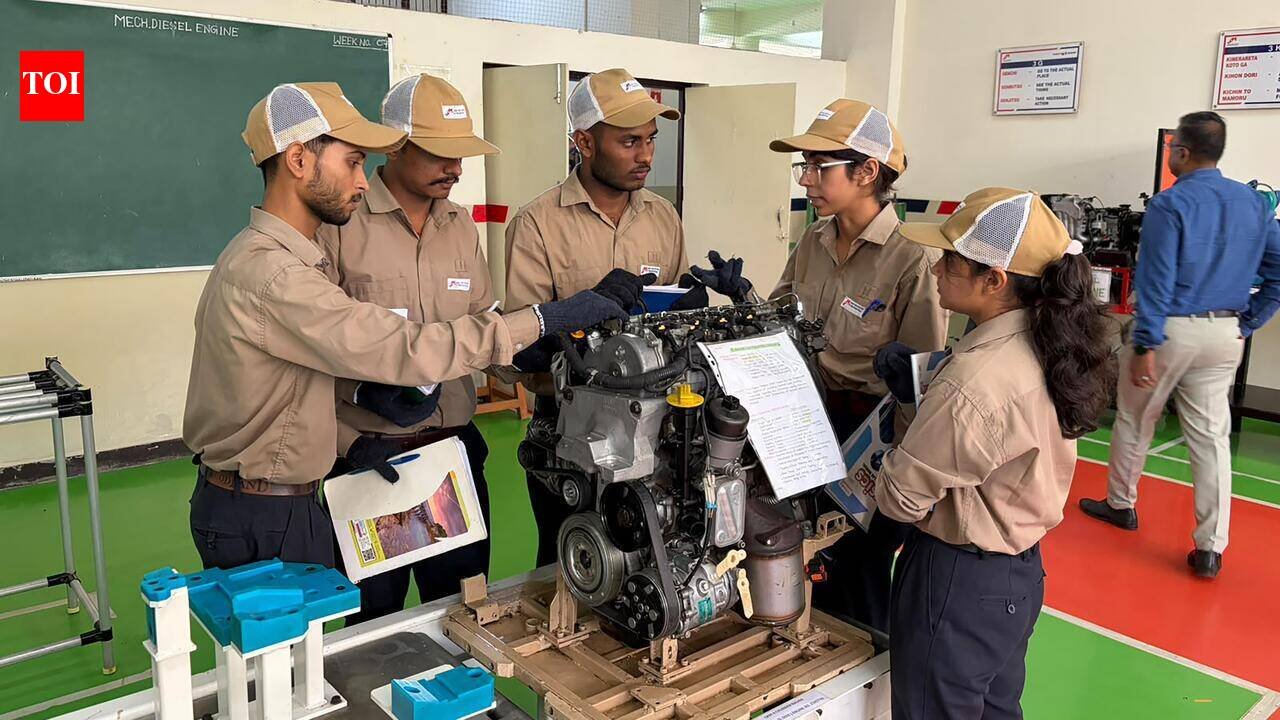
Gurgaon: Haryana is set for an industry-led makeover of 60 govt industrial training institutes (ITIs) across its 12 clusters under the Centre’s PM-SETU programme, with courses being developed in areas such as artificial intelligence, drones, electric vehicles, cybersecurity, semiconductors and green hydrogen. The five-year plan will give industry partners a key role in deciding courses, equipment, trainers, apprenticeships and placement pathways.Additional chief secretary, youth empowerment and entrepreneurship, G Anupama said anchor industry partners would hold 51% of the special purpose vehicles (or companies) set up to govern and manage each ITI cluster. “The model is intended to align vocational training more closely with industry requirements,” the official said.Under PM-SETU, industry partners will identify job roles, redesign courses, bring industry trainers into institutes and develop apprenticeship and placement pipelines. The model marks a shift from the traditional govt-led approach to one in which employers are expected to shape the supply of skills to match demand.The Centre has allocated Rs 60,000 crore for the five-year programme, including Rs 56,900 crore for upgrading 1,000 ITIs across the country. Each cluster has a hub ITI, the main institute providing advanced training and coordinating with other institutes, and spoke ITIs that support the cluster. A hub ITI can receive up to Rs 81 crore, while a spoke ITI can receive up to Rs 40 crore.The model has already moved into implementation in Haryana. On Monday, the national steering committee approved a Rs 320-crore strategic investment plan for the Kurukshetra ITI cluster, with Jindal Naveen Avsar Ltd as the anchor industry partner.The industry-led approach comes as Haryana has also expanded its apprenticeship programme. The number of apprentices engaged annually rose from 5,225 in 2016-17 to 86,565 in 2025-26. Cumulative engagement since 2016-17 crossed 4.73 lakh by Sept 19.Haryana already has an industry-linked vocational training model through Maruti Suzuki’s four Japan-India Institutes for Manufacturing (JIMs), two of which are in the state — at Manesar and Sonipat. The institutes were established under a collaborative initiative between the govts of India and Japan. They are affiliated with India’s National Council for Vocational Training and accredited by Japan’s ministry of economy, trade and industry.The company said the JIMs provide hands-on training in advanced manufacturing techniques, Japanese shop-floor management practices and soft skills. The aim is to make students industry-ready and to create a larger pipeline of trained manpower for India’s manufacturing industry, particularly the automotive ecosystem around Manesar and Gurgaon.JIM Uncha Majra currently offers vocational training in nine trades, largely linked to automotive manufacturing. Students combine classroom education with industry exposure under the dual system of training, including seven months of paid industry training annually.The institute is also seeking to increase the representation of women in its faculty and support functions to create a more conducive environment for female trainees.Rahul Bharti, senior executive officer, corporate affairs, Maruti Suzuki India, said diversity was important for developing a complete manufacturing skills ecosystem. He said many talented women remained unaware of opportunities in manufacturing or did not consider it a career option.


