



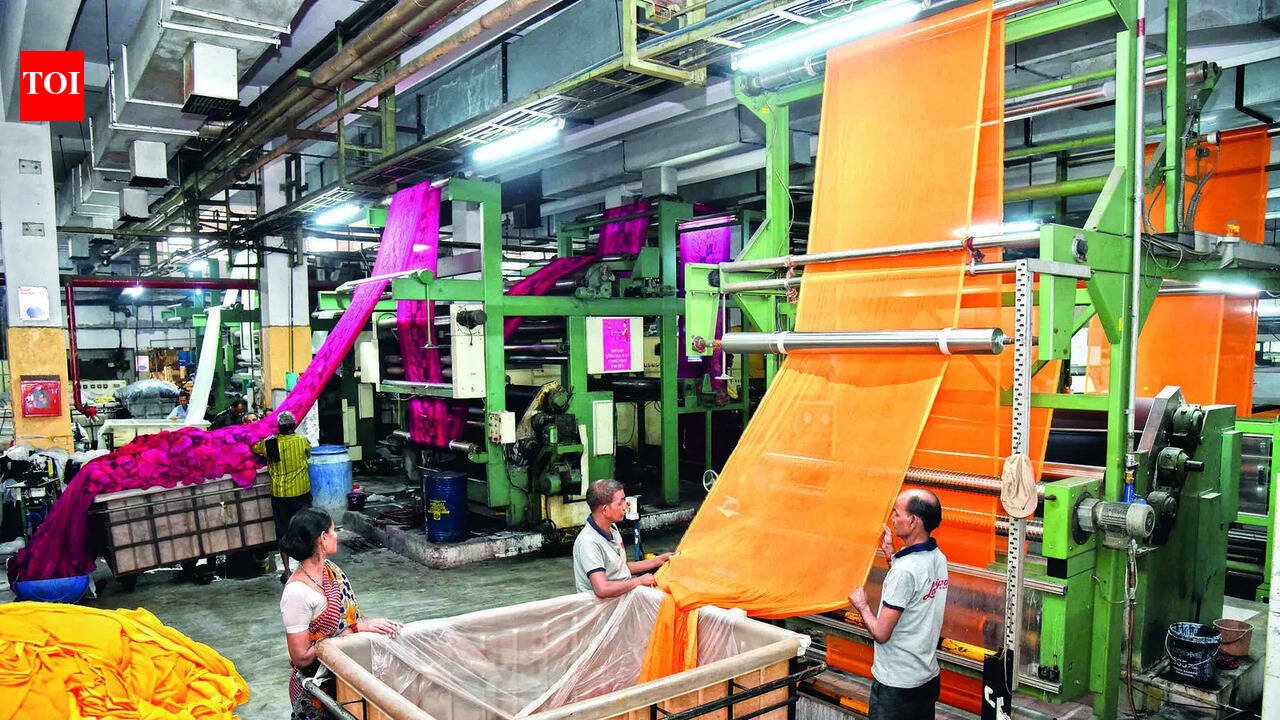
Ahmedabad: Textile weaving and processing units in the city are going through a difficult period as sharp increases in cotton, cotton yarn and processing input costs have disrupted production economics and weakened market demand. Industry participants say the pressure has intensified over the past three months, leaving many units struggling to maintain operations.Cotton and cotton yarn prices have risen steeply, pushing up fabric costs and making grey fabric more expensive for buyers. Traders have turned cautious amid uncertainty over future price movements. Many are limiting purchases because they fear that if prices decline later, they could be left holding costly stock and suffer heavy losses. This has led to a visible drop in grey fabric demand across the market.Processing units say the slowdown in grey fabric buying has directly affected production schedules. “Several units are operating at only around 50% capacity utilisation, while some have started remaining shut for one or two days a week to control losses and manage inventory. The situation has created concern among small and medium operators who depend on steady order flow,” said a director of a leading processing unit.He added that processing units are also under severe strain due to a steep rise in raw material costs. Inputs such as coal and colour chemicals have become significantly more expensive, increasing the overall cost of dyeing, printing and finishing. As a result, processing charges have been raised by around 5% to 7%, but unit owners say the increase is not enough to fully offset the higher expenses.“Raw material prices have gone up sharply, but demand has not kept pace. Units are unable to pass on the full burden to customers, and margins have been squeezed badly,” said a textile processor in Ahmedabad.The sector is also facing an acute labour shortage, adding to operational difficulties. Unit owners say irregular production and weak order books are making it harder to retain workers.“The industry is under pressure from every side, whether it is related to cotton, yarn, coal, chemicals or labour. If immediate relief is not provided, many units may find survival difficult. There is also a short supply of cotton yarn because spinning units have higher export commitments. Ahmedabad and surrounding areas have around 200 weaving units,” said Bharat Chhajer, former chairman of The Powerloom Development and Export Promotion Council (PDEXCIL). PDEXCIL has demanded removal of import duty on cotton, saying the measure is necessary to improve raw material availability and help the textile industry survive the current crisis.


