



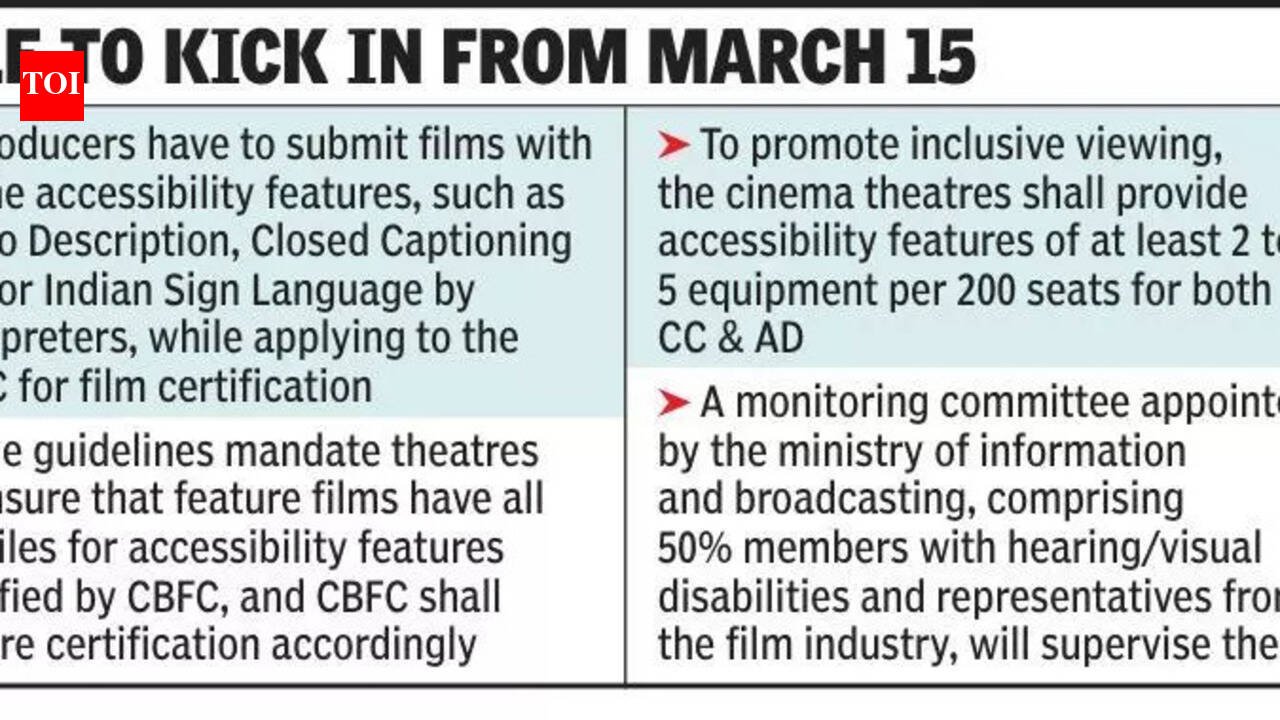
Kolkata: Following a SC court ruling, all feature films have to mandatorily include Audio Description (AD) and Closed Captioning (CC) norms for certification after March 15. While this move is intended to make cinema viewing an inclusive experience for persons with hearing and visual impairments, it means an additional expense of Rs 2 lakh per film. This has resulted in major financial stress to producers in Tollywood, most of who are now scampering to submit their films to CBFC Kolkata for certification before March 15. Audio description in the new guidelines is “the auditory narration of visual representations in a film to enhance film watching experience for the visually impaired. During gaps in dialogue, it describes visual elements such as scenes, settings, actions and costumes”. Closed captioning is the process “by which both the audio dialogue and sound representations of a film are made visible on demand by the user via on-screen text that is synchronized with the audio content”. These features support the Rights of Persons with Disabilities (RPwD) Act, 2016, by promoting equal access to cultural and recreational activities, said the CBFC authority. After March 15, producers have to submit films to CBFC with these accessibility features.Theatres must provide accessibility equipment for CC and AD at a minimum of two to five devices per 200 seats. Permitted equipment options include mirror captions, smart glasses with captions, caption stands, a separate caption display below the main screen for CC, and headphones or earphones for AD. Exhibitors TOI spoke to were unaware of the norms but are keen to implement it keeping the noble cause in mind.The ministry will appoint a committee, with half its members being persons with hearing or visual disabilities, along with film industry representatives, to oversee enforcement of accessibility standards. If accessible features are missing, viewers can first complain to the theatre licensee. If there is no response within 30 days, they can escalate the complaint to the committee, which must resolve it within the next 30 days.The policy is seen as progressive, but the industry worries about how it will work in a financially strained regional market. The main concern is higher costs when many Bengali films already struggle to recover production and post-production expenses. Director Indrasish Acharya, who has completed shooting ‘Gajoner Dhulobali’ and is waiting to take it to festivals before seeking certification, said “Where will we get the funds to do all this for certification? Is cinema-making going to be a profession and a passion only for the monied?”


