





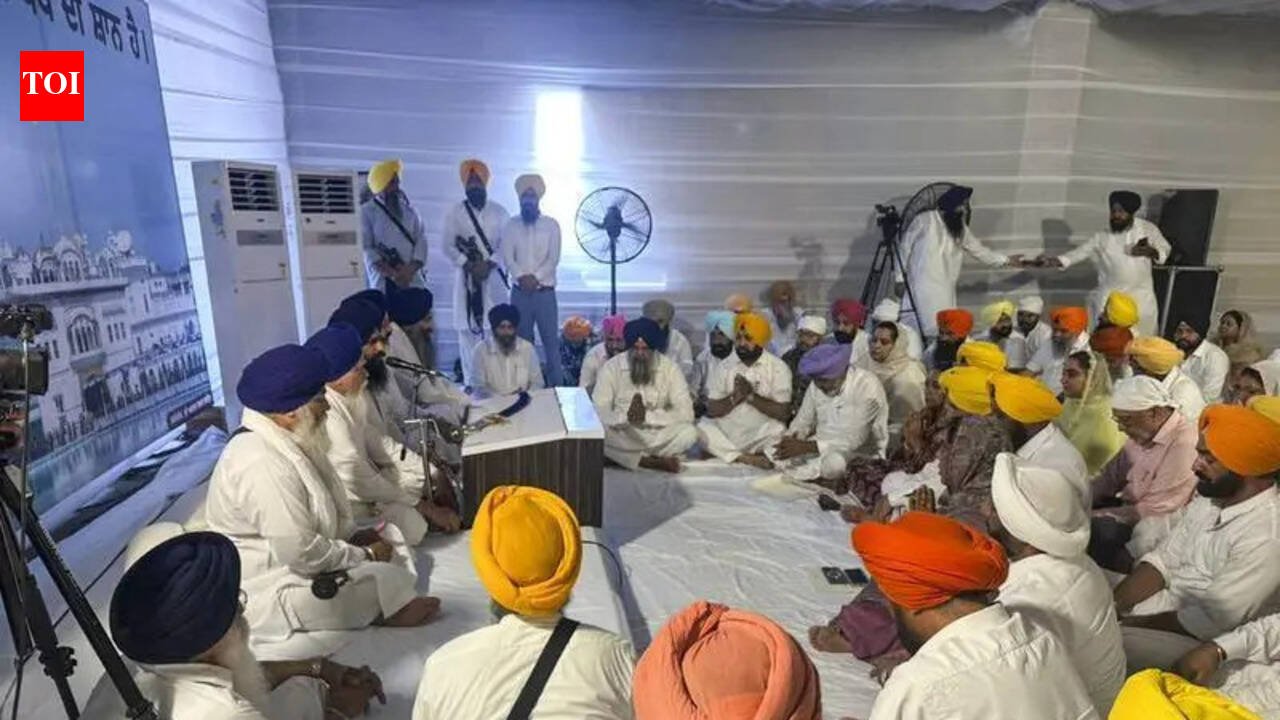
Jalandhar: In a little over a year, the Akal Takht has staged a remarkable institutional comeback.The proceedings at the Akal Takht secretariat on Monday evoked memories of Dec 2, 2024, when ‘tankhah’ (religious punishment) was pronounced on Shiromani Akali Dal president Sukhbir Singh Badal. That moment had underscored the authority of the highest temporal seat of Sikhism, but the months that followed saw its stature eroded, culminating in the dismissal of the Akal Takht jathedar and two other jathedars by the Shiromani Gurdwara Parbandhak Committee (SGPC).Monday’s proceedings, however, suggested that the institution had regained much of its authority. Acting Akal Takht jathedar Giani Kuldeep Singh Gargajj conducted the hearing with confidence and control, reinforcing both the authority of the takht and his own position, despite the controversy surrounding his appointment in March. The contrast with June 6 last year, when Damdami Taksal chief Baba Harnam Singh Dhuma did not allow him to address the Operation Blue Star anniversary gathering, was striking.The hearing also exposed serious gaps in the legislative process behind the Jaagat Jot Sri Guru Granth Sahib Satkar (Amendment) Act, 2026. It became evident that several MLAs had either not studied the legislation before passing it in the assembly on April 13 or were still unclear about its provisions. AAP MLA Manjit Singh Bilaspur’s inability to explain the term “custodian” invited a sharp rebuke from the jathedar and quickly became the defining moment of the proceedings, triggering criticism on social media.The proceedings also put Sikh groups that had backed the new law in an uncomfortable position and brought the 2015 Bargari sacrilege issue back into the political and religious discourse.Cong closest to Akal Takht’s positionDespite the Congress historically facing criticism over the events of June 1984, its legislators appeared closest to the Akal Takht’s position during Monday’s proceedings. Leader of the opposition Partap Singh Bajwa and MLAs Pargat Singh, Sukhpal Singh Khaira and Tript Rajinder Singh Bajwa said they had cautioned the Punjab govt in the assembly against rushing the legislation without consulting the Sikh community’s highest institutions. The Shiromani Akali Dal, despite its long association with Panthic politics, largely remained on the sidelines during the proceedings, even though the legislation is likely to have far-reaching implications for Sikh religious affairs.


