



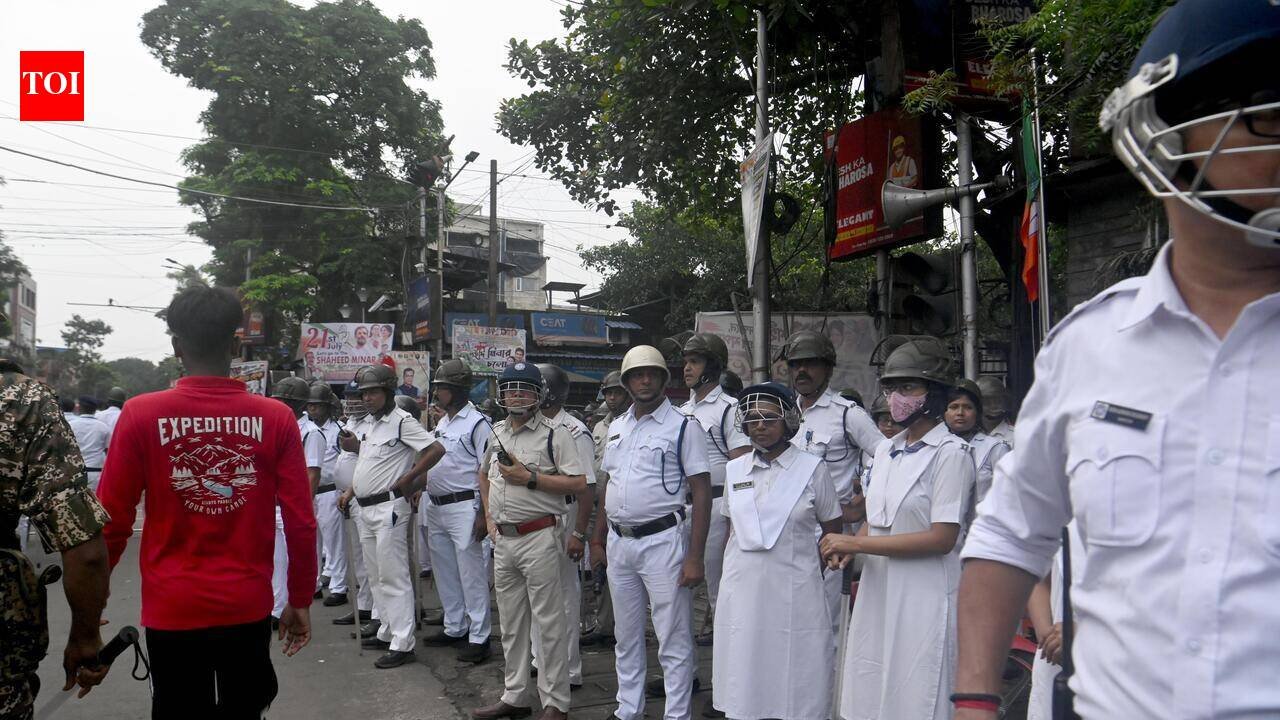
Kolkata: The city police on Friday adopted a strategy of maximum restraint while handling the students’ protest march in the city, refraining from using tear-gas shells, water cannons or baton charges despite repeated attempts by sections of protesters to breach barricades and trigger confrontations, senior police officers said.After the Delhi Police courted public anger for use of ‘excessive force’, officers of Kolkata Police said they had been specifically instructed to avoid any escalation and ensure the demonstration did not spiral into large-scale violence. “There were adequate arrangements, including tear-gas shells and water cannons but none of those had to be used. The focus was on exercising restraint and preventing serious injuries or any loss of life,” an officer said.A massive security arrangement was put in place across central Kolkata, with senior officers, rapid response teams, CRPF personnel, and reserve forces deployed at key intersections and around sensitive locations. Barricades were erected at multiple points along the protest route while traffic diversions were enforced to minimise disruption and prevent any breach of security.Despite the elaborate arrangements, protesters occupied Dorina Crossing from around 4 pm to 5.30 pm. Police then began dispersing the gathering, routing demonstrators towards the Y-Channel and R R Avenue near the East-West Metro’s Esplanade station. Even late on Friday night, nearly 2,000 protesters remained camped in the area.During the dispersal, a section of protesters allegedly hurled sticks and water bottles at police personnel. Officers, however, held their positions and did not retaliate, officials said.Police sources said personnel on the ground were operating under clear instructions from chief minister Suvendu Adhikari to exercise maximum restraint and use only the minimum force necessary while dealing with demonstrators. Even when protesters allegedly pushed barricades, hurled objects, and repeatedly attempted to break through police cordons, officers were directed to avoid retaliatory action.“There was immense pressure on officers on the ground. They faced repeated provocation but did not respond with force. The objective was to ensure the situation remained under control without triggering a larger confrontation,” another senior officer said.Officials said the approach marked a conscious emphasis on de-escalation, negotiation and crowd management. Senior officers continuously monitored developments from the police control room while field commanders remained in constant communication with deployed personnel. Additional reserve forces were kept on standby throughout the day but were not required to intervene.Protesters, however, denied targeting the police. They alleged that a section of “ruffians” had infiltrated the march and attempted to create law-and-order problems by attacking police personnel.“Our protest was against the govt in office in Delhi and our demand was the resignation of the education minister. We did not target the police, who also maintained a polite approach towards us,” said a protester in his 20s. He added that he had nevertheless expected the possibility of police action after seeing videos of recent protests in Delhi on social media.Police maintained that their priority throughout the day was to facilitate a democratic protest while ensuring public safety. “The extensive deployment was intended not to suppress the protest but to prevent violence, protect public property, and ensure the safety of both protesters and the general public,” another senior Kolkata Police officer said.


