






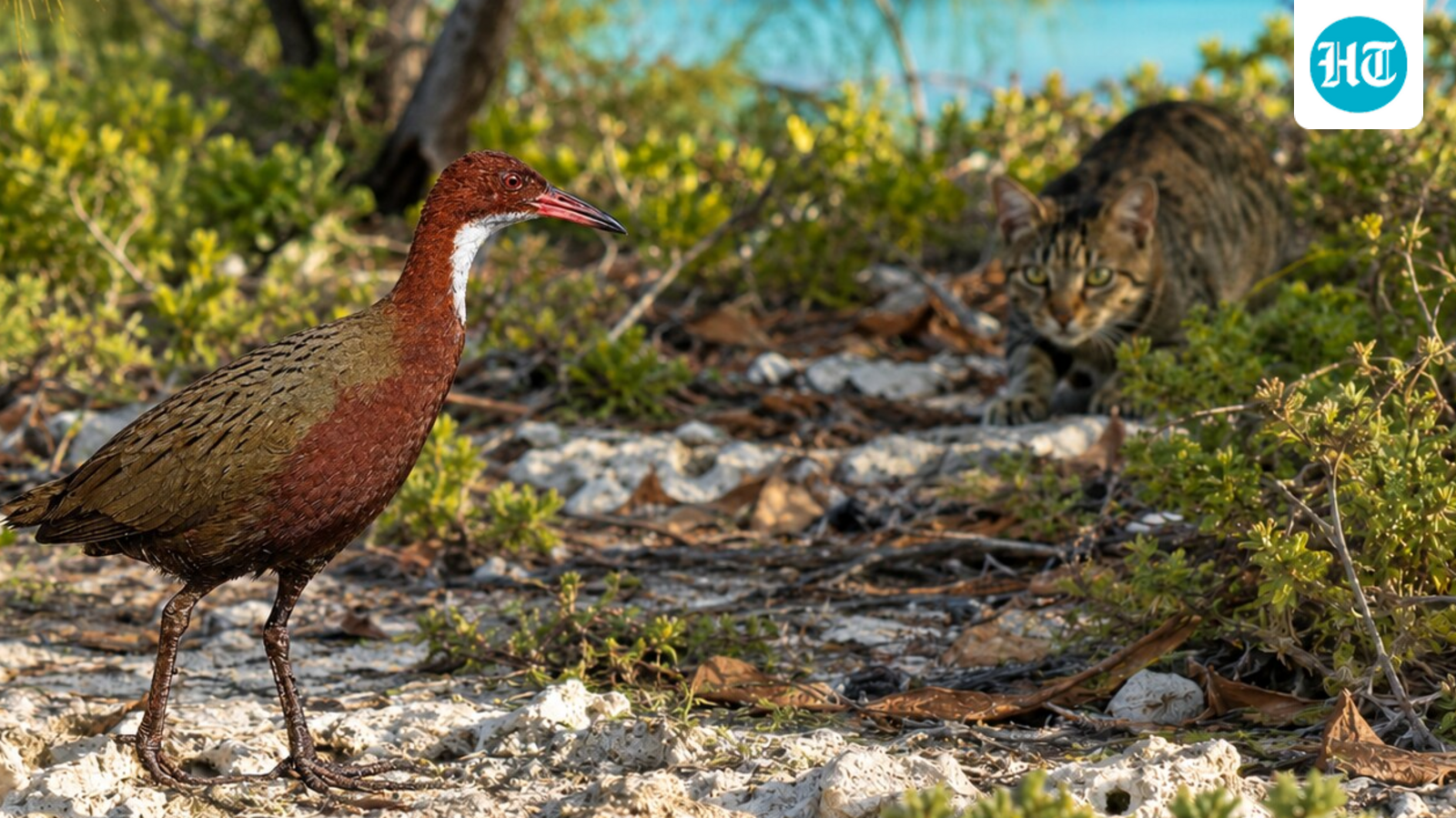
A bird that cannot fly has one big problem when a predator shows up: nowhere to go. On Aldabra Atoll in Seychelles, that predator was cats, and they were the main reason a flightless bird vanished from two of the atoll’s islands. In a 2013 study published in the journal Conservation Evidence Šúr, van de Crommenacker and Bunbury examined the return of that bird, the Aldabra rail, to Picard Island. It began with 18 birds and a reintroduction plan that exceeded scientists’ expectations.


Why the rail lost its home
Šúr and colleagues describe the Aldabra rail as the last surviving flightless bird in the Indian Ocean. Cats were a serious threat because a flightless bird has no quick way out. The study suggests that the rail disappeared from Grande Terre before the late 1800s and from Picard shortly after 1910. In both cases, the main culprit was feral cats brought in by early settlers. By 1998, the rail existed on only three of the atoll’s islands, and Picard was not among them. That left the entire wild population confined to three islands of a single atoll.
A careful plan to bring it back
Once the cats were off Picard, the island could be a home again. Wanless and colleagues documented the effort in a 2002 Biological Conservation paper, which notes that 18 rails were reintroduced there in 1999. The team used a soft release, which means the birds were given time and support to adjust to their new surroundings before being left on their own. They came from nearby Malabar Island, were moved while pairs were forming, and reached Picard within three days. The birds were then placed in enclosures of about 320 square feet near suitable habitat, with shelter, fresh water, and food, for six to 14 days. Even after release, the team continued to provide food to birds that stayed near their cages.
Early results were promising
Monitoring showed that all 18 released birds survived from November 1999 until at least April 2000. Seventeen birds were re-sighted between December 2000 and April 2001, and the remaining bird was recorded in an inaccessible part of the island. The rails were breeding as well. All chick deaths known in the first season happened within three weeks of hatching. The team figured that 15 to 16 chicks fledged, meaning they got old enough to leave the nest, in the first season, and at least 20 more did so in the second. By 2001, the number of birds on Picard had risen to at least 51, up from the original 18.
From 18 birds to nearly 3,000
Scientists had predicted that Picard could hold about 1,000 pairs of rails by 2010, which they saw as the island’s limit. A follow-up survey 12 years after the release, one year after the predicted population peak, confirmed that Picard had reached that limit and likely surpassed it. It found about 1,106 territorial pairs, roughly 10% more than predicted, plus an estimated 553 non-breeding adults, or about 2,765 birds in all. By 2012, the Seychelles Islands Foundation, which manages Aldabra, estimated the population at close to 3,000 birds. That’s a big jump from 18, but not every reintroduction will be like this. This was one species on one island, and the cats had to go first. The study also offers a reliable way to count rails and recommends continued monitoring and conservation management. For a bird that can’t fly away from trouble, Picard became a true second chance.


