






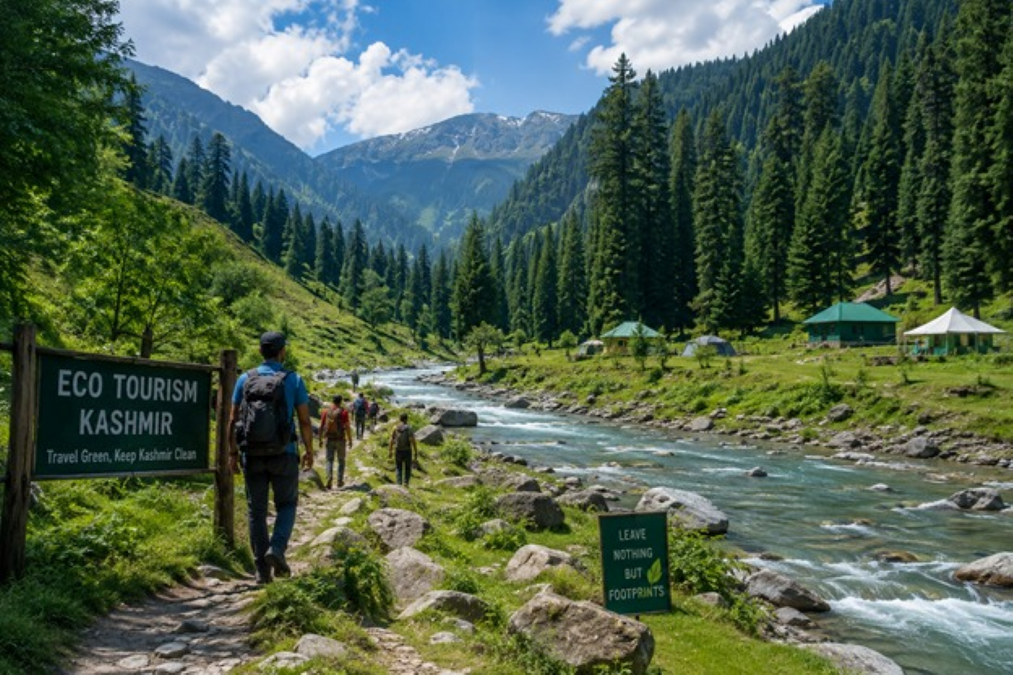
Kashmir has long been celebrated for its beauty. Its lakes, meadows, forests and snow-covered peaks have attracted visitors from across India and beyond. Yet the tourism story of the region has often remained confined to familiar images: shikaras on Dal Lake, houseboats, Mughal gardens and the seasonal charm of Gulmarg and Pahalgam.
That story is now changing. Adventure tourism is emerging as one of the most promising avenues for expanding Kashmir’s tourism economy. Trekking, mountaineering, skiing, rafting, paragliding, mountain biking, camping and rock climbing are no longer activities limited to a small group of enthusiasts. They are becoming part of a wider travel culture in which visitors seek experience, challenge and contact with nature rather than passive sightseeing alone.
Kashmir is naturally equipped for this transition. The region possesses a rare combination of landscapes within a relatively compact geographical area. High-altitude lakes, alpine meadows, dramatic valleys, swift-flowing rivers and dense forests offer opportunities for adventure tourism in every season. Sonamarg, Pahalgam, Gulmarg, Gurez, Doodhpathri, Bangus, Aharbal, Lolab and dozens of lesser-known locations can support carefully planned adventure circuits.
The attraction of adventure tourism is not merely recreational. It can also help distribute tourism more widely. Traditional tourism remains concentrated in a few established destinations, placing enormous pressure on places such as Srinagar, Gulmarg and Pahalgam while leaving many rural and border areas economically marginalised. Adventure tourism, by its very nature, encourages visitors to move beyond crowded centres and explore less-developed regions.
This creates opportunities for local communities. Young people can be trained as trekking guides, ski instructors, rescue professionals, outdoor educators, equipment operators and hospitality workers. Villages situated near trekking routes can provide homestays, food services, transport and local products. If planned properly, adventure tourism can create livelihoods without requiring every young person to leave their village in search of work.
But the promise should not make us blind to the risks. Adventure tourism is not simply about placing a signboard at a scenic location and inviting visitors to climb, camp or raft. It requires professional planning, trained personnel, reliable communication systems, medical support and clearly enforced safety standards.
Every trekking route should have an assessment of its difficulty, weather risks, emergency access and carrying capacity. Operators must be registered and accountable. Guides should receive certified training in first aid, navigation, high-altitude safety and rescue procedures. Tourists should be informed honestly about the risks involved instead of being encouraged through exaggerated advertising.
The administration and tourism department must also develop a strong rescue mechanism. Mountain emergencies can become fatal when help is delayed. Helicopter support, emergency shelters, trained rescue teams and coordinated communication between police, hospitals, local authorities and tour operators are essential. Safety cannot remain an afterthought that is discussed only after an accident.
Environmental protection is equally important. Kashmir’s natural beauty is not an unlimited commercial resource. Unregulated tourism can destroy the very landscapes that attract visitors. Plastic waste, careless camping, damage to alpine vegetation, traffic congestion and the construction of unsuitable infrastructure can permanently weaken fragile ecosystems.
Adventure tourism must therefore follow the principles of responsible tourism. Carrying capacities should be fixed for sensitive areas. Waste-management systems must be compulsory at campsites and tourist hubs. Single-use plastic should be strictly controlled. Construction in ecologically vulnerable zones should be limited, and local architecture should guide the development of homestays and accommodation facilities.
The participation of local communities must go beyond symbolic consultation. People living around tourist destinations should have a genuine stake in the benefits. Village-level tourism committees, transparent licensing systems and local ownership models can help ensure that revenue does not flow exclusively to outside agencies. A visitor who hires a local guide, stays in a village homestay and buys locally made products contributes far more meaningfully to the regional economy than one who merely passes through.
There is also a need to move away from seasonal thinking. Gulmarg’s winter sports and summer trekking, for instance, can be developed as part of a year-round tourism calendar. Autumn trails, spring birdwatching, mountain biking, cultural walks and winter camping can create sustained opportunities for workers and businesses. Such diversification would reduce dependence on a few months of intense tourism activity.
The private sector has a role, but so does the public sector. Investment is needed in roads, internet connectivity, weather information, public toilets, emergency centres and training institutions. At the same time, commercial interests must not be allowed to overpower public safety or environmental concerns. A balance between enterprise and regulation is essential.
Kashmir’s adventure tourism policy should also focus on inclusion. Facilities should gradually become accessible to women, children, older visitors and people with disabilities wherever possible. Local youth, including young women, should be encouraged to enter guiding, hospitality and outdoor education. Tourism becomes more valuable when it expands opportunity rather than reinforcing existing inequalities.
The future of Kashmir’s tourism cannot be secured through promotion alone. It will depend on credibility. Visitors must know that the routes are safe, the operators are trained, the environment is respected, and the local communities benefit. A destination earns lasting recognition not only through spectacular landscapes but also through the quality of its management.
Adventure tourism offers Kashmir a chance to present itself to the world in a new way—not merely as a beautiful place to visit, but as a region of exploration, resilience and responsible engagement with nature. The opportunity is immense, but it must be handled with patience and seriousness.
If the mountains are to become pathways to prosperity, they must not be treated as commodities. They must be protected, respected and shared responsibly. Kashmir’s next tourism chapter should be adventurous, but it should also be safe, sustainable and rooted in the people who call these landscapes home.
( The Author is a lecturer in HED and a Columnist)


