



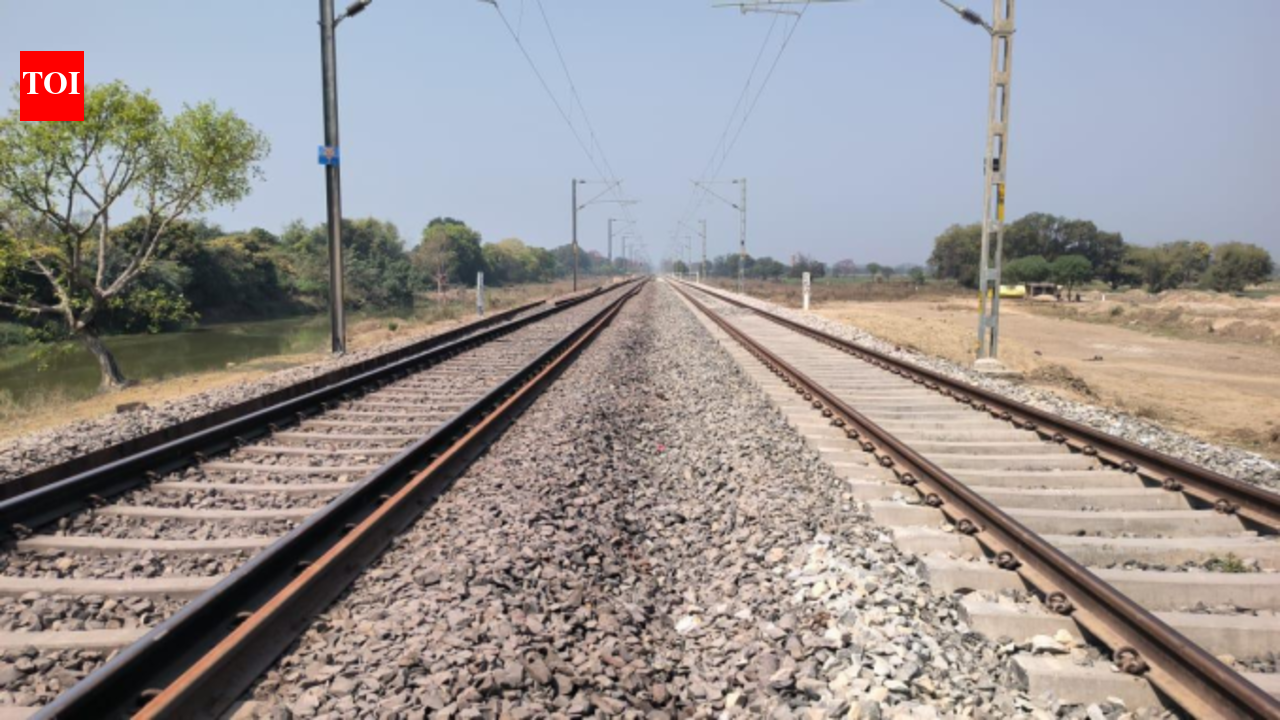
Patna: The railways is set to begin physical work on the third and fourth railway lines along the busy DDU-Patna-Jhajha corridor, following approval from the Railway Board. The project, spanning roughly 400km under the East Central Railway’s Danapur division, aims to ease congestion on one of the region’s most saturated routes.According to ECR’s chief public relations officer (CPRO) Saraswati Chandra, the Railway Board has approved the ambitious project to be executed in phases. In the first phase, three key stretches have received the green signal Fatuha-Bakhtiyarpur (24km), Bakhtiyarpur-Punarkh (30km) and Punarakh-Kiul (50km) from the board, he said, adding work on the remaining sections DDU-Danapur, Danapur-Fatuha and Kiul-Jhajha will be taken up in subsequent phases.The total cost of the project is around Rs17,000 crore. The scope of work includes laying new tracks, installing advanced signalling systems, constructing small bridges and upgrading station facade buildings along the route, he said, adding the DDU-Patna-Jhajha line, one of the oldest rail corridors of Indian Railways dating back to the pre-Independence era, currently operates with only two lines UP and Down.According to Danapur senior divisional commercial manager (senior DCM) Abhinav Siddarth, a sharp increase in passenger traffic and the introduction of numerous trains have stretched the route beyond capacity. Towns such as Buxar, Ara, Bihta, Barh, Mokama and Jhajha have witnessed a surge in daily passenger movement to the state capital, he said, adding at present the DDU-Danapur-Patna-Jhajha mainline route is operating at 150% to 160% saturation“The expansion will not only decongest the route, but also improve operational efficiency and passenger convenience. With population growth and railways continuing to be the preferred mode of transport, the addition of third and fourth lines is expected to usher in a new era of rail network development in the region,” Siddarth said, adding railways is also acquiring the land where it is necessary on the route.In addition, the project is likely to enhance connectivity, reduce travel time and support both passenger and freight traffic, including semi-high speed trains, providing long-term benefits to thousands of commuters across the state, he said.


