






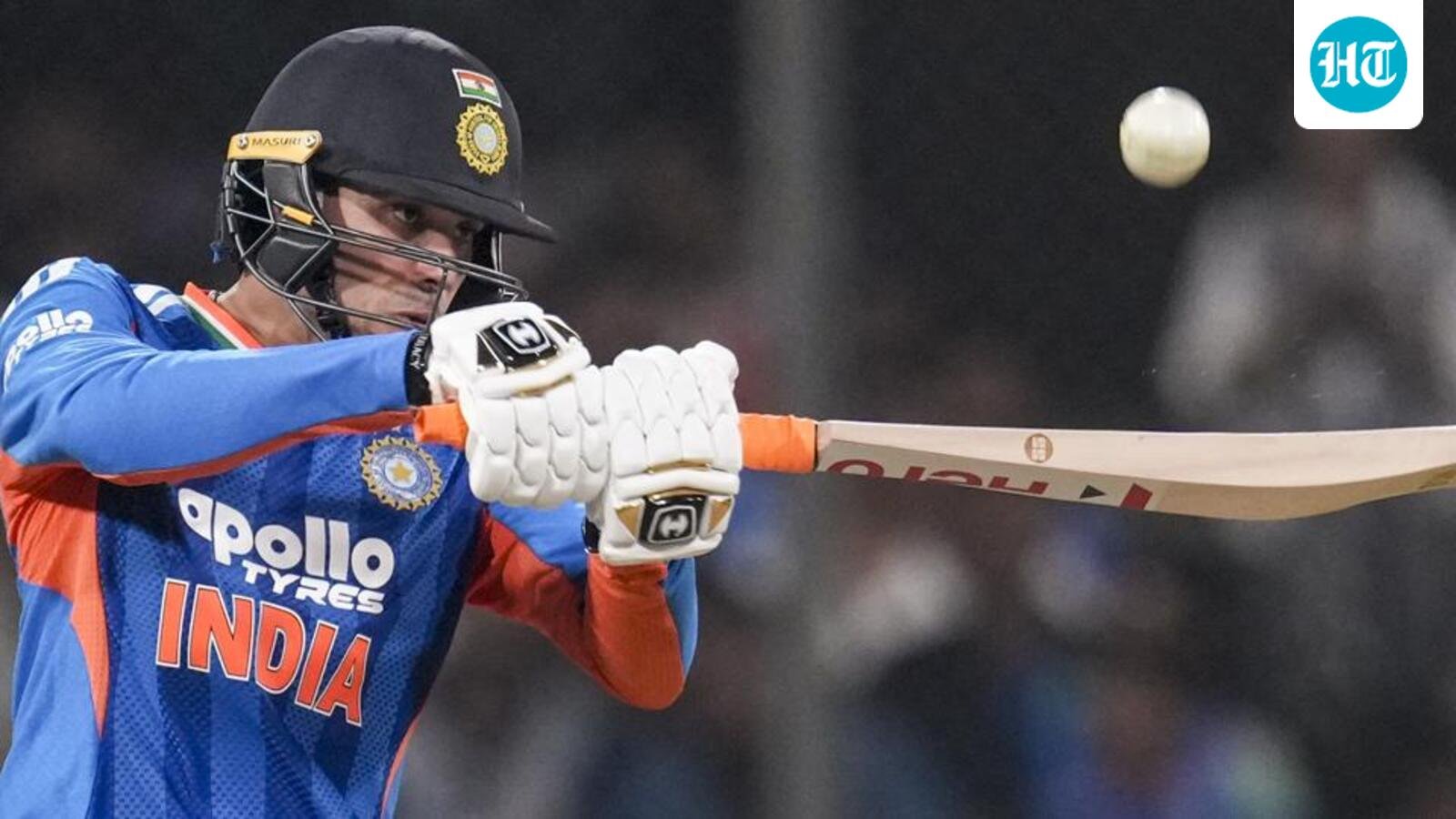
In the end, India’s victory margin was a comfortable 14 runs but the home side would be proud they left Indore with a win, after successfully defending the total on a batting paradise in the third T20I against West Indies on Sunday.
Batters from both sides have been so dominant through the white-ball series that 200-plus remains just a notional high score, not a match-winning one.
Even as the asking rate kept climbing as West Indies went in pursuit of 224, Indian bowlers were not breathing easy. For the day, India’s bowling tactics of playing the extra pacer as well as their execution – Mayank Yadav’s at the start and Prince Yadav’s in the closing overs – was exemplary. Arshdeep Singh was good all round as he so often is.
The left-arm quick got all the wickets (4-0-44-3), including the most important one of the in-form Shai Hope early in the innings. India scored 223 and restricted West Indies to 209/7, going 2-1 up in the five-game series.
High-scoring matches with short boundaries have a grammar of their own. Where everything seems to happen in a hurry. Boundaries come frequently, but there is greater premium on spells of play where the defensive ploy works. India came out winners on this count. Their all-pace strategy kept West Indies in check at 54/1 in the Powerplay.
At one stage, Shimron Hetmyer was threatening to make India pay for offering a life on five. But Naman Dhir, developing a reputation for his one-twos – six followed by a wicket – got the left-hander on 43 (26b) in such a sequence. An over later, Kamil Pooran got on top of him for three sixes, but he was still able to have the final say with his wicket on 42 off the final ball. Dhir’s smarts have been a useful addition to India’s bowling mix.
With the bat, India were 87/1 in the Powerplay, 87/5 in the middle overs. They added 49 more runs at the death. In isolation, good returns across phases. But considering India had brought up their 100 inside 8 overs, and this was Indore, a T20 prototype of a venue, they would admit they lacked cricket intelligence during the second half of their batting innings.
The five wickets they lost came within a span of 6 overs. That can sometimes happen in venues where the batting side is not sure if any total was safe. Even after Chase’s momentum-turning ninth over where he struck double blows by beating Ishan Kishan (37) and Shreyas Iyer (1) in the air. Dhir (10) too holed out at long-off against Gudakesh Motie, trying to clear the boundary even after a flurry of wickets.
Even as runs continued to flow, Indian batters soon slipped into collective brain fade. Nitish Reddy (21) got a feather to one down the leg for what would be construed as unfortunate in other formats, but a lazy dismissal in T20 cricket. If that wasn’t enough, Tilak Varma assumed Axar Patel had cleared the boundary and was caught unaware that the ball was still in play. The fielding side ran him out in the most bizarre fashion with the runner not even making an attempt to make the crease.
No one in the Indian camp, certainly not Varma, saw the funny side of it. Soon enough Axar (20) was caught in a mix-up with Arshdeep and India threw away the more prized wicket in the 19th over.
Despite this, if they still managed 223, that was down to Abhishek Sharma’s 69 (30b, 6×4,5×6) lighting up the night sky at the Holkar stadium with sumptuous hitting.
Abhishek’s well-timed assault
Getting off the blocks can be demanding, especially when you are batting first and have to set the pace. On a good surface with short boundary dimensions, there’s even more pressure to press the paddle. Abhishek began patiently. The left-hander would wait for eight balls and let Roston Chase commit his first error in length before going on the offensive. Then he made room and went bang, sliced one over extra cover for four. Then, six over long-off. Six again over point.
With that, Abhishek was away. So was India. It was a great case study as to how little it takes for Abhishek’s engine to warm up. Often, it’s a matter of delivering the opening salvo. Soon enough, he begins to free up his arms. With Abhishek, his feet too, making enough room to dissect the off-side boundary.
West Indies knew what Abhishek’s strengths were. Their pacers went fuller, introduced yorker lengths early. Tried to take it wider from him, but weren’t accurate enough. Abhishek played around the off-side boundary with geometric precision. From batting at run-a-ball in the first five balls he faced, Abhishek brought up his fifty off the next 13. It took a sharp bouncer from Shamar Springer to end Abhishek’s stay. That was the only way West Indies could have arrested the scoring rate.


