



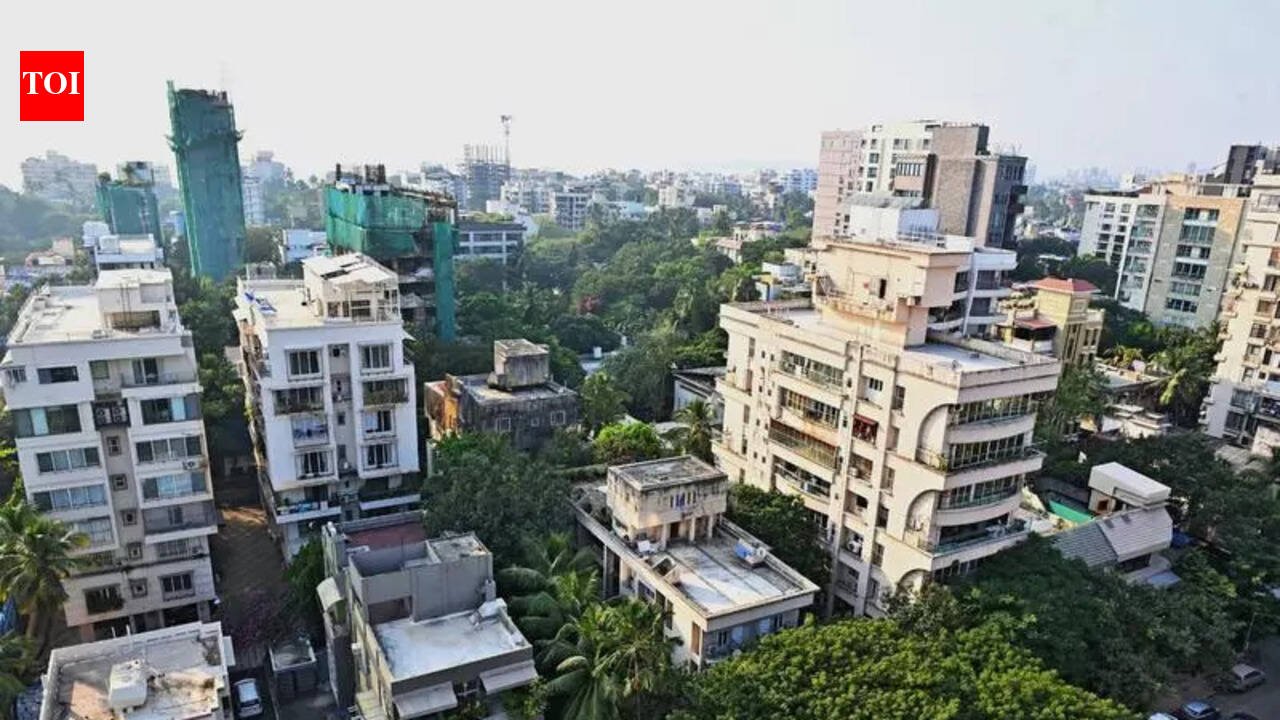
Mumbai: A new Airports Authority of India (AAI) circular on the impact of high frequency (HF) transmitters affecting vertical growth could bring a ray of hope to stuck redevelopment projects in and around the Juhu area. The March 18, 2026, circular said a regional committee would be constituted to study zones, evaluate their implications on aviation safety, and formulate guidelines for permissible building heights on a case-to-case basis. “There is a demand for reviewing the regulations for safeguarding of high frequency transmitters. There are no clear standards or guidelines from ICAO (International Civil Aviation Organisation) and these restrictions are affecting vertical growth of metropolitan cities,” it said.Juhu residents said some 50-60 redevelopment projects of over 35-40 year-old buildings are held up. Due to height restrictions, permissible building heights for plots within 1 km radius from a high frequency transmitter radar at Juhu have been drastically reduced, making redevelopment unviable for developers.Architect Manoj Daisaria said, “The committee will adopt a more nuanced, plot-specific approach now rather than applying blanket restrictions. It is expected that there may be scope for height relaxations in the eastern parts of Juhu where HF transmitters are located, while stricter controls may continue on the ocean-facing side, which lies within the landing approach zone. Overall, the committee will study each plot individually and recommend permissible heights accordingly, aiming to balance aviation safety requirements with urban development potential.“Majority of projects in these locations involve redevelopment of Mhada colonies and slum rehabilitation for which additional incentive floor space index (FSI) is required to be consumed to make these projects viable. FSI defines how much can be built on a plot.Earlier, a uniform height of 57 metres above mean sea level (AMSL) was permitted within these areas; however, due to subsequent operational constraints, permissible heights were reduced to 43 m AMSL in certain zones and further down to 34 m AMSL in zones closer to critical areas. These restrictions have significantly impacted redevelopment potential and overall development feasibility within the affected localities.Under the circular, no structure will be permitted within 100 metres of the transmitter antenna, between 100 m and 2,000 m from the antenna centres, structures are allowed but come under certain restrictions.A property market source said, “Instead of blanket restriction, the new circular has allowed controlled development by clearly defining restricted zones and permitting conduct of operational impact analysis study by a highly technical team of communication and navigation experts, airport officials and high frequency communication equipment system engineers. They will determine whether the proposed building would actually affect signals required for long distance aircraft communication and suggest any further measures required to be adopted for mitigation.“The circular has also listed out steps involved in conducting and approving the findings including levels of hierarchy for approving the additional building heights and detailed process to be followed in this regard. “Methodical and timely adoption of the circular will allow controlled urban development without compromising aviation safety, which is especially challenging in Mumbai with fully functional airports at Santacruz and Juhu, both within close proximity and within city limits,” said the source.


