






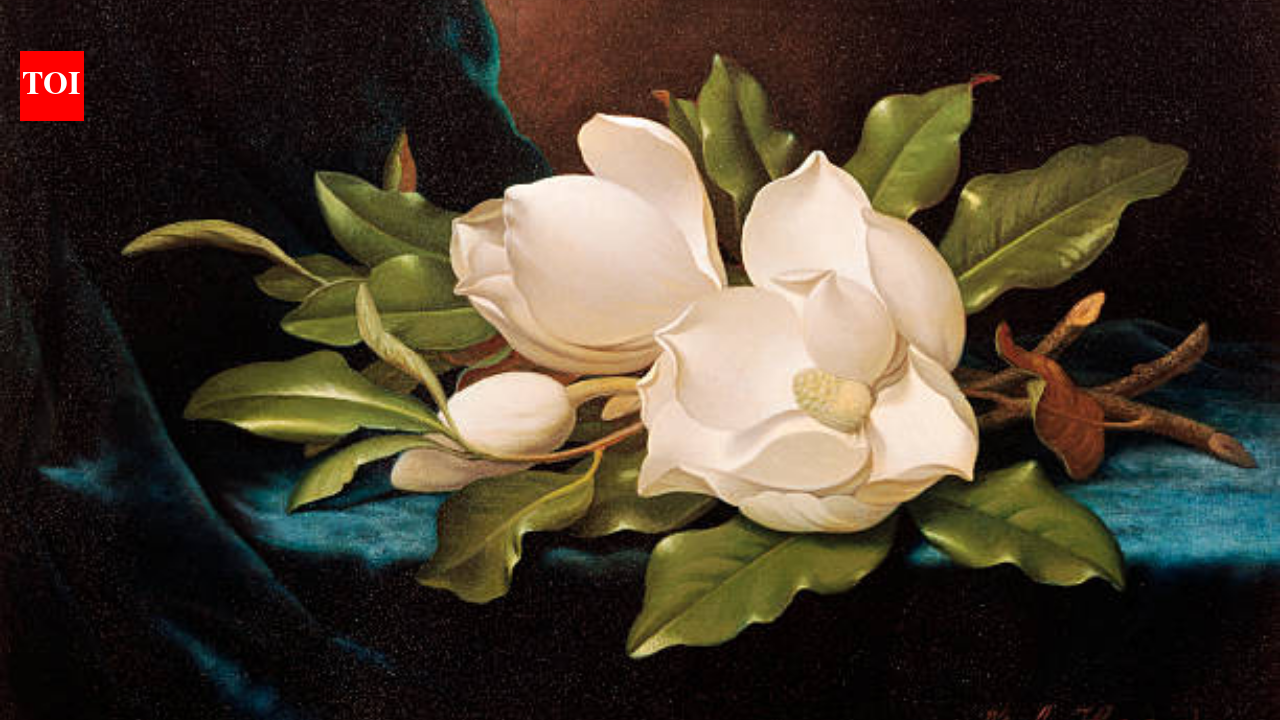
A Wisconsin bargain hunter paid just $29 for a flower painting at a rummage sale, with no idea that the artwork would eventually be worth a fortune. About a decade later, the painting was identified as a work by American artist Martin Johnson Heade and went on to Christie’s in New York. According to Christie’s auction record, Two Magnolias on Blue Plush sold for $882,500 on May 26, 1999, after carrying an estimate of $300,000 to $500,000. The sale turned an inexpensive rummage-sale purchase into one of the more remarkable art discoveries of its time.
A $29 painting with a surprising history
The painting began its journey to the auction block in an unlikely place: a Wisconsin rummage sale. A man from Wausau bought the artwork for just $29 because he liked the way the magnolia flowers were depicted. At the time, there was little indication that the painting was the work of a notable 19th-century American artist.It stayed with the buyer for roughly a decade before experts recognised its significance. The work was identified as Two Magnolias on Blue Plush, a floral still life by Martin Johnson Heade, who lived from 1819 to 1904. What had initially looked like an inexpensive decorative painting was now considered an important work by an established American artist.
Christie’s confirms the Heade attribution
Christie’s official catalogue identifies the artist as Martin Johnson Heade and the work as Two Magnolias on Blue Plush. It is an oil painting on canvas measuring 15 by 24 inches. The auction house records the work as signed by Heade, although the signature is described as indistinct. Christie’s also provides extensive background on Heade’s magnolia paintings and their importance within his career.The painting was offered in Christie’s Important American Paintings, Drawings & Sculpture sale in New York on May 26, 1999. Its estimated price was between $300,000 and $500,000. Instead, bidding pushed the final price to $882,500. That result transformed the story of the Wisconsin rummage-sale purchase into an extraordinary art-market bargain. A painting bought for $29 had eventually sold for hundreds of thousands of dollars.
Why Heade’s magnolia paintings were important
The value of the painting was not simply a result of its unusual discovery story. Much of its importance came from Heade himself and the distinctive way he approached floral subjects. Heade worked in several genres, including landscapes and still lifes, but his magnolia paintings became particularly notable. Christie’s describes the magnolia series as the culmination of his career and among his most original American still-life works. His treatment of the flowers was different from a conventional floral arrangement. Instead of placing magnolias upright in a vase, Heade frequently showed the blossoms lying across richly coloured fabric.In Two Magnolias on Blue Plush, the pale flowers are set against blue velvet, creating a sharp contrast between the blossoms and the dark, luxurious background. Christie’s notes that Heade paid close attention to the individual flower, exploring its form, texture and delicate details. The magnolia became more than simply a decorative subject; it was the central focus of the composition.
From overlooked artwork to auction treasure
The painting’s discovery was especially striking because it had not been purchased from a gallery or recognised as an important artwork when it changed hands. The Wausau buyer found it in an ordinary rummage-sale setting and paid a modest amount for it. It was only later, after examination and identification, that the painting’s connection to Heade became clear. The story became part of a wider fascination with valuable American artworks turning up in unlikely places.
A remarkable difference in value
The numbers alone show how dramatic the transformation was. The original purchase price was $29. Christie’s estimated the painting at $300,000 to $500,000 before the auction. It ultimately sold for $882,500. The auction price was therefore more than 30,000 times the amount originally paid for the painting.But the price was driven by more than the bargain behind its discovery. The painting had the artistic importance, provenance and attribution necessary to make it valuable in the serious American art market. Christie’s describes Heade’s magnolia paintings as an important part of his artistic legacy, helping explain why Two Magnolias on Blue Plush attracted such strong interest at auction.
The wider fascination with Heade’s lost treasures
The Wisconsin discovery was not the only story involving Heade paintings being found outside the traditional art market. Later reporting by TIME described several Heade flower paintings that had been purchased for surprisingly small amounts at garage and estate sales before being recognised and sold for much larger sums. The stories added to the appeal of Heade’s work and demonstrated how artworks can sometimes remain unidentified for years. At the same time, the market for Heade paintings also faced concerns about authenticity.
From $29 to $882,500
The story of Two Magnolias on Blue Plush is ultimately about a remarkable change in perspective. What one Wisconsin buyer saw as an attractive flower painting at a rummage sale eventually emerged as a work attributed to an important American artist. Christie’s sold Martin Johnson Heade’s painting for $882,500 in 1999, turning a $29 purchase into an extraordinary art-world discovery. The sale remains a striking example of how an overlooked artwork can acquire an entirely different value once its history and artist are properly recognised.


